
Working outdoors comes down to one practical test: is the screen readable once direct sunlight hits it? Below are eight current laptops with display brightness and battery figures that hold up to that test, matched to different budgets and use cases.
The latest notebooks offer portability without compromising performance, thanks to energy-efficient chips and thinner batteries packed into smaller chassis. Most laptops on the market are still built and tested around indoor lighting, so brightness and glare handling need to be checked directly rather than assumed. If you’re a student, freelancer, or anyone who works away from a desk, you know the feeling — it’s hard to focus on a display in sunlight when you can see everything except its content. The picks below are the ones with the display and battery numbers to hold up outside.
Editor’s Pick
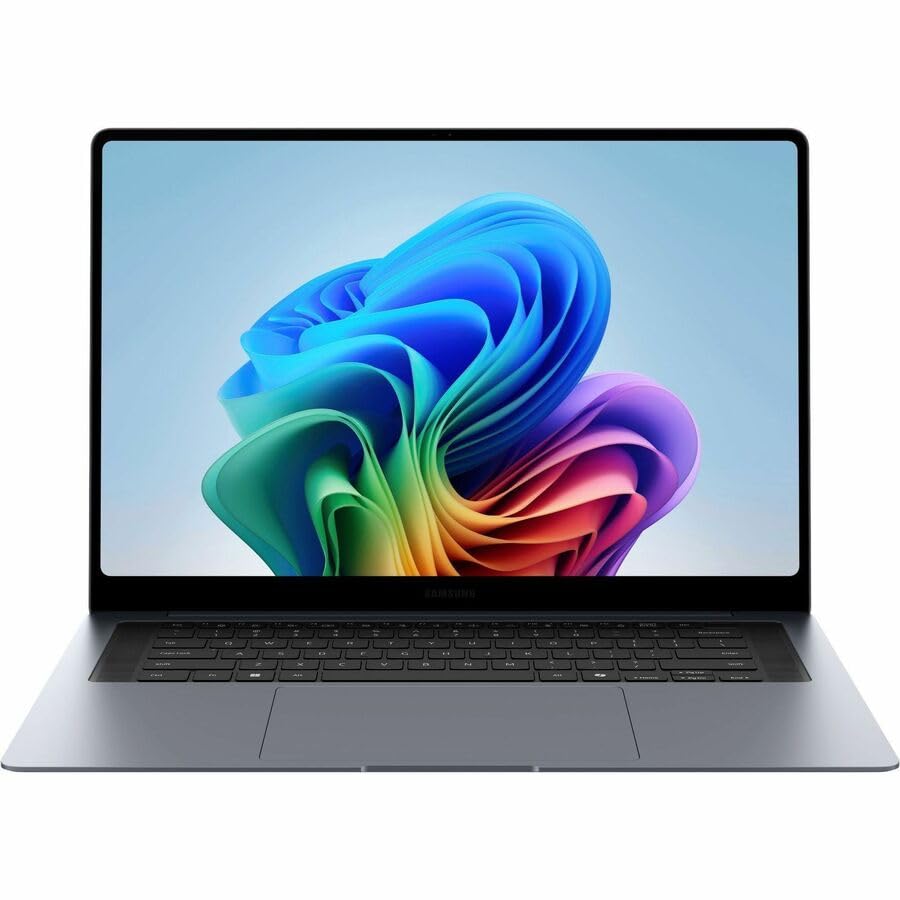
Last update on 2026-10-22 / Affiliate links / Images from Amazon Product Advertising API
1,000 nits of peak brightness is rare — most laptops on this list top out at 400-500. Samsung rates the battery at 30 hours, measured under the same low-brightness conditions every manufacturer uses, so treat it as a ceiling rather than a guaranteed all-day number outdoors.
- Intel Core Ultra 7 356H
- 16″ AMOLED, 1000 nits
- 16-32GB RAM
- Up to 30h battery (rated)
What’s Inside
- 1 – Best Laptop for Working Outdoors — Buyer's Guide
- 2 – Outdoor Laptop Comparison Table
- 3 – Best Laptops for Outdoor Use — Reviews
- 3.1 – 1. Dell XPS 13 9345 (Best Overall)
- 3.2 – 2. Samsung Galaxy Book6 Pro (Brightest Display)
- 3.3 – 3. Lenovo ThinkPad T14 Gen 6 (Best Portable Business Laptop)
- 3.4 – 4. Lenovo ThinkPad X1 Yoga Gen 10 (Best Convertible)
- 3.5 – 5. Samsung Galaxy Book5 Pro 360 (Best 2-in-1 for Business)
- 3.6 – 6. Apple MacBook Air 13" (Best Apple Laptop)
- 3.7 – 7. HP OmniBook Ultra Flip 14 (Best Premium Convertible)
- 3.8 – 8. LG gram Pro 17 (Largest and Lightest)
- 4 – Recommended Accessories
- 5 – Which Laptop Should You Buy for Outdoor Use?
- 6 – Outdoor Laptop Use FAQ
- 7 – Final Thoughts on the Best Laptops for Outdoor Use
Best Laptop for Working Outdoors — Buyer’s Guide
Display Brightness for Outdoor Laptop Use
This is the single most important factor. The rule is simple: the higher the brightness, the better — reading stays easier in bright light without constantly tilting the screen to fight reflections.
Standard laptops typically produce 200-300 nits of brightness, which isn’t enough outdoors. Look for at least 350-400 nits; above 500 is comfortable even in direct sun. Nits and candela per square meter (cd/m²) are the same unit, so don’t get thrown off if a spec sheet uses one or the other.
Panel finish matters just as much as the raw brightness number. A glossy screen produces punchier colors indoors, but turns into a mirror in direct sunlight. A matte display with an anti-glare coating is what makes a laptop usable outside.
The battery claim most reviews don’t check
Manufacturer battery ratings are almost always measured at low, dim brightness — not the setting anyone would actually use outdoors. Notebookcheck’s own lab testing found the MacBook Air M5’s rated 18-hour battery life drops to 6 hours 39 minutes at full brightness — the exact setting needed in direct sun. Rating batteries at a fixed, dim brightness is standard practice across the industry, not an Apple-specific choice, though how far a given machine drops from its rated number at full brightness varies by panel and hasn’t been independently measured for every laptop on this list. Treat the advertised number as a best-case indoor figure, not what you’ll get squinting through sunlight.
Build Quality for Outdoor Laptops
Using a laptop outside means facing conditions you don’t get indoors — dust, direct heat, the occasional drop. You don’t need a fully rugged, MIL-spec brick like a Panasonic Toughbook for everyday outdoor work; those are durable but heavy and bulky. The best laptop for outdoor use is durable but light, ideally with a metal chassis. A protective sleeve is a cheap way to reduce risk further.
Portability for On-the-Go Laptop Use
A laptop’s weight tracks its screen size — you generally won’t find a travel-friendly companion in the 17-inch class, though one laptop below complicates that rule. 14-inch or smaller is the sweet spot for carrying around all day. That said, don’t swing too far the other way — an 11-inch display isn’t great for real multitasking. It’s a balance between what you can carry and how much screen you need to work on.
Battery Life for Outdoor Laptops
Finding a laptop with both a bright display and long battery life isn’t impossible, but it depends on the processor, GPU, and storage working together efficiently. An energy-efficient chip paired with SSD storage is the formula — and skip the dedicated GPU if you can, since a bright display already asks a lot of the battery without one.
Outdoor Laptop Comparison Table




Last update on 2026-10-22 / Affiliate links / Images from Amazon Product Advertising API
Best Laptops for Outdoor Use — Reviews
1. Dell XPS 13 9345 (Best Overall)
Best Overall
Last update on 2026-09-05 / Affiliate links / Images from Amazon Product Advertising API
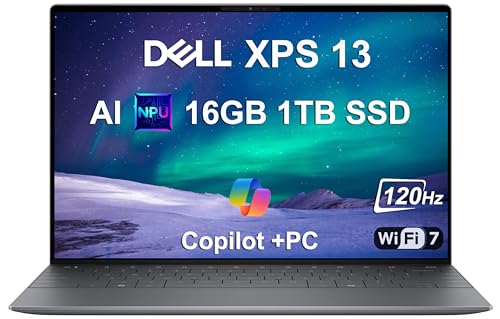
- ProcessorSnapdragon X Elite X1E-80-100
- GPUQualcomm Adreno (integrated)
- RAM16GB
- Storage1TB SSD
- Display13.4″ FHD+, 500 nits, 120Hz
- BatteryUp to 27 hours (rated)
Dell rates this configuration’s 13.4-inch display at 500 nits, and PCWorld measured 551 nits with full 100% sRGB gamut coverage on the same Snapdragon X Elite chassis — bright enough for outdoor work, with a full sRGB gamut rather than just a marketing-only spec (gamut coverage and color accuracy are different measurements; PCWorld’s review doesn’t report the latter). The 120Hz refresh rate is a bonus for scrolling and video, though not something you’d specifically miss without it.
The move to Snapdragon’s ARM-based X Elite chip is what pushes the battery rating to 27 hours, well above the Intel-powered XPS 13 generations before it. PCWorld’s own battery test measured 16 hours on this chip — still strong, and a reminder that manufacturer ratings run well ahead of real-world use even before outdoor brightness is factored in. At 2.67 lbs, it’s also easy to carry to wherever you’re working.
One trade-off of the glass, borderless trackpad, though: PCWorld found it too easy to mouse off the edge with no visible boundary, and the outer edges click less reliably than the center. A minor daily annoyance rather than a dealbreaker.
Pros
- 551 nits measured, 100% sRGB gamut coverage
- 27-hour rated battery (16 hours measured by PCWorld)
- Lightweight at 2.67 lbs
Cons
- Not built for heavy graphics work
- Borderless trackpad has no tactile edge — easy to swipe off accidentally
2. Samsung Galaxy Book6 Pro (Brightest Display)
Brightest Display
Last update on 2026-10-22 / Affiliate links / Images from Amazon Product Advertising API
- ProcessorIntel Core Ultra 7 356H
- GPUIntel Arc (integrated)
- RAM16-32GB
- StorageUp to 1TB SSD
- Display16″ AMOLED, 1000 nits
- BatteryUp to 30 hours (rated)
If the Dell XPS 13 above is the best all-around pick, this is the one to reach for if brightness is the priority. Samsung’s own spec page — confirmed here — puts peak brightness at 1,000 nits, more than double what the T14, X1 Yoga and MacBook Air below offer. That’s the difference between comfortable outdoor use and constantly repositioning to cut glare.
Samsung’s 30-hour rating is measured the same low-brightness way every manufacturer measures it, per the buyer’s guide callout above. No independent lab has published a Galaxy Book6 Pro battery test at full 1,000-nit brightness, so the 30 hours is a best-case ceiling rather than a number to plan an outdoor workday around. The 16-inch AMOLED panel is vivid enough to double as a primary screen back at a desk.
The keyboard is the recurring complaint: Notebookcheck, testing the higher-tier Core Ultra X7 358H configuration of this same 16-inch chassis, found it lacks a premium tactile feel and called the keys heavy — a complaint about the physical deck shared across the chassis’s processor options, including the Core Ultra 7 356H model listed here. The trackpad, by contrast, is large and reliable.
Pros
- 1,000 nits — the brightest display on this list by a wide margin
- Vivid AMOLED panel doubles as a primary display
Cons
- Integrated graphics only — not for heavier creative work
- Keyboard lacks the tactile feel of the rest of the build, per Notebookcheck
- RAM is soldered, not upgradeable later
- No independent battery-at-brightness test published yet
3. Lenovo ThinkPad T14 Gen 6 (Best Portable Business Laptop)
Best Portable Business Laptop
Last update on 2026-10-22 / Affiliate links / Images from Amazon Product Advertising API
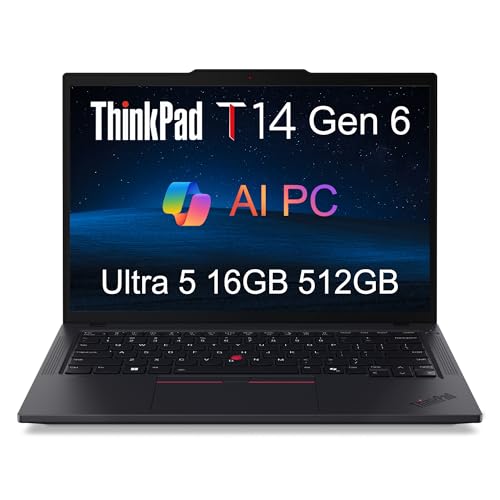
- ProcessorIntel Core Ultra 5 225U
- GPUIntegrated
- RAM16GB
- Storage512GB SSD
- Display14″ FHD, 400 nits, anti-glare (rated)
- Battery11 hours (Lenovo rated)
The ThinkPad T14 Gen 6 is a straightforward, well-rounded pick — a 14-inch anti-glare IPS panel rated at 400 nits, enough for comfortable outdoor use without the premium price of the AMOLED options on this list. Lenovo’s business-focused build quality shows here too: narrow bezels, a compact chassis, and the keyboard and trackpad quality the ThinkPad line is known for.
The T14 Gen 6 chassis carries the same TrackPoint nib and discrete touchpad buttons across its Intel and AMD configurations — XDA Developers confirms both are present, though that review tested the AMD Ryzen AI 7 PRO 350 version of this generation, not the Intel Core Ultra 5 225U configuration listed here, and its 9-plus-hour battery result is specific to that different chip. No independent lab has tested this Intel configuration, so the 400-nit display and 11-hour battery figure above are Lenovo’s own ratings.
There’s no dedicated GPU, so this isn’t a laptop for heavier creative or gaming work, but for writing, browsing, and general productivity outdoors, it’s a dependable, well-priced choice with security features (dTPM 2.0, fingerprint reader, ThinkShutter physical webcam cover) worth having if you’re working in public spaces.
Pros
- 400-nit anti-glare display at a fair price
- Durable, business-grade build quality
- Security features worth having for public/outdoor work
Cons
- No dedicated GPU
- TrackPoint nib and discrete touchpad buttons are a love-it-or-leave-it ThinkPad holdover
- No independent test published yet for this Intel Ultra 5 225U configuration
4. Lenovo ThinkPad X1 Yoga Gen 10 (Best Convertible)
Best Convertible
Last update on 2026-10-22 / Affiliate links / Images from Amazon Product Advertising API
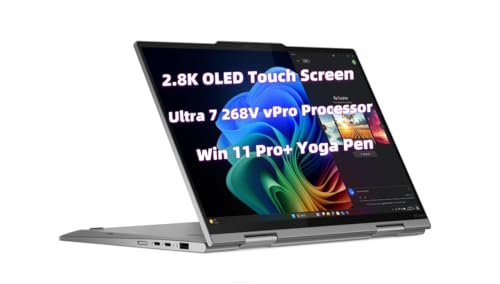
- ProcessorIntel Core Ultra 7 268V
- GPUIntel Arc 140V (integrated)
- RAM32GB LPDDR5X
- Storage1TB PCIe SSD
- Display14″ OLED touch, 2880×1800, 500 nits (rated)
- Battery12 hours (Lenovo rated)
No independent lab review of the X1 Yoga Gen 10 turned up in research for this guide, so the figures here are Lenovo’s own. The 14-inch 2.8K OLED touchscreen is rated at 500 nits, bright for an OLED panel. Combined with the 2-in-1 hinge, it’s built for sketching, annotating, or taking notes outdoors as well as typing.
Lenovo’s “Rise and Fall” keyboard retracts automatically in tablet mode to prevent accidental keypresses, a feature carried across several X1 Yoga generations. Lenovo lists MIL-STD-810H testing for the chassis, and at 2.97 lbs it isn’t a heavy machine for the added hinge.
Pros
- 500-nit rated OLED — bright for the panel type
- 2-in-1 hinge with pen input for sketching and notes outdoors
- MIL-STD-810H tested chassis, per Lenovo
Cons
- Memory is soldered, not upgradeable
- No independent review published for this generation yet — brightness and durability figures are Lenovo’s own
5. Samsung Galaxy Book5 Pro 360 (Best 2-in-1 for Business)
Best 2-in-1 for Business
Last update on 2026-10-22 / Affiliate links / Images from Amazon Product Advertising API
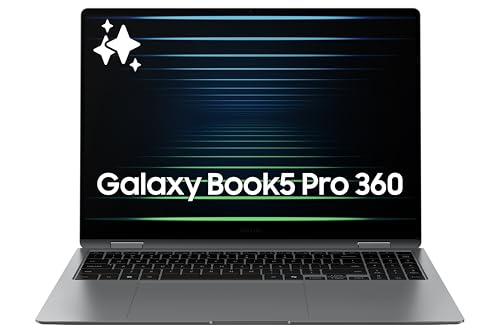
- ProcessorIntel Core Ultra 7 256V
- GPUIntel Arc 140V (integrated)
- RAM16GB LPDDR5X
- Storage512GB SSD
- Display16″ WQXGA+ AMOLED touch, 120Hz
- Battery13 hours
The 16-inch AMOLED touchscreen runs at a smooth 120Hz refresh rate, and the 360-degree hinge means tablet-mode flexibility alongside a full laptop. Samsung doesn’t publish an exact nits figure for this panel, and no independent lab has measured it either, so none is stated here — AMOLED’s high contrast generally helps outdoor visibility regardless of peak brightness, but that’s a property of the panel type, not a substitute for a measured number.
PCWorld reviewed a loaner unit with the Ultra 7 258V chip and confirmed the S Pen is bundled in the box rather than sold separately, with “a pleasantly rubbery feeling that provides varying levels of pressure.” PCWorld noted Samsung’s currently listed retail configuration uses the Ultra 7 256V chip instead — the same S Pen and chassis, a different processor tier — and Stuff reviewed that 256V retail configuration directly, which matches the spec row above.
The place the premium feel drops off: Stuff found the down-firing quad speakers “can’t hold a candle to up-firing rivals like the MacBook Pro” for bass, even with Dolby Atmos upmixing. Fine for calls and background audio, less so if audio quality is a priority.
Pros
- Smooth 120Hz AMOLED touchscreen
- 360-degree convertible hinge with bundled S Pen
- Premium aluminum build quality
Cons
- Down-firing speakers are thinner on bass than up-firing rivals
- No independently measured brightness figure published for this panel
6. Apple MacBook Air 13″ (Best Apple Laptop)
Best Apple Laptop

Last update on 2026-10-22 / Affiliate links / Images from Amazon Product Advertising API
- ProcessorApple M5 (10-core)
- GPUM5 GPU (integrated)
- RAM16GB
- Storage512GB SSD
- Display13.6″ Liquid Retina, 500 nits
- Battery18 hours (rated)
Apple’s Liquid Retina display is rated at 500 nits — confirmed on Apple’s own tech specs page — with P3 wide-color coverage, and it’s one of the brighter panels on this list for actual outdoor visibility, not just a spec-sheet number.
The 18-hour battery rating is measured at low indoor brightness, though — turn the panel up to the level direct sun demands, and Notebookcheck measured 6 hours 39 minutes. That’s still workable for a partial day outdoors, but don’t plan a full day around the marketing number.
Fanless, silent, and built from a single block of aluminum, the Air remains one of the more portable laptops on this list at 2.71 lbs, regardless of the battery caveat above.
Pros
- 500-nit display, confirmed by Apple
- Durable unibody aluminum build and portability
- Fanless, silent operation
Cons
- Real-world battery at full brightness is well under half the rated figure
- Only 2 Thunderbolt 4 ports — you’ll need an adapter for most non-USB-C peripherals
7. HP OmniBook Ultra Flip 14 (Best Premium Convertible)
Best Premium Convertible
Last update on 2026-10-22 / Affiliate links / Images from Amazon Product Advertising API
- ProcessorIntel Core Ultra 7 256V
- GPUIntel Arc (integrated)
- RAM16GB LPDDR5
- Storage1TB SSD
- Display14″ 2.8K OLED touch, 400 nits SDR / 500 nits HDR (rated)
- BatteryNot independently tested for this configuration
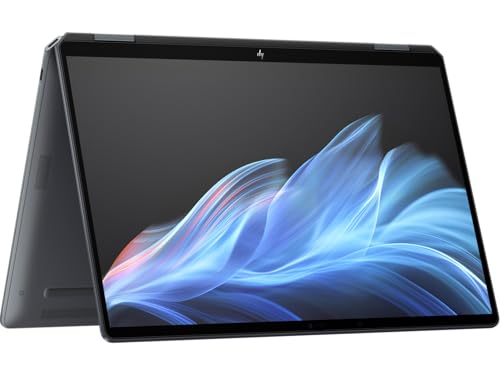
Quick naming note: HP’s own explanation of its 2024 rebrand confirms the Spectre line was folded into the OmniBook family, with the Spectre x360 convertible’s successor sold as the OmniBook Ultra Flip. HP rates this panel at 400 nits SDR and 500 HDR; Expert Reviews measured 382 cd/m² in general use and 612 cd/m² during HDR playback on the Ultra 7 258V configuration — a different processor tier than the Ultra 7 256V listed here, though the same chassis, panel and Gorilla Glass 5 coating.
The aluminum chassis feels premium, and the OLED panel’s deep contrast makes text and images legible even without fighting glare. With Thunderbolt 4/USB4 connectivity and an IR camera for Windows Hello, it’s built for people who want convertible flexibility without stepping down in display quality.
Two weak spots keep this from being a clean sweep, though: Expert Reviews, on that same 258V unit, called the webcam “frankly terrible” with “grainy, soft, noisy images,” and described the speakers as sounding “thin and metallic” with distortion at maximum volume. It also measured 17 hours 20 minutes of video-playback battery on the 258V configuration; the 256V model listed here hasn’t been independently tested, so that figure isn’t claimed as this laptop’s own.
Pros
- 2.8K OLED display, measured brighter than most OLED panels this size
- Premium aluminum build with Gorilla Glass 5
- Converts fully between laptop and tablet modes
Cons
- OLED panels can be more reflective than matte IPS in direct sun despite high brightness
- Webcam and speaker quality trail the rest of the build, per Expert Reviews (on the 258V configuration)
- No independent battery test published for this 256V configuration
8. LG gram Pro 17 (Largest and Lightest)
Largest and Lightest
Last update on 2026-10-22 / Affiliate links / Images from Amazon Product Advertising API
- ProcessorIntel Core Ultra 7 355
- GPUIntel integrated
- RAM32GB LPDDR5X
- Storage1TB SSD
- Display17″ WQXGA touch, 350 nits
- Battery77Wh, rated 28.5 hours
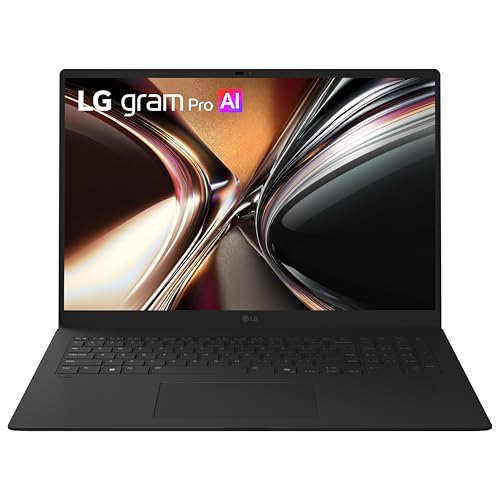
The gram Pro 17 is the biggest screen on this list, and it’s also light for that screen size at 3.3 lbs — well under what most 17-inch laptops weigh. The WQXGA touchscreen runs at 350 nits — the dimmest panel on this list — but with an effective anti-glare coating and 99% DCI-P3 color coverage that keeps it usable outdoors, just not class-leading on brightness.
Confirmed on LG’s own spec page: it’s MIL-STD-810H tested for durability, and the 77Wh battery is rated at 28.5 hours. Combined with the low weight, it holds up to being carried around all day, even if its brightness numbers trail the AMOLED options above.
Pros
- 17-inch display at a comparatively light 3.3 lbs
- MIL-STD-810H durability testing, confirmed by LG
- 77Wh battery, rated 28.5 hours
Cons
- 350 nits is the dimmest display on this list
Recommended Accessories
Two cheap accessories solve most of the remaining glare problem a bright screen alone can’t fix: an anti-glare screen protector, and a folding laptop sunshade for harsh direct sun.

Last update on 2026-10-22 / Affiliate links / Images from Amazon Product Advertising API
Which Laptop Should You Buy for Outdoor Use?
| Best For | Pick |
|---|---|
| Overall | Dell XPS 13 9345 |
| Brightest display | Samsung Galaxy Book6 Pro |
| Portable business use | Lenovo ThinkPad T14 Gen 6 |
| Convertible / 2-in-1 | Lenovo ThinkPad X1 Yoga Gen 10 |
| 2-in-1 for business | Samsung Galaxy Book5 Pro 360 |
| Apple / macOS | Apple MacBook Air 13″ |
| Premium convertible | HP OmniBook Ultra Flip 14 |
| Largest screen, lightest weight | LG gram Pro 17 |
Outdoor Laptop Use FAQ
How can I use my laptop outside more comfortably?
Wear polarized sunglasses, work under an umbrella or awning when possible, use a cap with a brim, and consider an anti-glare screen protector or a shade that clips over the screen when the sun is harsh.
Is it safe to use a laptop in direct sunlight?
Yes, but avoid prolonged direct sun exposure where possible — it adds significant heat on top of the laptop’s own thermal load, which can affect performance and long-term battery health.
Does sunlight or UV light damage a laptop?
UV light itself isn’t typically harmful to a laptop’s internals, but prolonged exposure can degrade the plastic body’s color and finish over time, and OLED displays in particular can be more sensitive to extended heat and light exposure.
What temperature range can a laptop safely handle?
Most laptops are rated to operate safely between 50-95°F (10-35°C). Operating outside that range for extended periods can affect performance and component lifespan.
Do anti-glare screen protectors actually work?
Yes — they meaningfully reduce reflections and also help keep fingerprints and smudges off the display, which matters more once you’re already fighting glare.
Final Thoughts on the Best Laptops for Outdoor Use
Not every laptop is built with outdoor visibility in mind, which is why the list above is narrower than a generic “best laptops” roundup — brightness, glare handling, and honest battery expectations at full brightness all matter more here than raw performance. Check the actual nits rating and panel finish before buying, and don’t assume the advertised battery life applies once you’re actually working in the sun.

Totally disagree on SB2. Its shiny touch screen is next to useless outdoors on full brightness – you need a non-touch matt screen.
Fair criticism — a glossy touchscreen is genuinely rough in direct sun regardless of brightness, and that’s a real trade-off worth calling out clearly rather than glossing over. Appreciate you pushing back on it.
some of the “HP Elite Dragonfly” laptops (not all of them, but some) are specified as 1000 nits!
Good catch, thanks — some Elite Dragonfly configurations do ship with a 1,000-nit HDR display option, which is a genuinely rare spec at that weight class. Worth calling out specifically for outdoor or bright-light use.
Did Lenovo fix it’s flickering screen issues that plagued multiple generations of the yoga? I have a gen 2 and it sucks. I would never buy another one because of Lenovo’s huge drop in reliability. You should research this before you recommend Yoga laptops.
Appreciate you flagging this, Ryan — display flickering has been a recurring complaint across a few Yoga generations for some users, though not universal. Worth checking current-generation reviews specifically before buying if that’s a dealbreaker for you.
I am into stock photography and travel often. From a month I was looking to replace my old laptop and was very confused about which one would be good for me. Thank you for this well-written guide, it’s helped me.
Andrew S.
Thanks, Andrew! For travel and stock photography work specifically, portability and a color-accurate screen tend to matter more day-to-day than raw power — glad the guide pointed you the right way.
Thank you for delivering up-to-date information. Nowadays, most blogs are filled with garbage and just want users’ clicks to earn money. It genuinely helped me. Thanks a lot. Noah J.