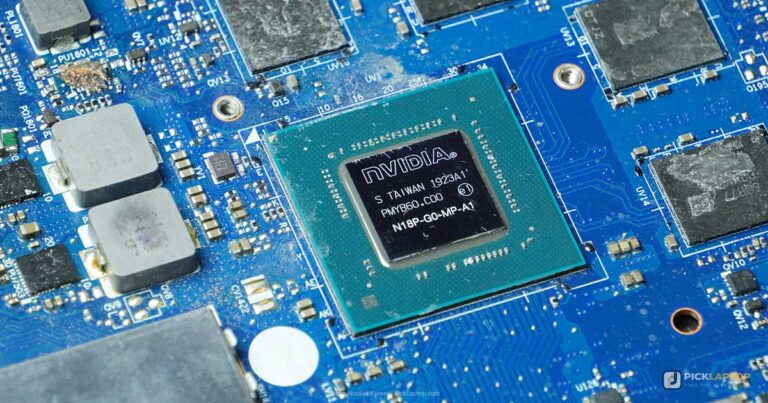
Does the chip inside your laptop matter for battery life anymore? For years the answer was “not really” — most Intel and AMD ultrabook chips landed in the same rough ballpark. That’s no longer true. ARM-based chips — Apple Silicon and Qualcomm’s Snapdragon X series — have opened a measurable gap: on Tom’s Hardware’s battery test, Snapdragon X Elite laptops ran 12 to nearly 16 hours against roughly 12 to 14 hours for comparable Intel Core Ultra machines, and Apple’s own MacBook Pro line topped 17 hours in the same round of testing.
That doesn’t make x86 obsolete for travel — it still wins on guaranteed software compatibility, since some professional tools (certain Adobe apps, specialized business software) still run better or exclusively on x86. The practical question for 2026 travel is which of those two things matters more to you: pick ARM if battery life is the priority, pick x86 if you need certainty that every program you rely on will run without emulation.
Editor’s Pick


Last update on 2026-10-08 / Affiliate links / Images from Amazon Product Advertising API
Apple Silicon’s efficiency lead is the most mature and best-supported version of the ARM battery advantage, with the widest native software support of any ARM platform.
- Apple M5 10-core CPU
- 16GB unified memory
- Up to 18 hours rated (video streaming)
- 2.71 lbs
What’s Inside
- 1 – Traveling Business Laptop Buyer's Guide
- 2 – Traveling Business Laptop Comparison Table
- 3 – Best Laptops for Traveling Business in 2026 — Reviews
- 3.1 – 1. Apple MacBook Air 13-inch M5 (Best Overall)
- 3.2 – 2. Lenovo Yoga Slim 7x (Best Business ARM)
- 3.3 – 3. Microsoft Surface Laptop 13.8-inch (Best Battery Life)
- 3.4 – 4. Microsoft Surface Pro 13-inch (Most Portable and 2-in-1)
- 3.5 – 5. LG gram 15 (Best x86 Compatibility Pick)
- 3.6 – 6. HP OmniBook 5 Flip (Cheapest)
- 4 – Recommended Accessories
- 5 – Which Traveling Business Laptop Should You Buy?
- 6 – Traveling Business Laptop FAQ
- 7 – Final Thoughts on Traveling Business Laptops
Traveling Business Laptop Buyer’s Guide
ARM vs x86: The Real 2026 Battery Question
Tom’s Hardware’s battery test put Snapdragon X Elite laptops in a 12-to-15:48 hour range, against roughly 12:21 to 13:45 for the Intel Core Ultra and Core i7 machines it tested alongside them — a real but modest gap, not the wide margin the “ARM lasts all day, x86 doesn’t” framing implies. Apple Silicon led both: the MacBook Pro (M3) ran past 17 hours on the same test. The gap comes from ARM’s chip architecture being built around power efficiency from the outset rather than added on top of a performance-first design — Tom’s Hardware doesn’t quantify how much of the difference that architectural choice accounts for versus other factors like display and software optimization.
The trade-off is software. Windows on ARM (Snapdragon) runs most mainstream apps natively or through Prism, its built-in emulator, but gaps remain — certain Adobe Creative Cloud apps and some specialized business or engineering software still run better, or only, on x86. If your workflow depends on something specific, confirm it runs on ARM before switching, or stick with x86 for the guarantee.
Weight and Portability
Under 3 lbs is the practical threshold for daily carry — the difference between 2.7 and 3.9 lbs is noticeable after a full day of walking through airports and between meetings. A 13 to 14-inch screen is the sweet spot for most business travel; anything larger adds bag weight for marginal screen benefit.
Storage: Skip the HDD Entirely
Every laptop on this list ships with an SSD, and that’s not a coincidence — a spinning hard drive has moving parts that don’t handle the drops, vibration, and temperature swings of actual travel well. 512GB is enough for typical business use; go higher if you keep large presentation files or media locally rather than in the cloud.
Display and Screen Size
Full HD is enough resolution for most business work — email, documents, video calls, presentations. A higher-resolution or larger display draws more battery for a benefit that matters mainly if you’re doing color-sensitive creative work on the road, which most business travel doesn’t require.
Traveling Business Laptop Comparison Table



Last update on 2026-10-08 / Affiliate links / Images from Amazon Product Advertising API
Best Laptops for Traveling Business in 2026 — Reviews
Six picks: three ARM machines proving the battery-life case, one x86 pick for guaranteed compatibility, and two budget-to-mid options at either end.
1. Apple MacBook Air 13-inch M5 (Best Overall)
Best Overall
Last update on 2026-10-08 / Affiliate links / Images from Amazon Product Advertising API
- ProcessorApple M5 (10-core CPU)
- GPUApple M5 (integrated)
- RAM16GB unified
- Storage512GB SSD
- Display13.6-inch Liquid Retina
- BatteryUp to 18 hours rated (video streaming), per Apple
This is the ARM efficiency story at its most mature — fanless, silent, and built for a full day of meetings, email, and document work without hunting for an outlet. macOS also carries the widest, most stable native software ecosystem of any ARM platform, so the compatibility trade-off that affects Windows-on-ARM barely applies here.
Apple rates this model at up to 18 hours of video streaming, but that figure covers one specific use case; the company’s own wireless-web rating for the same machine is 15 hours. Tom’s Hardware measured 15 hours 28 minutes on its own mixed-use battery test — closer to Apple’s web-browsing figure than its video number, and the more relevant estimate for a travel day that’s mostly email and documents rather than movies.
Push it into sustained heavy work — batch-exporting large files, hours of video calls back to back — and the same review measured the fanless chassis throttling under a sustained Cinebench load, with scores dropping from an initial 3,415 into the low 2,300s. That’s a rare edge case for typical business travel, not a daily concern.
Pros
- 18 hours rated for video, 15h28m measured in mixed use — all-day either way
- Silent fanless operation
- Widest native software support of any ARM platform
Cons
- Thermal-throttles under sustained heavy load
- Not Windows — a real factor if your company standardizes on it
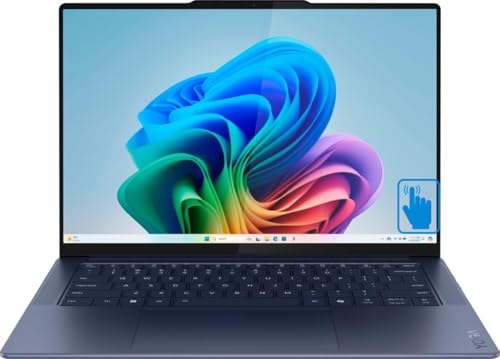
2. Lenovo Yoga Slim 7x (Best Business ARM)
Best Business ARM
Last update on 2026-10-08 / Affiliate links / Images from Amazon Product Advertising API
- ProcessorQualcomm Snapdragon X Elite X1E-78-100 (12-core)
- GPUAdreno (integrated)
- RAM16GB
- Storage512GB SSD
- Display14.5-inch 3K OLED touchscreen
- BatteryManufacturer MIL-STD-810H durability testing; runtime not independently verified for this configuration
The keyboard carries over ThinkPad-style key shaping and 1.5mm of travel, a Lenovo spec-sheet detail rather than a hands-on finding here — no independent review of this configuration covered typing feel in enough depth to cite. MIL-STD-810H is Lenovo’s durability testing standard for this model, useful context for anyone whose bag gets tossed around between flights, though it’s a manufacturer claim rather than a third-party stress test result.
On Windows-on-ARM specifically, Tom’s Guide found this exact model can’t run the desktop version of Google Drive, and Adobe apps including Premiere Pro and After Effects don’t work on it because of the Arm-based Snapdragon X Elite processor — confirm your specific software stack works before committing if creative or Google Workspace tools are part of your daily routine. That review tested the X1E-80-100 bin of the same Snapdragon X Elite chip rather than the X1E-78-100 listed for this unit; both are 12-core X Elite parts and the app-compatibility finding is about the ARM architecture rather than clock speed, so it carries over.
Pros
- ThinkPad-style keyboard with 1.5mm key travel
- MIL-STD-810H durability testing (manufacturer standard)
- 3K OLED display in a thin chassis
Cons
- Premiere Pro, After Effects, and desktop Google Drive don’t run natively
- No independent battery or build-quality testing found for this exact configuration
3. Microsoft Surface Laptop 13.8-inch (Best Battery Life)
Best Battery Life

Last update on 2026-10-08 / Affiliate links / Images from Amazon Product Advertising API
- ProcessorQualcomm Snapdragon X2 series (10- to 12-core, tier-dependent)
- GPUAdreno (integrated)
- RAM16GB (up to 64GB configs)
- Storage512GB, removable SSD
- Display13.8-inch PixelSense touchscreen, 120Hz
- BatteryUp to 20 hours rated, per Microsoft
Microsoft sells this chassis with a choice of Snapdragon X2 chips — NotebookCheck’s review tested the 10-core Snapdragon X2 Plus configuration and called out that its real-world performance deficit against the higher X2 Elite tier is small. Confirm which specific chip a listing ships before buying if the exact core count matters to you.
20 hours of rated battery life puts this at the top of this list on paper. NotebookCheck’s review doesn’t report a measured hour figure, describing the battery only as “very good”; no other independent lab has published a runtime measurement for this exact configuration, so treat 20 hours as Microsoft’s rating rather than a confirmed number.
For travel specifically, NotebookCheck found the ARM configuration ships with a glossy touchscreen and no anti-glare coating, which means real reflections working in a bright airport terminal or a window-side café table. If you do most of your work in bright, uncontrolled lighting, that’s a bigger deal than it sounds.
Pros
- Up to 20 hours rated battery life (manufacturer figure)
- Removable SSD storage
- 120Hz PixelSense touchscreen
Cons
- Glossy display, no anti-glare — real reflections in bright environments
- Rated battery figure not independently confirmed; same ARM app-compatibility caveats apply
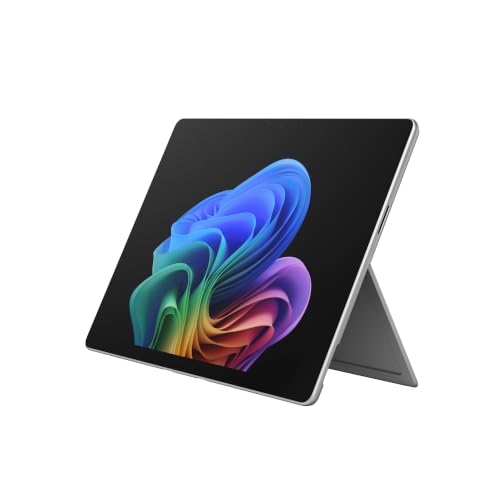
4. Microsoft Surface Pro 13-inch (Most Portable and 2-in-1)
Most Portable
Last update on 2026-10-08 / Affiliate links / Images from Amazon Product Advertising API
- ProcessorQualcomm Snapdragon X2 Elite X2E-78-100 (12-core)
- GPUAdreno (integrated)
- RAM16GB (higher configs available)
- Storage512GB SSD
- Display13-inch OLED touchscreen, detachable
- Battery15.5 hours rated, per Microsoft
NotebookCheck measured the tablet alone at 882 grams, about 1.94 lbs — lighter than any other pick on this list, though that figure is for the tablet by itself; the keyboard and pen, sold separately, add back some of the weight. Pull the keyboard off entirely at security or on a cramped tray table, and you’re holding just the display and pen — something a standard clamshell laptop can’t do at all.
Same Snapdragon platform, same trade-off: mainstream apps including Office and most browsers run through Windows’ Prism emulation without issue, but check any niche or legacy business-specific program for compatibility before you commit. NotebookCheck’s review doesn’t publish a measured battery-runtime figure, calling it only “decent,” so 15.5 hours below should be read as Microsoft’s rating. The keyboard and pen are typically sold separately, which adds to the real cost.
Pros
- Lightest option on this list at about 1.94 lbs for the tablet
- True detachable tablet form factor
- OLED touchscreen
Cons
- Keyboard and pen typically sold separately
- 15.5-hour figure is Microsoft’s rating, not a lab measurement; check niche software compatibility before buying
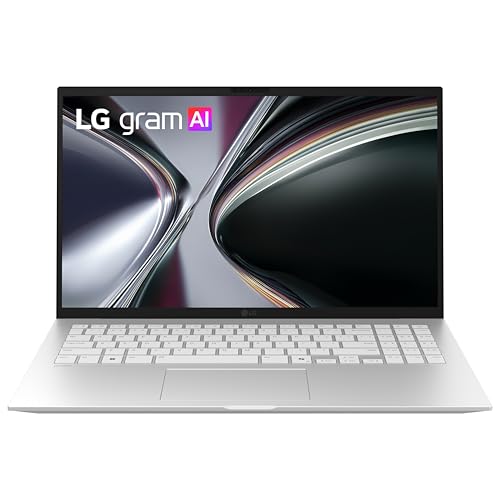
5. LG gram 15 (Best x86 Compatibility Pick)
Best x86 Compatibility Pick
Last update on 2026-10-08 / Affiliate links / Images from Amazon Product Advertising API
- ProcessorAMD Ryzen AI 7 350
- GPUAMD Radeon (integrated)
- RAM16GB
- Storage512GB SSD
- Display15.6-inch Full HD IPS touchscreen
- Battery72Wh, rated around 27 hours of video playback, per LG
If x86 compatibility matters more to you than chasing the absolute best battery number, this narrows the gap further than any other x86 pick here. LG lists a 72Wh battery rated around 27 hours of video playback and a weight of 1.29kg (about 2.84 lbs) for this configuration. Searches turned up no hands-on battery or performance test of this specific AMD Ryzen AI 7 350 configuration from any lab; the figures above are manufacturer specifications, not measured results, and should be treated accordingly.
Every program built for Windows runs here without needing an ARM64 build or an emulation layer, which is the point of choosing x86 over ARM in the first place. The 15.6-inch screen is also more working room than any of the ARM picks above, useful if screen real estate matters more to your workflow than absolute minimum weight.
Pros
- 72Wh battery rated around 27 hours, narrowing the ARM gap
- About 2.84 lbs, light for a 15.6-inch x86 laptop
- Full x86 software compatibility, no emulation needed
Cons
- No independent review has tested this specific configuration
- Rated battery still trails the top ARM picks on this list
6. HP OmniBook 5 Flip (Cheapest)
Cheapest

Last update on 2026-10-08 / Affiliate links / Images from Amazon Product Advertising API
- ProcessorIntel Core 5 120U
- GPUIntel Graphics (integrated)
- RAM8GB DDR5 (16GB config available — get this one)
- Storage512GB SSD
- Display14-inch 2K IPS touchscreen
- BatteryUp to 21 hours rated, per HP
This is the cheapest laptop on this list by a wide margin, and HP rates it at up to 21 hours of battery life on a traditional Intel chip. That figure is HP’s own number, not one any lab has measured: other reviews cover OmniBook 5 Flip variants running a Core 7 150U or an i5-1334U, and a separate OmniBook 5 review (non-Flip) running a Snapdragon chip that beat its own rating by a wide margin — but none of those cover the Core 5 120U configuration this ASIN ships with, so none of it transfers.
The 16GB configuration is worth the upgrade over the base 8GB — once you’re running email, video calls, and documents all at the same time, that’s what keeps a full business workload from bogging down.
Pros
- Cheapest laptop on this list by a wide margin
- 21-hour rated battery on traditional x86, per HP
- 2K touchscreen display at this price tier
Cons
- No independent test found for this exact configuration — battery and build quality are unverified manufacturer claims
- Base 8GB config feels tight — budget for the 16GB upgrade
Recommended Accessories


Last update on 2026-10-08 / Affiliate links / Images from Amazon Product Advertising API
Which Traveling Business Laptop Should You Buy?
| Best For | Pick |
|---|---|
| Best Overall | Apple MacBook Air 13-inch M5 |
| Best Business ARM | Lenovo Yoga Slim 7x |
| Best Battery Life | Microsoft Surface Laptop 13.8-inch |
| Most Portable | Microsoft Surface Pro 13-inch |
| Best x86 Compatibility | LG gram 15 |
| Cheapest | HP OmniBook 5 Flip |
Traveling Business Laptop FAQ
Is ARM (Apple Silicon or Snapdragon) or x86 (Intel/AMD) better for business travel?
It depends on which trade-off costs you more. Tom’s Hardware’s testing put Apple Silicon and Snapdragon X Elite ahead of comparable Intel machines by roughly two to four hours in mixed use — a real gap, but not the “all day versus half a battery” difference some marketing implies. Before switching to ARM, check the specific software you use daily against the vendor’s own ARM64 or Apple Silicon support page rather than assuming it will just work through emulation.
Do I need a dedicated graphics card for business travel?
No, for the vast majority of business tasks — sending email, joining video calls, and building slide decks put no real load on integrated graphics. A dedicated GPU mainly adds battery drain and weight without benefiting typical office workflows.
Should I get an SSD or HDD for a travel laptop?
SSD, without exception among current laptops — none of the picks above even offer an HDD option. Full-disk encryption (BitLocker or FileVault) is also worth factoring in: it adds negligible overhead on an SSD, so leaving it on all the time costs nothing, while the same encryption slows a mechanical drive by comparison.
Does Windows on ARM (Snapdragon) run all my normal software?
Most mainstream software runs natively or through Prism, Windows’ built-in x86 emulator, without a noticeable slowdown for typical office tasks. The gaps that remain are specific rather than general: on the Yoga Slim 7x reviewed above, for example, Tom’s Guide found Adobe Premiere Pro, After Effects, and the desktop Google Drive client don’t run on the Arm-based chip at all — not slower, not emulated, simply unavailable. Check your specific software vendor’s site for Arm64 support before switching if you rely on anything outside mainstream office apps and browsers.
How much RAM do I need for business travel?
16GB is the practical minimum for typical business multitasking — email, browser tabs, video calls, and documents running together. 8GB works for very light single-app use but leaves little room once more than a couple of those run at once, which is why the HP OmniBook above is worth upgrading past its base configuration.
Final Thoughts on Traveling Business Laptops
The old advice to “just get an Intel U-series chip” is too blunt for travel in 2026. Whether battery life or guaranteed software compatibility matters more for how you work decides the answer more than any single spec — ARM wins the first by a real but moderate margin, x86 still wins the second outright, and neither is the wrong choice.
If your travel work also involves photo or video editing on the road, our guide to laptops for GoPro video editing covers similar portability-versus-power trade-offs from that angle.