You’ve read enough Arch install threads to know the spec sheet never tells the whole story. Two laptops can share the same CPU and RAM, and one of them boots into a working Wi-Fi connection while the other leaves you tethering from your phone at 1am trying to find the right kernel module.
The questions to settle before you buy aren’t about power — Arch’s hardware requirements are low enough to be beside the point. They’re about which chipsets have in-kernel driver support, which ones need out-of-tree work, and how much of the Linux experience a vendor documents rather than leaving to the forums. Those three questions shape the seven 2026 laptops below.
Anonymity and amnesic sessions are a different priority than a rolling-release desktop. If that’s the goal instead, the Tails OS laptop guide is the one to read.
Editor’s Pick
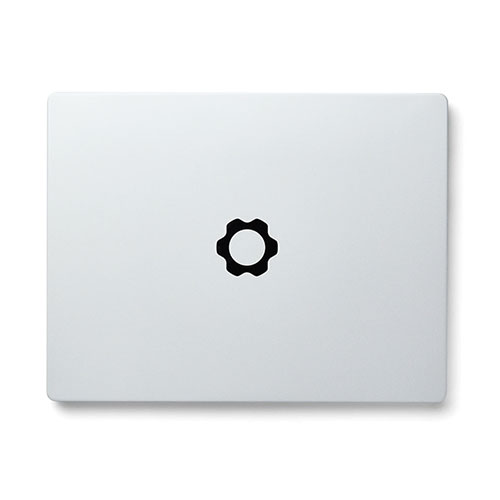
Framework Laptop 13
All-AMD integrated graphics on the in-kernel amdgpu driver, so there’s no Optimus setup to work through — and Framework is the only vendor here that names Arch on its own Linux support page.
- AMD Ryzen AI 300 series
- DDR5-5600, two slots, up to 96GB
- 13.5″ 3:2 matte, 2256×1504 or 2880×1920
- Four swappable Expansion Card bays
What’s Inside
- 1 – Best Laptops for Arch Linux Buyer's Guide
- 2 – Arch Linux Laptop Comparison Table
- 3 – Best Laptops for Arch Linux in 2026: In-Depth Reviews
- 3.1 – 1. Framework Laptop 13 (Best Overall)
- 3.2 – 2. Lenovo ThinkPad E16 Gen 2 (Best Business)
- 3.3 – 3. Dell 14 Laptop (Best Budget)
- 3.4 – 4. LG gram 15 (Best Ultraportable / Battery Life)
- 3.5 – 5. Lenovo Yoga 9i 2-in-1 (Best Convertible)
- 3.6 – 6. Framework Laptop 16 (Best with Dedicated GPU)
- 3.7 – 7. LG gram Pro 17 (Best Large-Screen)
- 4 – Recommended Accessories
- 5 – Which Arch Linux Laptop Should You Buy?
- 6 – Arch Linux Laptop FAQ
- 7 – Final Thoughts on Arch Linux Laptops
Best Laptops for Arch Linux Buyer’s Guide
Wi-Fi and Bluetooth Chipsets
Wireless is what fills the “why doesn’t my Wi-Fi work” threads on the Arch forums, and it has nothing to do with drivers you install — it’s about which chipset shipped inside the laptop in the first place. Intel and Qualcomm Atheros wireless chipsets have long-standing in-kernel driver support and tend to just work. Broadcom and some Realtek chipsets are the ones that generate forum threads, often needing an out-of-tree driver or a firmware package that isn’t guaranteed to keep working across kernel updates.
The catch is that the card is often a configuration choice rather than a property of the model — three of the picks below either ship several WLAN options under one product name or don’t publish the card at all. Match the exact card model on the listing you’re buying against the ArchWiki’s laptop category, which tracks model-specific compatibility notes.
Graphics: NVIDIA vs. AMD vs. Intel
AMD and Intel integrated graphics run on drivers that ship inside the kernel — amdgpu for Radeon, i915 and the newer xe driver for Intel — with Mesa supplying the userspace half. Nothing gets installed from a vendor site, and a kernel upgrade doesn’t leave you rebuilding a module before the display comes back.
Two things get merged here that shouldn’t be. The drivers are open source; the machine is not blob-free. Both AMD and Intel GPUs load binary microcode from Arch’s linux-firmware packages, and so do most wireless cards. What “open-source graphics” buys you on Arch is a driver that arrives with the kernel and needs no version matching against it — not a laptop free of proprietary firmware.
An NVIDIA hybrid-graphics laptop is the one arrangement on this list that needs a decision made before the display stack works the way you want. The ArchWiki’s NVIDIA Optimus page documents several different approaches to running a laptop with both an integrated and an NVIDIA discrete GPU — PRIME render offload and optimus-manager among them — each with its own setup steps and caveats. None of that is a dealbreaker if you’re comfortable with it, but it’s work an AMD or Intel-only laptop doesn’t ask of you.
If you need CUDA or 3D acceleration, an NVIDIA laptop is still the right call — just go in expecting an afternoon of setup rather than the hands-off arrangement the integrated options give you.
A machine built specifically for penetration testing rather than a general Arch desktop has a narrower set of hardware priorities, laid out in the ethical hacking laptop guide.
Processor Architecture: Why x86_64 Still Matters
Arch Linux’s official installer targets x86_64 only. That rules out two laptop categories that show up in generic “best Linux laptop” lists: Windows-on-ARM machines (Qualcomm Snapdragon X/X2 Elite) and Apple Silicon Macs. Both run Linux, but not the distribution the installation guide describes. Snapdragon laptops need Arch Linux ARM, a separate port that uses the Arch name under permission and maintains its own repositories. Apple Silicon Macs depend on the independent Asahi Linux project, whose flagship release is Fedora Asahi Remix rather than anything from Arch. If you’re installing Arch itself rather than a Linux distribution in general, stick to an Intel or AMD x86_64 laptop.
RAM and Storage
Arch’s own minimum is 512 MiB of RAM and 2 GiB of free disk space, per the official installation guide. That’s not a typo — it’s also the figure for a base install with no desktop environment, no browser and no toolchain on top of it. As a practical rule of thumb, 16GB of RAM and a 512GB SSD is where a daily-driver Arch desktop stops being an exercise in restraint.
Secure Boot and BIOS Access
Arch’s installer is manual rather than a guided, signed installer like some other distributions ship, so you’ll want a laptop whose BIOS/UEFI lets you toggle Secure Boot off — or enroll your own keys — without a locked-down vendor menu in the way. Business lines from Dell, Lenovo and HP tend to expose those settings, since IT departments need the same access for imaging fleets of machines.
Arch Linux Laptop Comparison Table



Last update on 2026-10-22 / Affiliate links / Images from Amazon Product Advertising API
Framework Laptop 13 and Framework Laptop 16 aren’t sold on Amazon, so they’re not in the table above — see their reviews below.
Best Laptops for Arch Linux in 2026: In-Depth Reviews
Seven machines, sorted by what each one asks of you after the install finishes.
1. Framework Laptop 13 (Best Overall)
Best Overall
Framework Laptop 13
The only pick here whose manufacturer publishes a Linux support page that names Arch — on a chassis where the ports, the memory and the mainboard itself are all replaceable parts rather than reasons to buy another laptop.
- ProcessorAMD Ryzen AI 300 series (up to 12-core)
- GPUAMD Radeon integrated
- RAMDDR5-5600, two slots, up to 96GB
- StorageUser-supplied M.2 2280 NVMe
- Display13.5″ 3:2 matte IPS
- OSSold with Windows 11 or Linux
“Supported” has a precise meaning on this machine, and it’s narrower than the marketing around Framework suggests. Framework’s Linux page names Ubuntu and Fedora as its officially supported distributions, with engineering collaboration behind them. Arch Linux sits one tier down, listed alongside Bazzite, NixOS and Linux Mint as community-supported — widely used by Framework customers, in the company’s words, but not validated by Framework itself. That’s still more than any other manufacturer on this list does; it is not a support contract, and an Arch install here is your problem to solve the same as anywhere else.
The hardware is what removes work. Every Ryzen AI 300 configuration Framework sells uses Radeon integrated graphics, so amdgpu in the kernel and Mesa’s RadeonSI and RADV in userspace cover the whole display stack, with no proprietary driver to install and nothing to rebuild after a kernel upgrade. The GPU still pulls AMD’s binary microcode out of linux-firmware, as the wireless card does. Open drivers, not a blob-free machine — and no second GPU to arbitrate between.
Four Expansion Card bays let you choose the port mix — USB-C, USB-A, HDMI, DisplayPort, microSD, Ethernet — and an Ethernet card is a useful thing to have in the bay while you’re sorting out a wireless driver from a live USB. Framework lists two DDR5-5600 SODIMM slots taking up to 96GB and M.2 storage to 8TB; the DIY Edition ships without RAM or a drive, so you pick the exact parts and know their model numbers going in rather than reading them off a retail listing afterwards.
Two costs. Ordering is direct rather than through Amazon, and the DIY Edition needs light assembly before first boot. Fan noise is the other: Engadget, reviewing the Ryzen AI 7 350 board, found plenty of fan noise and heat under heavy load and attributed it to a modular layout that puts all the CPU cooling on the mainboard itself, while PC Gamer, on the Ryzen AI 9 HX 370 board, calls fan noise improved on earlier Framework 13s without calling it solved — the fans still spin up for routine background work.
Pros
- Arch named on Framework’s own Linux page, in the community tier
- All-AMD integrated graphics — amdgpu in-kernel, no Optimus setup
- Two SODIMM slots to 96GB, user-supplied M.2 drive, swappable ports
Cons
- Framework’s official support covers Ubuntu and Fedora only
- Not sold on Amazon — direct order only
- Fan noise under load, a known trait of the modular layout
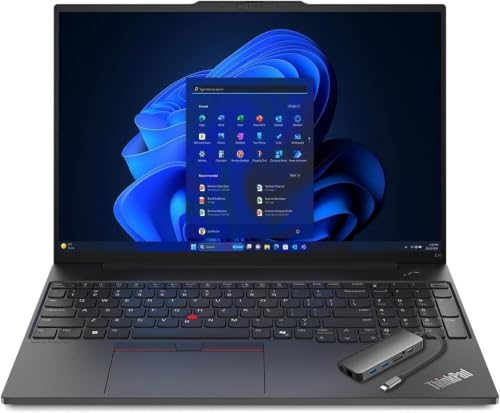
2. Lenovo ThinkPad E16 Gen 2 (Best Business)
Best Business
Last update on 2026-10-22 / Affiliate links / Images from Amazon Product Advertising API
- ProcessorAMD Ryzen 7 7735HS
- GPUAMD Radeon 680M (integrated)
- RAM16GB DDR5 (two slots, up to 64GB)
- Storage512GB PCIe Gen 4 SSD
- Display16″ WUXGA IPS
- OSWindows 11 Pro
Radeon 680M graphics put this one in the same position as the Framework — amdgpu is already in the kernel and there’s no discrete GPU in the picture. Wireless is where it needs attention, and this is the pick that demonstrates why the chipset question is a configuration question. Lenovo’s spec sheet lists five WLAN options for the E16 Gen 2 AMD, spread across Intel, MediaTek and Realtek. Two laptops with the same model name can therefore land on opposite sides of the Wi-Fi problem, and the card model printed on the listing is what tells you which one you’re getting.
The same document sets the ceilings: two DDR5 SODIMM slots to 64GB, and two PCIe 4.0 M.2 slots — one 2242, one 2280 — so a 16GB single-drive machine now becomes a 64GB two-drive machine later without buying a new laptop. MIL-STD-810H testing is listed. Starting weight is 1.78kg, or 3.92 lbs, which makes this a working 16-inch machine rather than something you forget is in the bag.
Panel choice matters more here than the IPS label does. Lenovo lists a 300-nit 45% NTSC WUXGA panel at the entry point, with 400-nit 100% sRGB WUXGA and WQXGA options above it. If your day is tiled terminals and small text, the entry panel is the configuration to skip.
One limitation to carry: every figure above comes from Lenovo’s own documentation. The Ryzen 7 7735HS configuration hasn’t been through a published lab test, so there’s no measured brightness, runtime or thermal number to hold the spec sheet against.
Pros
- Radeon 680M — amdgpu in-kernel, no hybrid graphics
- Two SODIMM slots to 64GB and two M.2 slots, per Lenovo’s spec sheet
- MIL-STD-810H tested
Cons
- WLAN card varies by configuration — Realtek is among the options
- Entry panel is 300 nits at 45% NTSC
- Specifications come from Lenovo’s spec sheet; no published lab test of this configuration
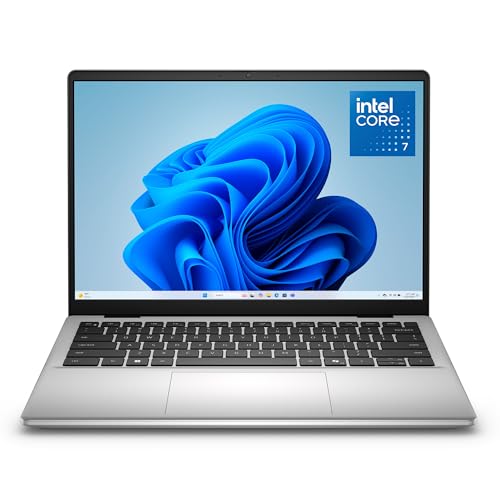
3. Dell 14 Laptop (Best Budget)
Best Budget
Last update on 2026-09-12 / Affiliate links / Images from Amazon Product Advertising API
- ProcessorIntel Core 7 150U
- GPUIntel integrated
- RAM16GB DDR5
- Storage1TB SSD
- Display14″ WUXGA IPS, anti-glare
- OSWindows 11 Home
A low-friction Arch install doesn’t take much money. Graphics are Intel integrated, so i915 and xe cover it from inside the kernel with nothing hybrid to configure, and Dell’s own product brief lists Ubuntu 24.04.2 as a factory operating system option on the DC14250 — a machine the manufacturer already ships with Linux on it has been through some vendor-side validation, even if you wipe it on day one.
The same brief also names the wireless card, and it’s the reason this pick needs a caveat the others don’t: a Realtek RTL8852BE, a 2×2 Wi-Fi 6 part — Realtek being the family that fills the driver threads, not the Intel card the rest of this list leans on. It’s the single component here most likely to cost you an evening, so check whether the ArchWiki has notes on that part before you commit to it.
Dell lists three battery sizes across the line at 41Whr, 54Whr and 64Whr, and 300-nit anti-glare panels at both 1920×1200 and 2560×1600. Those are Dell’s numbers — no review outlet has published measurements of this configuration.
16GB of RAM and a 1TB drive at this tier leave room for a desktop environment, a browser and a toolchain without rationing storage — comfortable for daily use and for working through the install itself, though a heavier multi-container development setup will want more RAM than this configuration carries.
Pros
- Intel integrated graphics — i915/xe in-kernel, nothing hybrid
- Ubuntu 24.04.2 listed by Dell as a factory OS option
- 16GB RAM and 1TB storage at the entry tier
Cons
- Realtek RTL8852BE wireless — the chipset family that generates driver threads
- Consumer chassis, no military-standard durability testing listed
- Every figure is Dell’s own; nothing measured has been published
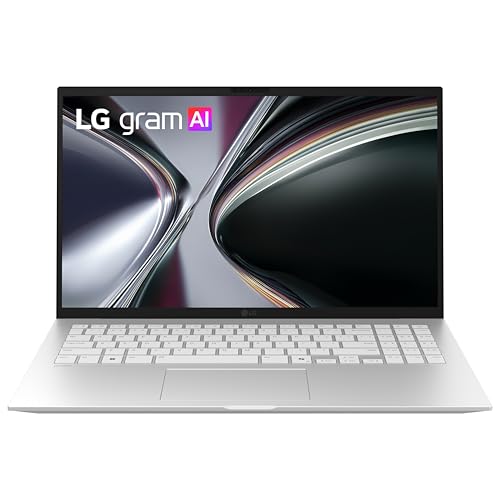
4. LG gram 15 (Best Ultraportable / Battery Life)
Best Ultraportable
Last update on 2026-10-22 / Affiliate links / Images from Amazon Product Advertising API
- ProcessorAMD Ryzen AI 7 450
- GPUAMD Radeon (integrated)
- RAM16GB
- Storage512GB SSD
- Display15.6″ FHD IPS touch
- BatteryRated up to 28 hours video playback
A 15.6-inch screen at 2.8 lbs is rare for the size class. LG lists the 15Z95U at 2.8 lbs and 0.7 inches, rates it at up to 28 hours of video playback, and says it passed seven MIL-STD-810H tests — that last part being the unusual one for a chassis this light.
Read the battery rating for what it is. LG’s own footnote puts the conditions at 150 nits with wireless off and audio through earphones, which is a laboratory playback loop rather than a working day. It’s a useful marker of where the machine sits against other ultraportables and a poor predictor of what you’ll see with Wi-Fi up and a browser open.
Radeon integrated graphics again, so amdgpu handles the display side and there’s no discrete GPU to arbitrate. Wireless is the open item: LG’s 2026 listing doesn’t name the WLAN card, and the previous AMD gram 15 shipped a Wi-Fi 6E AW-XM514N — a different generation, so don’t assume it carries over. This is one to look up on the specific SKU before ordering.
The display is the compromise. FHD across 15.6 inches works out to a lower pixel density than the 14-inch WUXGA panels elsewhere on this list, which shows up in small text more than in anything else. LG’s ratings also stand unchecked: nobody outside LG has published measurements of the Ryzen AI 400-series gram 15.
Pros
- 2.8 lbs with seven MIL-STD-810H tests passed, per LG
- AMD Radeon integrated graphics — amdgpu, no hybrid setup
- LG rates up to 28 hours of video playback
Cons
- FHD across 15.6 inches — lower pixel density than the 14-inch picks
- WLAN card not named in LG’s listing
- 28-hour figure is LG’s laboratory playback loop, not a working day
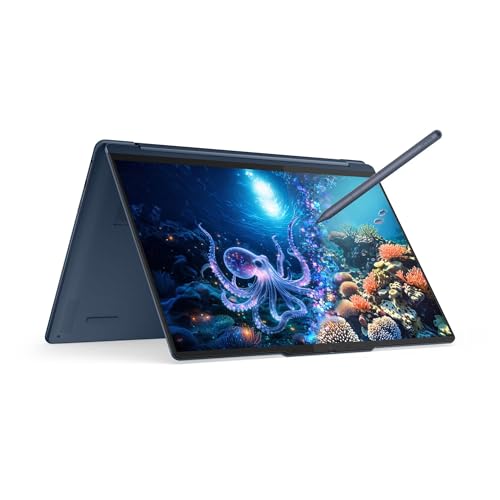
5. Lenovo Yoga 9i 2-in-1 (Best Convertible)
Best Convertible
Last update on 2026-10-22 / Affiliate links / Images from Amazon Product Advertising API
- ProcessorIntel Core Ultra 7 355
- GPUIntel integrated
- RAM32GB LPDDR5X
- Storage1TB NVMe SSD
- Display14″ 2.8K OLED touch
- OSWindows 11 Pro
Convertibles are thin on the ground in Arch recommendations, largely because touchscreen and pen behavior depends on the exact digitizer rather than on the laptop’s name. The hardware underneath this one is the easy kind: Core Ultra 7 355 with Intel integrated graphics, and Ultrabookreview lists the wireless as an Intel BE201 Wi-Fi 7 card — an iwlwifi part, which puts the chipset question on the settled side for once.
LaptopMedia measured this generation’s 2.8K OLED at 503 nits in SDR with 100% sRGB and 100% DCI-P3 coverage, and recorded 15 hours 39 minutes of offline video playback. The same review put screen reflectance at 134 GU, which is a high-gloss figure — a window behind you is where this panel gets difficult.
Audio is the unexpected part for a chassis this thin, and it’s also where the generation matters. Ultrabookreview counts four speakers on the Core Ultra 7 355 model — two firing down from the base and two tweeters built into the screen hinge — with LaptopMedia describing the result as fuller and more spacious than compact laptops usually manage. Earlier Yoga 9i generations used a rotating soundbar in the hinge instead; that’s a different design, so reviews of the previous model are describing different hardware.
Two things to weigh. Ultrabookreview recorded fans reaching 40 dBA in Performance mode. And touchscreen and stylus support still varies by panel and digitizer, so search the ArchWiki and the forums for this exact model before committing if pen input is part of how you work. The 32GB of LPDDR5X is soldered — the configuration you order is the one you own.
Pros
- Intel graphics and an Intel BE201 Wi-Fi 7 card — iwlwifi, no hybrid GPU
- 503-nit OLED at 100% sRGB and 100% DCI-P3, measured by LaptopMedia
- Four speakers with hinge-mounted tweeters on this generation
Cons
- 134 GU screen reflectance — difficult in bright rooms
- Touchscreen and stylus support worth confirming for this exact panel
- 32GB LPDDR5X is soldered, and fans reach 40 dBA in Performance mode
6. Framework Laptop 16 (Best with Dedicated GPU)
Best with Dedicated GPU
Framework Laptop 16
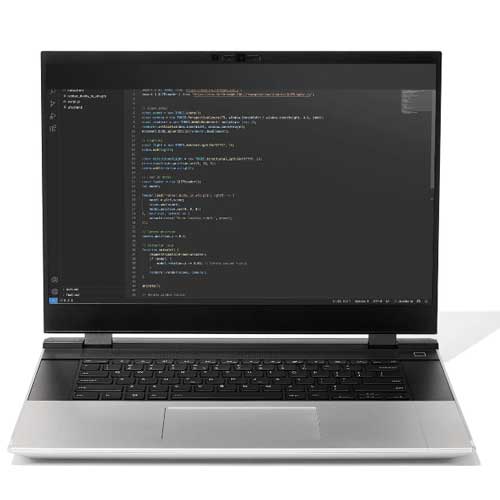
A discrete NVIDIA GPU that unbolts — the RTX 5070 module comes out and an AMD module or an empty bay shell goes in, which no other laptop here can offer.
- ProcessorAMD Ryzen AI 300 series
- GPUNVIDIA RTX 5070 (modular)
- RAMDDR5-5600, two slots, up to 96GB
- StorageUser-supplied M.2 NVMe
- Display16″, 2560×1600, 165Hz
- OSSold with Windows 11 or Linux
CUDA, 3D rendering and gaming are the reasons to accept a discrete GPU on an Arch machine, and the Laptop 16 is the one pick here where that decision stays reversible. Framework sells the graphics bay as a module — RTX 5070 in 8GB or 12GB GDDR7, an AMD Radeon RX 7700S, or a plain Expansion Bay Shell with no GPU at all — so a machine bought for CUDA work can be turned back into an all-AMD laptop later by swapping a part rather than the laptop.
With the NVIDIA module fitted, though, this is a hybrid-graphics laptop like any other: a proprietary driver, an offload method to choose, and a driver-to-kernel pairing to keep an eye on through rolling updates. Framework’s Linux page doesn’t change that, and it doesn’t put Arch in the official tier either — the official tier is the same two distributions as on the Laptop 13, and Arch sits below it in the community list on both machines. What Framework does provide is documentation of the Linux experience on its own hardware, which is more than the other vendors on this list attempt.
Memory goes to 96GB across two DDR5-5600 slots, and Framework recommends its 240W adapter with a graphics module fitted. Gizmodo tested the Ryzen AI 7 350 board with the RTX 5070 module and wrote that the fans never reached the noise level of the other 14- and 16-inch laptops it had tested recently, and found the two side-firing speakers not up to media on their own — budget for headphones.
Pros
- Swappable graphics module — RTX 5070, RX 7700S, or no GPU at all
- Quieter under load than the other laptops of this size Gizmodo tested recently
- Up to 96GB DDR5-5600 and a user-supplied drive
Cons
- Hybrid NVIDIA graphics — full Optimus configuration required
- Arch is community-supported by Framework, not officially supported
- Side-firing speakers are weak; not sold on Amazon
7. LG gram Pro 17 (Best Large-Screen)
Best Large-Screen
Last update on 2026-10-22 / Affiliate links / Images from Amazon Product Advertising API
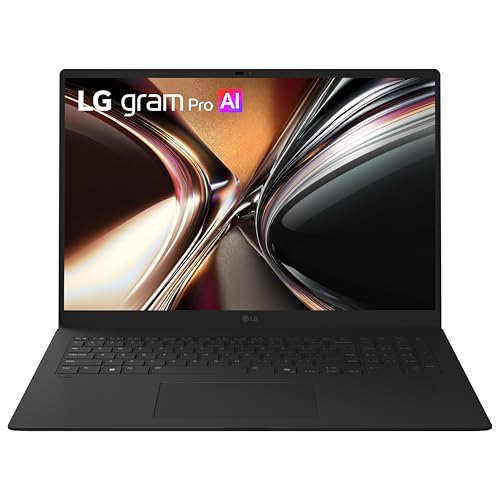
- ProcessorIntel Core Ultra 7 355
- GPUIntel integrated
- RAM32GB LPDDR5X
- Storage1TB NVMe SSD
- Display17″ WQXGA touch
- BatteryRated up to 26.5 hours video playback
Screen area is the whole argument for this one: 17 inches at 2560×1600 holds a couple of terminals, a documentation pane and a browser side by side without a second display. LG lists this touchscreen configuration at 3.3 lbs with 32GB of LPDDR5X, a 1TB drive and a rating of up to 26.5 hours of video playback, and LaptopMedia’s listing for the 17Z90U puts it at 1.50kg, which is the same figure.
Two weight figures circulate for this model: the non-touch gram Pro 17 is the 3 lb machine, and the touch panel adds the rest. A listing quoting 3 lbs next to a touchscreen is mixing SKUs.
Driver-wise it matches the Yoga 9i: the same Core Ultra 7 355, the same integrated graphics, no second GPU in the path. Wireless is the same unknown as the gram 15 — LG doesn’t name the card, so it goes on the pre-order checklist.
The battery rating comes from the same video-playback loop as the gram 15’s, and the 2026 gram Pro 17 hasn’t been measured by anyone outside LG either. 32GB and a 1TB drive do run VMs and containers alongside a desktop environment, which is the part of the pitch the specifications settle.
Pros
- 17-inch 2560×1600 IPS touch panel at 3.3 lbs
- Intel integrated graphics — in-kernel driver, no hybrid GPU
- 32GB LPDDR5X and 1TB NVMe as configured
Cons
- LG’s listing doesn’t identify the wireless card
- Rated runtime is LG’s own; nothing measured has been published
- A 17-inch laptop is still a 17-inch laptop in a bag
Recommended Accessories


Last update on 2026-10-22 / Affiliate links / Images from Amazon Product Advertising API
Which Arch Linux Laptop Should You Buy?
| Best For | Pick |
|---|---|
| Overall | Framework Laptop 13 |
| Business | Lenovo ThinkPad E16 Gen 2 |
| Budget | Dell 14 Laptop |
| Ultraportable / Battery | LG gram 15 |
| Convertible | Lenovo Yoga 9i 2-in-1 |
| Dedicated GPU | Framework Laptop 16 |
| Large Screen | LG gram Pro 17 |
Arch Linux Laptop FAQ
What are the minimum hardware requirements for Arch Linux?
512 MiB of memory and 2 GiB of disk, on an x86_64 machine. Those figures describe a base system as the installer leaves it — a shell and a package manager. Everything you add afterwards is what sets the real number: 16GB and 512GB is the practical starting point, not the official minimum.
Does Arch Linux work well with NVIDIA graphics cards?
It works, but a two-GPU laptop needs a decision rather than a default, and which of the documented approaches suits you depends on your compositor and display server. The part people underestimate is maintenance rather than installation: the proprietary driver is tied to the kernel version, so a rolling-release distribution puts that pairing in front of you more often than a fixed-release one does.
Can I install Arch Linux on an ARM laptop like a Snapdragon X Elite machine?
Not with the standard installer. The port that does run on ARM is a separate project with separate repositories and separate maintainers, so package availability, update timing and the state of the AUR on that platform are all different questions from the ones the ArchWiki answers. Snapdragon laptops also carry their own firmware and device-tree problems on top of that.
Can I install Arch Linux on a MacBook with Apple Silicon?
No. The practical difference is bigger than the name: the Apple Silicon port depends on reverse-engineered drivers for Apple’s own GPU, display controller and power management, so what works is decided by that project’s progress rather than by the mainline kernel. Feature coverage varies by Mac generation, and it is a Fedora-based system rather than an Arch one.
How do I check if a laptop’s Wi-Fi chipset works well with Arch Linux?
Find the card model, not the laptop model — one product name can cover half a dozen different wireless cards, and the answer lives on the specific SKU’s spec sheet or in a retailer’s detailed listing. If you can get to the machine first, lspci -k from a live USB names the card and the driver bound to it in one line, which settles the question before you spend anything.
Do I need to disable Secure Boot to install Arch Linux?
Usually, unless you’re set up to enroll your own keys — Arch doesn’t ship a signed shim the way some distributions do. Enrolling your own keys is a supported path and documented on the ArchWiki, but it’s extra work at install time, so an accessible BIOS/UEFI menu makes the first evening shorter either way.
Is a business laptop better than a consumer laptop for Arch Linux?
Not inherently — the cheapest pick above is a consumer machine. What business lines tend to bring is unlocked firmware settings and spec sheets detailed enough to tell you which wireless card is inside, and that documentation matters more than the badge on the lid. A consumer laptop with an Intel card and a BIOS you can get into beats a business laptop whose card nobody publishes.
Final Thoughts on Arch Linux Laptops
Check the wireless card and the graphics arrangement before the CPU benchmark. Arch runs on very little hardware; whether your first week is quiet or spent on the forums comes down to whether the parts underneath have drivers that ship with the kernel. And on several of these machines that answer isn’t on the product page at all — it’s in the fine print of the specific listing you’re buying from.