Published July 2026 — covering Apple’s June 2026 WWDC announcement
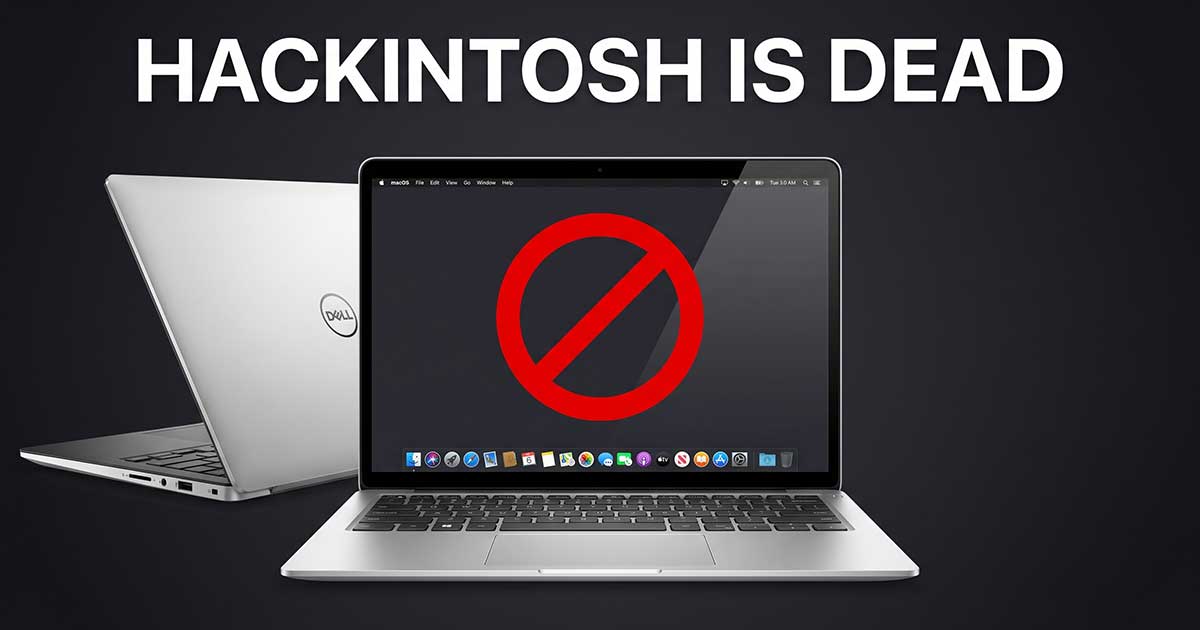
For close to two decades, a dedicated community of hobbyists has been installing macOS on regular PC hardware — no Apple logo required. That project, known as Hackintosh, just got its official expiration date. At WWDC 2026 in June, Apple announced macOS 27 “Golden Gate,” and buried in the announcement is the line that ends the road for traditional Hackintosh builds: it runs on Apple Silicon only. No Intel Mac, real or spoofed, will ever run it.
If you’re running a Hackintosh build today, or thinking about starting one, here’s what actually changed, what it means for the machine you already have, and why there’s no realistic workaround this time.
What’s Inside
What Golden Gate Actually Changed
macOS Golden Gate was announced at WWDC 2026, and it’s the first version of macOS built to run exclusively on Apple Silicon. Apple had already signaled this was coming — macOS 26 Tahoe, released in September 2025, was confirmed at WWDC 2025 as the last major version that would support Intel hardware. Golden Gate is the follow-through: no Intel Mac, and by extension no Hackintosh, can install it.
The technical reason isn’t just Apple drawing a line for its own sake. Golden Gate’s on-device AI features lean on the Neural Engine hardware built into Apple Silicon chips — hardware that simply doesn’t exist on Intel Macs or on any PC hardware a Hackintosh build spoofs. That’s not a driver or compatibility gap software can bridge; it’s a missing physical component.
Why macOS Tahoe Is the Permanent Ceiling
A Hackintosh works by getting macOS to believe it’s running on genuine Apple hardware, using x86 processors and drivers that mimic real Mac components closely enough to boot and run. That approach has always depended on macOS itself still being built for x86 architecture underneath. Golden Gate removes that foundation entirely — there’s no x86 version to spoof your way into anymore.
That makes macOS Tahoe (macOS 26) the last version any Hackintosh build will ever be able to run, permanently. Not “until the next update fixes it” — permanently, because there’s no future x86 macOS release for the Hackintosh community to eventually catch up to.
What About an ARM Hackintosh?
The obvious next question, raised directly in developer community discussion when Golden Gate was announced: could someone build an ARM-based Hackintosh instead, using Snapdragon or similar ARM PC hardware to spoof Apple Silicon? In principle, macOS on ARM already exists — it’s what real Apple Silicon Macs run. In practice, this isn’t a realistic path. Apple Silicon includes deeply integrated, custom hardware (the Secure Enclave, custom Neural Engine, unified memory architecture) that generic ARM PC hardware doesn’t replicate, and there’s no established tooling or community infrastructure for it the way there was for x86 Hackintosh over the years. It’s a theoretical idea discussed in forums, not a working project.
What This Means If You Have an Existing Hackintosh Build
Your build isn’t going to stop working overnight. macOS Tahoe will continue receiving security patches for a while — reports point to security patches continuing until roughly 2028, following Apple’s typical two-year security-only support window after a version stops getting new features. But the feature freeze starts now: Tahoe is what your Hackintosh will run for the rest of its useful life, with no path to any macOS version after it.
Practically, that means: new macOS features, new app requirements tied to newer OS versions, and eventually security patches will all stop reaching your build on the same fixed timeline as an actual Intel Mac from the same era — except your Hackintosh never had Apple’s hardware warranty or support to begin with.
Should You Still Build a Hackintosh in 2026?
Honestly, no — not as a long-term platform. A new Hackintosh build in 2026 buys you, at best, a year or two of security patches on a version of macOS that’s already the final Intel-compatible release. If your goal is genuinely running macOS long-term, actual Apple Silicon hardware is the only path with a future in front of it rather than behind it.
If you’re finally making that jump, our guide to Apple Silicon MacBooks for everyday use and our broader buying guides cover current M-series options across budgets.