Working outdoors sounds better than it looks on screen. Take a laptop into open sunlight and the display washes out, the reflections turn the panel into a mirror, and after twenty minutes the chassis is uncomfortably warm to touch.
Two separate problems are at work: a visibility problem you can mostly solve with brightness, positioning and shade, and a heat problem you cannot solve at all, only avoid. This guide handles both, with the actual numbers manufacturers publish rather than guesses.
Also read: Best laptops for outdoor work
What’s Inside
- 1 – How Many Nits You Actually Need Outdoors
- 2 – The Heat Risk Is Real, and Manufacturers Publish the Limits
- 3 – How Can I Use My Laptop Outside in the Sun?
- 3.1 – 1. Maximize the Laptop's Screen Brightness
- 3.2 – 2. Turn On a High-Contrast Theme
- 3.3 – 3. Find a Shady Spot
- 3.4 – 4. Face the Sun
- 3.5 – 5. Wear Dark Clothes
- 3.6 – 6. Use Polarized Sunglasses, With Care
- 3.7 – 7. Wear a Wide-Brimmed Hat
- 3.8 – 8. Use an Anti-Glare Screen Protector
- 3.9 – 9. Invest in a Laptop Shade or Hood
- 3.10 – 10. Get a Laptop Built for Outdoor Use
- 4 – DIY Fixes That Cost Nothing
- 5 – Keeping a Laptop Cool and Charged Outdoors
- 6 – Questions About Using a Laptop Outdoors
- 7 – Final Thoughts on Working Outdoors With a Laptop
How Many Nits You Actually Need Outdoors
Screen brightness is measured in nits (candelas per square meter), and this is the specification that decides whether outdoor work is pleasant, tolerable or impossible.
A typical mainstream laptop sits around 250 to 400 nits. Apple lists the MacBook Air at 500 nits, which is towards the bright end of ordinary consumer machines. Panels genuinely designed for daylight go far higher — Dell’s Latitude 7330 Rugged Extreme specifies a 1400-nit display, and that gap is the difference between squinting and simply reading.
Peak brightness and sustained brightness are not the same number. Many OLED and mini-LED laptops advertise a high peak figure that applies to a small highlighted area of HDR content, not to a full white document window. When comparing panels for outdoor use, look for the full-screen or SDR brightness figure rather than the headline HDR peak.
Contrast matters as much as raw output. In direct sun, ambient light reflecting off the panel raises the black level, which collapses the effective contrast ratio no matter how bright the backlight is. That is why a 400-nit matte screen in shade often reads better than a 500-nit glossy one in full sun.
Matte Versus Glossy in Daylight
Glossy panels reflect specularly: the sun, the sky and your own face come back at you as sharp mirror images. Move your head slightly and the reflection moves off the text you were reading, which is why glossy is usable outdoors only if you can control the angle.
Matte and anti-glare coatings scatter that reflection instead of bouncing it back cleanly. Nothing disappears — the same light energy is still hitting the panel — but it is spread into a diffuse haze rather than a defined mirror image, which is much easier to read through. The cost is slightly softer text and a marginal reduction in perceived contrast indoors.
For outdoor use specifically, matte wins. Apple’s Nano-texture glass option and the anti-glare panels on business and rugged laptops exist precisely because diffuse scattering beats specular reflection when you cannot control the light source.
The Heat Risk Is Real, and Manufacturers Publish the Limits
This is the part of outdoor laptop use that gets treated as a vague caution. It isn’t vague. Manufacturers state an ambient operating range in their own specifications, and it is narrower than most people assume.
Apple states plainly: use a Mac laptop where the ambient temperature is between 50° and 95° F (10° and 35° C). That guidance is in Apple’s own support document on keeping your Mac laptop within acceptable operating temperatures. Dell publishes a comparable figure — the XPS 15 9530 specification sheet gives 0°C to 35°C (32°F to 95°F). Both top out at 35°C ambient. A 30°C day with the laptop sitting in direct sun puts the air immediately around the chassis well past that.
Ambient air temperature is not the whole story outdoors, because a dark laptop lid absorbs solar radiation and heats well above the surrounding air. The cooling system is designed to reject heat into ambient air; when that air is already near the limit and the case is being heated directly by the sun, the fans have nowhere to put it.
The result is thermal throttling — the chip drops clock speed to protect itself, and the machine gets slow. That behavior is a designed-in safety response rather than a fault, and our guide on diagnosing a laptop that runs too hot covers how to tell throttling apart from an actual cooling failure.
Heat and the Battery
Lithium-ion cells degrade faster at high temperature, and unlike throttling that damage does not reverse when things cool down. Apple’s storage guidance for a Mac laptop when it is not in use runs from –13° to 113° F (–25° to 45° C), a wider band than the operating range but still well below what a closed car reaches on a hot afternoon.
Never leave a laptop in a parked car. Apple’s own instruction is direct — “Don’t leave your Mac laptop in your car, because temperatures in parked cars can exceed this range.” The National Weather Service notes that sunlight can cause the inside of a car to heat up very quickly, with vehicular heatstroke recorded when outside temperatures were below 70°F. A boot or glovebox is not meaningfully cooler.
How Can I Use My Laptop Outside in the Sun?
1. Maximize the Laptop’s Screen Brightness
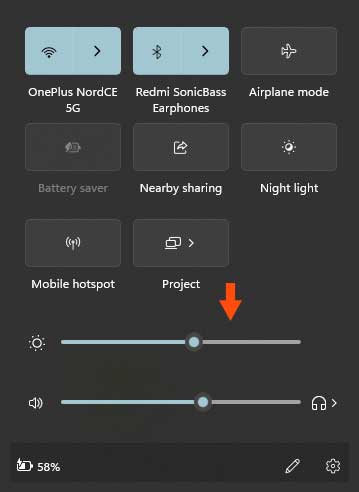
The obvious first move, and the one with a real battery cost — the backlight is typically the largest single power draw in a laptop, so running at 100% outdoors will shorten runtime noticeably.
Most laptops have dedicated brightness keys on the function row, sometimes needing the Fn modifier depending on the model. In Windows 11 the slider is in Settings > System > Display or in the quick settings panel opened with Windows + A. On macOS it is System Settings > Displays.
Turn off adaptive brightness while you are outside. Windows 11 exposes this under Settings > System > Display > Brightness as “Change brightness automatically when lighting changes”, and ambient light sensors frequently misjudge outdoor conditions and dim the panel at exactly the wrong moment. Also disable any content-adaptive brightness setting, which dims for dark content and makes text harder to read outdoors.
2. Turn On a High-Contrast Theme
Raising contrast helps because ambient light is lifting the black level. Pure black text on pure white does more for outdoor legibility than a subtle gray-on-white theme.
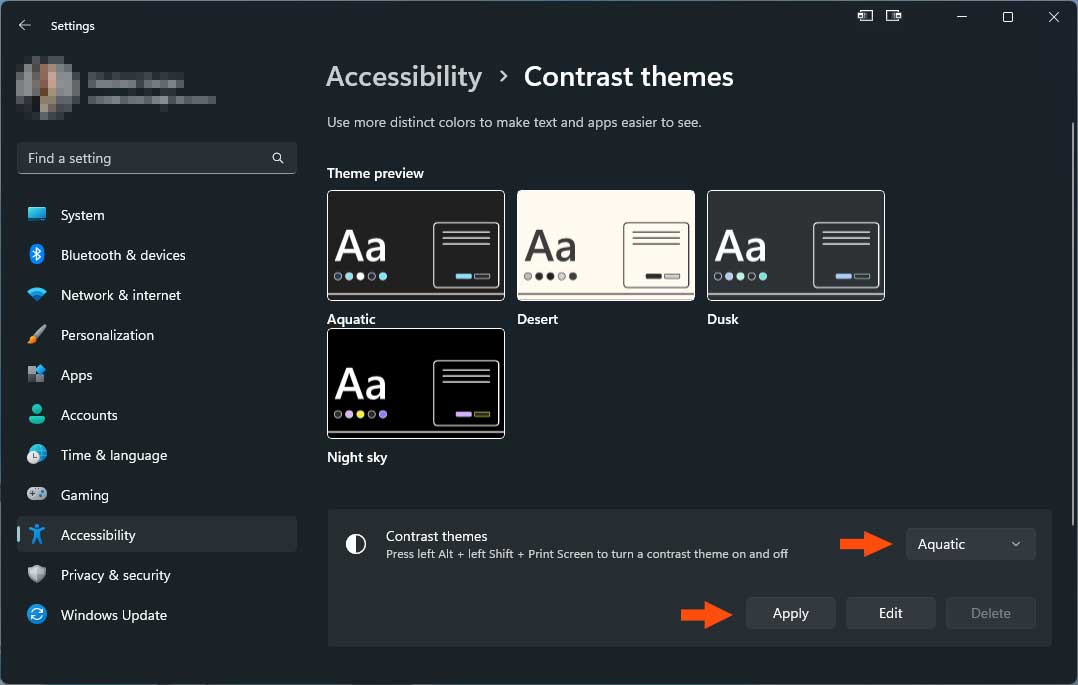
On Windows 11: Start > Settings > Accessibility > Contrast themes, then pick a theme and select Apply. Microsoft documents the full list in its contrast themes guide.
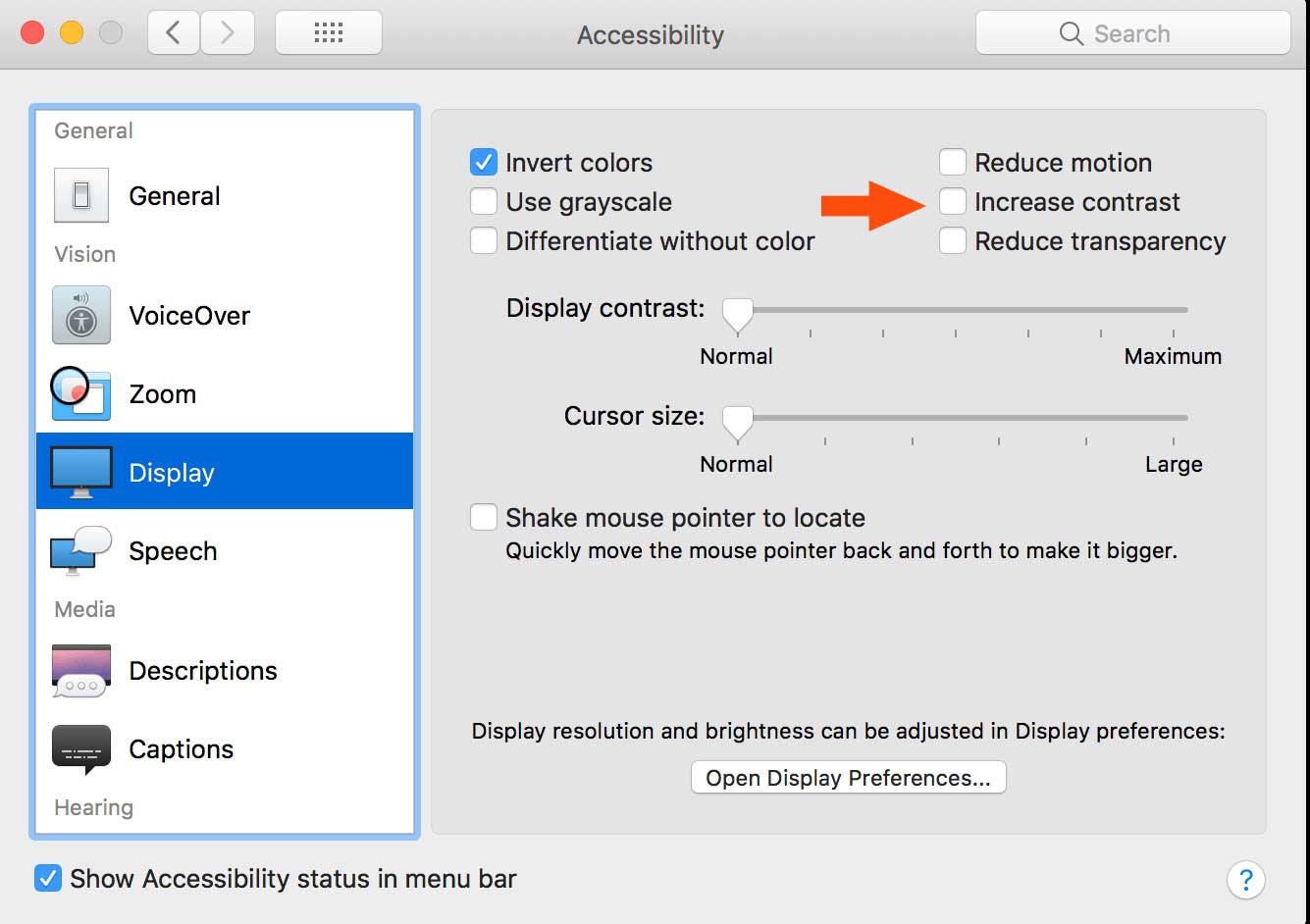
On macOS: Apple menu > System Settings > Accessibility > Display, then turn on Increase contrast. Reduce transparency in the same pane also helps, since translucent window backgrounds are harder to read against bright surroundings.
Light mode beats dark mode outdoors, which reverses the usual advice. A dark interface has less light output overall to compete with the sun, and its dark areas act as a better mirror for reflections.
3. Find a Shady Spot

This solves both problems at once, which nothing else on the list does. Shade removes the direct solar load that pushes the chassis past its ambient rating, and it removes the light source causing the reflections.
A tree, an awning, an umbrella or the shadow side of a building all work. Track the shade as the sun moves rather than staying put and letting it drift off you.
4. Face the Sun
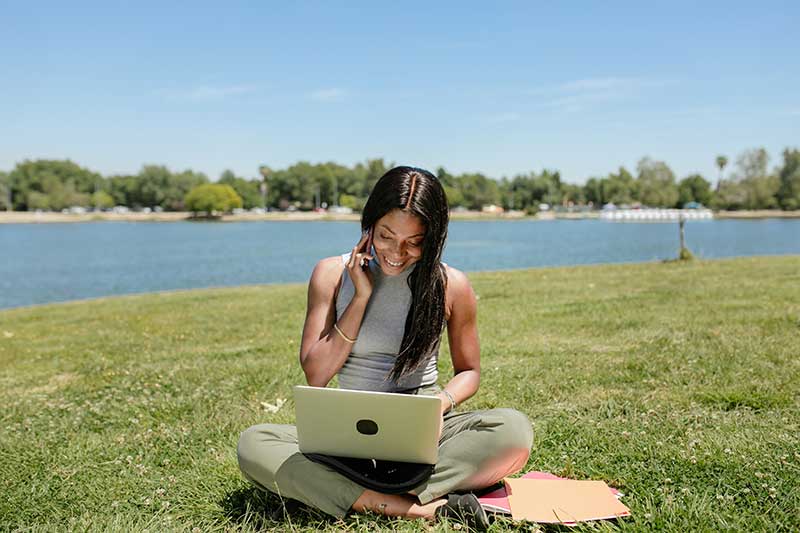
With the sun behind you it sits in the reflection path and bounces straight off the panel into your eyes. Turning to face it puts the sun behind the screen instead, so the lid shades the display and the reflection has nowhere bright to come from.
The trade-off is that you are now looking towards the sun, so this pairs badly with a low sun and well with a hat or sunglasses.
5. Wear Dark Clothes
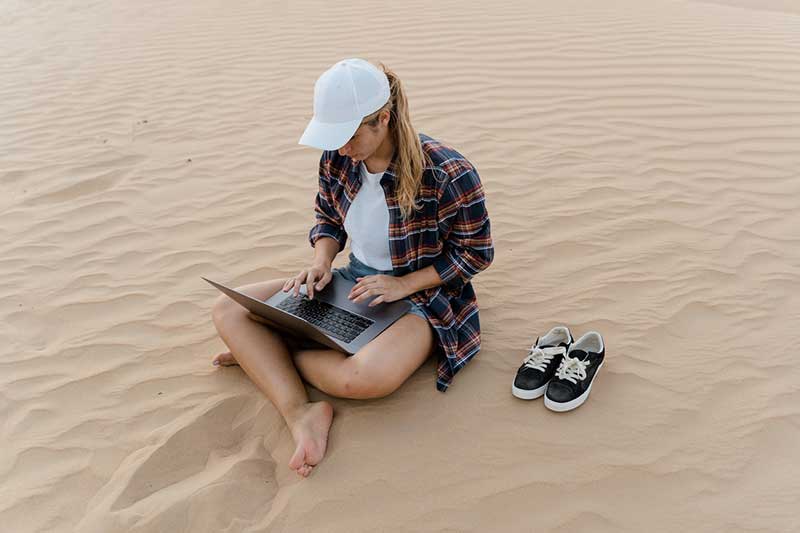
A white shirt sitting in the reflection path of a glossy screen is a large bright surface directly in front of the panel. Dark clothing reflects less of it back. The effect is small but free, and it is most noticeable on glossy screens where the reflection is specular.
6. Use Polarized Sunglasses, With Care

Polarized lenses cut glare from horizontal surfaces well, and they reduce eye strain in bright conditions. There is a catch specific to laptops, though.
An LCD emits polarized light by design. Depending on the panel’s polarization axis and the angle you hold your head, polarized sunglasses can dim the screen dramatically or black it out entirely — tilt your head 90 degrees while wearing them and you will see the effect. If the screen goes dark, either rotate the laptop or switch to non-polarized tinted lenses.
7. Wear a Wide-Brimmed Hat
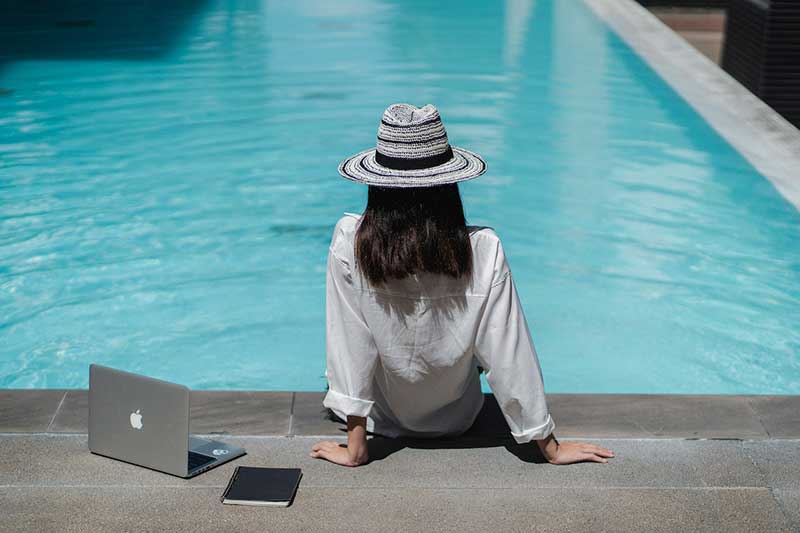
A brim does two useful things: it shades your eyes so your pupils are not fighting the surrounding brightness, and it casts a shadow across the top of the screen if you angle the lid to meet it. A dark underside to the brim helps, since a pale one becomes another reflective surface.
8. Use an Anti-Glare Screen Protector
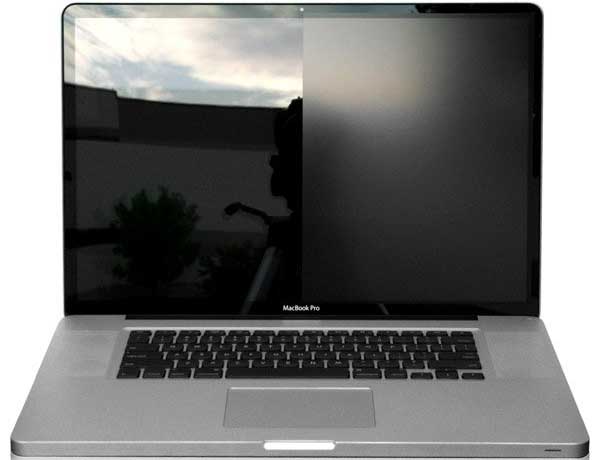
Only relevant if your panel is glossy. A matte film converts specular reflection into diffuse scatter, which is the same mechanism a factory anti-glare coating uses.
Expect a trade-off indoors: matte films soften text slightly and can add a faint sparkle to white backgrounds. If you only work outside occasionally, a removable film beats a permanently applied one.
9. Invest in a Laptop Shade or Hood
A folding hood that shrouds the screen is the most effective single accessory for outdoor visibility, because it creates local shade exactly where it is needed instead of relying on the environment to provide it.
They fold flat, they double as a privacy shield since nobody beside you can see the panel, and they come in sizes matched to common screen dimensions. The one thing to watch is airflow — a hood that also wraps the chassis can trap heat around the vents, which is the opposite of what you want on a warm day.
10. Get a Laptop Built for Outdoor Use
If outdoor work is routine rather than occasional, the hardware solves it better than any accessory. Look for a high sustained full-screen brightness figure, a matte or anti-reflective panel, and — on rugged models — a stated wider operating temperature range.
Rugged and semi-rugged machines from Dell, Panasonic and Getac are the category built for this, with daylight-readable panels well above consumer figures. Our roundup of laptops suited to outdoor work covers the more portable end of that range.
DIY Fixes That Cost Nothing
11. Use a Cardboard Box as a Sunshade
A box on its side with the laptop inside is a free laptop hood. The box needs to be larger than the laptop and rigid enough to hold its shape, and a dark or matte interior works better than a glossy printed one.
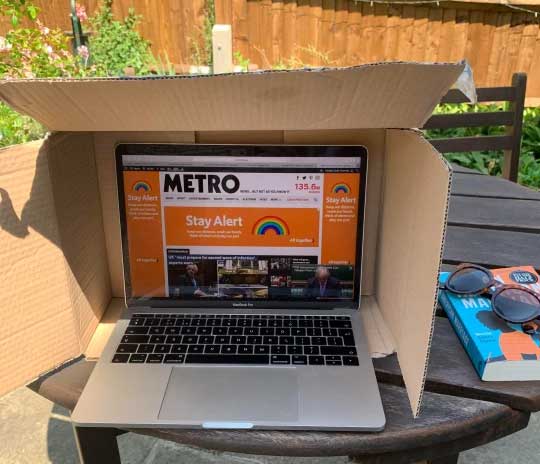
Leave the vents clear. Boxing in a laptop that is already working hard in warm air is how you turn a visibility fix into a thermal problem.
12. Get Under a Towel or Sheet
Awkward, effective, and the oldest trick in photography. A towel over your head and the screen blocks the ambient light reaching the panel entirely.
The same caution applies: drape it over the screen and your head, not over the laptop body, so the intake and exhaust vents stay open.
Keeping a Laptop Cool and Charged Outdoors
Keep the machine out of direct sun even when you are not. Put it on something that isn’t hot — a table rather than dark paving or sand — and keep the underside vents clear of blankets, towels and soft bags.
If the fans have been running flat out and performance has collapsed, move into shade and let it cool before carrying on. Charging a hot battery accelerates the degradation, so let it come down before plugging in if you can.
Runtime is the other constraint, and maximum brightness makes it worse. A power bank with sufficient USB-C Power Delivery output for your machine is the practical answer; folding solar panels exist but generally deliver well below what a laptop needs to charge while in use.
Sand and moisture are the other outdoor hazards. If a drink does go over the keyboard at the beach, our guide on what to do when a laptop gets wet covers the first few minutes that decide the outcome.
Questions About Using a Laptop Outdoors
How hot is too hot for a laptop outside?
Manufacturers publish this. Apple specifies an ambient operating range of 50° to 95° F (10° to 35° C) for Mac laptops, and Dell gives 0°C to 35°C (32°F to 95°F) for the XPS 15 9530. Both cap at 35°C ambient. In direct sunlight the air immediately around the chassis is hotter than the shaded air temperature, so a 30°C day in full sun already puts you at the edge.
Can heat ruin a laptop?
Heat causes two distinct effects. Throttling is reversible — the chip lowers its clock speed to protect itself and recovers when it cools. Battery degradation is not: lithium-ion cells lose capacity permanently when held at high temperature, and that loss does not come back.
How many nits do I need to use a laptop in direct sunlight?
Most mainstream laptops manage 250 to 400 nits, which struggles in direct sun. 500 nits, as on the MacBook Air, is usable in bright shade. Panels built for daylight go much higher — the Dell Latitude 7330 Rugged Extreme is specified at 1400 nits. Check the full-screen SDR brightness rather than an HDR peak figure, which applies only to small highlights.
Is a matte or glossy screen better outside?
Matte. A glossy panel reflects the sun as a sharp mirror image directly over whatever you are reading; a matte or anti-glare coating scatters the same light into a diffuse haze that is far easier to read through. Glossy gives slightly better perceived contrast indoors, which is the trade-off.
Can I leave my laptop in the car while I’m out?
No. Apple’s guidance is explicit that you should not leave a Mac laptop in a car because parked-car temperatures exceed its range, and the National Weather Service notes car interiors heat up very quickly in sunlight — vehicular heatstroke has been recorded with outside temperatures below 70°F. The boot is not meaningfully cooler.
Do polarized sunglasses work with a laptop screen?
Sometimes, and sometimes they black the screen out. LCD panels emit polarized light, so depending on the panel’s axis and your head angle a polarized lens can cancel most of it. If the display goes dark, rotate the laptop or use non-polarized tinted lenses instead.
Does a laptop sunshade or hood actually work?
Yes, and it is the most effective single accessory for outdoor visibility because it makes shade where you need it rather than relying on finding some. Check that whichever model you use leaves the intake and exhaust vents unobstructed.
Should I use dark mode outdoors?
No — this is the one place the usual advice reverses. Dark mode puts less light out to compete with the sun, and its dark areas reflect surroundings more visibly. A light theme or a high-contrast theme with black text on white reads better in daylight.
Final Thoughts on Working Outdoors With a Laptop
Shade fixes both problems at once, which is why every other item on this list is a workaround for not having any. Max brightness, a high-contrast light theme and a hood will get most laptops through an hour in bright conditions.
The heat side deserves more respect than it usually gets. Apple and Dell both stop their operating specification at 35°C ambient, and no amount of screen tweaking changes what direct sun does to a chassis sitting in it.