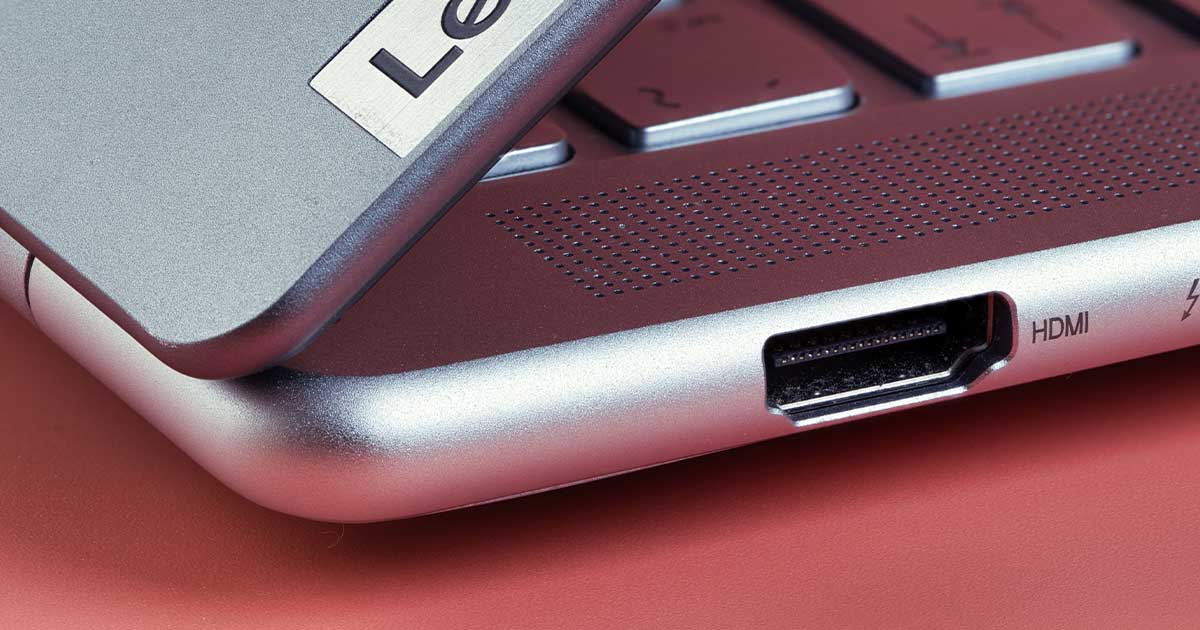
Plugging a laptop into a monitor, a TV or a conference-room projector used to require no planning at all. On a growing share of thin-and-light machines it now requires an adapter, because the HDMI port is one of the first things to go when a chassis gets thinner. Checking for the port before buying has become part of the job.
The port on the spec sheet is only half the question. ASUS lists the Vivobook 16’s port as “HDMI 2.1 TMDS”, while Dell states outright that the Inspiron 14 2-in-1’s port is capped at 1920×1080/60Hz — one carries the newest version number without the bandwidth behind it, the other stops below 4K altogether. Eight laptops below that kept the port, with the figure each manufacturer publishes for what its output can drive.
Editor’s Pick

Last update on 2026-10-15 / Affiliate links / Images from Amazon Product Advertising API
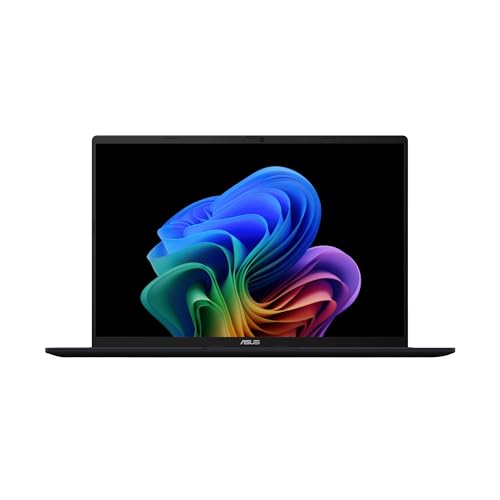
A Copilot+ Ryzen AI chip and a 16:10 16-inch panel at the mainstream tier, with a full-size HDMI output rated to 4K60 — the figure most desk displays, TVs and projectors actually run at.
- AMD Ryzen AI 7 350 (Copilot+)
- 16″ WUXGA, 16:10, 60Hz
- 16GB DDR5, 512GB SSD
- HDMI 2.1 (TMDS), Wi-Fi 6
What’s Inside
- 1 – HDMI Laptop Buyer's Guide
- 2 – HDMI Laptop Comparison Table
- 3 – Best Laptops with HDMI Ports — Reviews
- 3.1 – 1. ASUS Vivobook 16 (2026) (Best Overall)
- 3.2 – 2. ASUS Chromebook Plus CX34 (Best Budget)
- 3.3 – 3. Acer Nitro V 16 (Best Budget Gaming)
- 3.4 – 4. Razer Blade 14 (RTX 5070) (Best Premium Gaming)
- 3.5 – 5. Lenovo ThinkPad T14s Gen 6 (Snapdragon X Elite) (Best for Business)
- 3.6 – 6. LG gram Pro 17 (2026) (Best Lightweight Large-Screen)
- 3.7 – 7. Apple MacBook Pro 14-inch (Best for Creators)
- 3.8 – 8. Dell Inspiron 14 2-in-1 (7445) (Best Budget Convertible)
- 4 – Recommended Accessories
- 5 – Which HDMI Laptop Should You Buy?
- 6 – HDMI Laptop FAQ
- 7 – Final Thoughts on HDMI Laptops
HDMI Laptop Buyer’s Guide
Why HDMI Still Matters in 2026
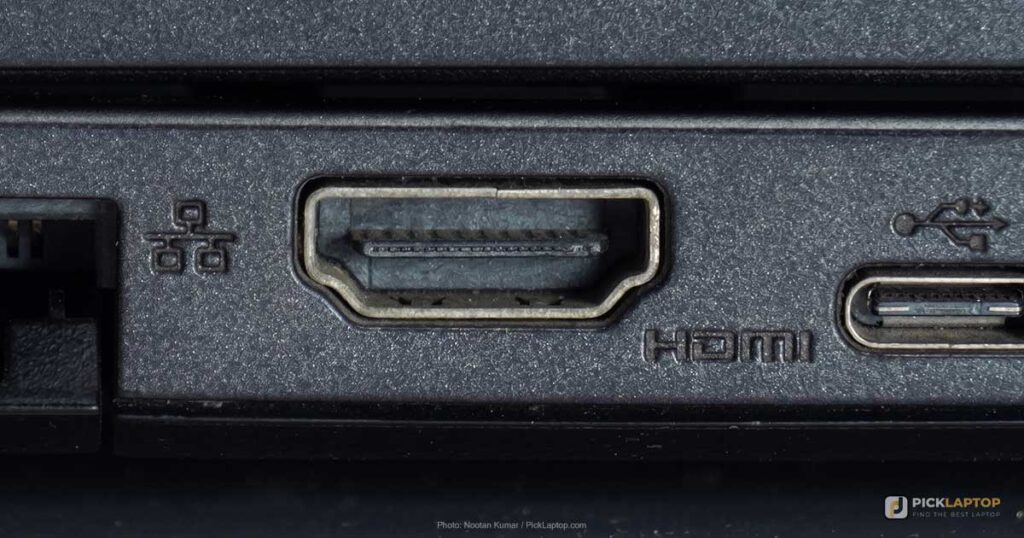
HDMI carries video and audio over one cable, works with effectively every TV, monitor and projector made in the last two decades, and needs no driver or adapter. A laptop with only Thunderbolt or USB-C ports means carrying an adapter to reach an HDMI-only display, and an adapter introduces a component that can fail, be forgotten, or behave differently with a particular monitor. If you’re building a multi-monitor setup, a native port is one fewer variable in the chain when something doesn’t come up.
HDMI Port vs. HDMI Input — Know the Difference
Laptop HDMI ports are output only — they send video out to a display and cannot receive a signal in. HDMI input on a laptop, which would let you use the screen as a monitor for a game console, is rare and mostly limited to a handful of discontinued models. To feed video into a laptop screen you need a USB video capture device, and the laptop’s own HDMI port has nothing to do with it.
Why New Laptops Are Dropping HDMI Ports
A USB-C port with DisplayPort Alt Mode or Thunderbolt carries video, data and power over one reversible connector, and it takes less internal depth than the HDMI connector shell. That is why the thinnest chassis designs drop HDMI first. It is a defensible engineering trade, and it shifts the checking onto the buyer — the same 14-inch model line can have the port in one generation and not the next.
HDMI Version Numbers, Briefly Explained
The version number sets a ceiling, and a laptop can carry the number without carrying the bandwidth behind it. HDMI 1.4 tops out at 4K/30 — Dell rates the Inspiron 14 2-in-1’s HDMI 1.4 output at 1920×1080 at 60Hz and states plainly that it stays under 4K. HDMI 2.0 raises the ceiling to 4K/60. HDMI 2.1 introduced the FRL signaling that 4K/120 and variable refresh rate depend on, but the version label does not oblige a manufacturer to implement it: ASUS lists the Vivobook 16 as “HDMI 2.1 TMDS” — the newer number over the older signaling mode — and Lenovo publishes the ThinkPad T14s Gen 6’s port spec as version 2.1 capped at 4K/60Hz. Find the resolution-and-refresh figure the manufacturer prints next to the version, not the version alone.
One more wrinkle applies to gaming laptops specifically: on many of them whether the HDMI port pulls from the discrete GPU or the integrated graphics changes by configuration, which affects what refresh rates the port can drive and whether variable refresh works on an external panel. Manufacturers rarely print this. If a high-refresh external display is the reason you want the port, it’s a question to put to the manufacturer before ordering.
The newest standard, HDMI 2.2, supports up to 12K at 120Hz and 16K at 60Hz per the HDMI Forum’s own spec — no consumer laptop ships with it, so it won’t appear on a spec sheet you’re shopping from this year.
The Adapter Alternative — When You Don’t Have HDMI
A USB-C-to-HDMI adapter substitutes for the port, on one condition: the specific USB-C port has to carry DisplayPort Alt Mode or Thunderbolt. Charging-and-data-only USB-C ports output no video at all, and manufacturers mark which is which in the port list rather than on the chassis. On several machines below the USB-C path is the higher-bandwidth one — a 4K monitor gets a better result through USB-C than through an HDMI 1.4 port.
HDMI Laptop Comparison Table





Last update on 2026-10-19 / Affiliate links / Images from Amazon Product Advertising API
Best Laptops with HDMI Ports — Reviews
1. ASUS Vivobook 16 (2026) (Best Overall)
Best Overall
Last update on 2026-10-15 / Affiliate links / Images from Amazon Product Advertising API
- ProcessorAMD Ryzen AI 7 350 (Copilot+)
- GPUAMD Radeon 860M (integrated)
- RAM16GB DDR5 (onboard)
- Storage512GB SSD
- Display16″ WUXGA IPS, 16:10, 60Hz, 45% NTSC
- PortsHDMI 2.1 (TMDS), 2x USB-A, USB-C, Wi-Fi 6
ASUS’s own spec sheet calls this port “HDMI 2.1 TMDS”, and that second word is the operative one — TMDS is the signaling mode HDMI used before 2.1 added FRL, so the ceiling is 4K at 60Hz rather than the 4K120 the version number suggests. A 4K desk monitor, living-room TV or projector already tops out at 60Hz, so nothing is lost for those uses. A 120Hz external gaming panel is the case this laptop can’t serve.
The 16:10 shape puts more rows of a spreadsheet or more lines of a document on screen than a 16:9 panel of the same diagonal, which is the practical argument for the 16-inch size at this price. ASUS rates the panel at 45% NTSC coverage at 60Hz — readable and matte, and short of what photo or video color work needs.
Third-party coverage of this exact configuration is thin. Notebookcheck’s aggregate page for the M1607KA shows 80%, drawn from a single review across two sources — a rating rather than a body of independent testing. No lab has published a full benchmark run on the Ryzen AI 7 350 in this chassis, so treat the performance expectation as coming from the chip rather than from this machine.
Pros
- Copilot+ Ryzen AI 7 350 with a dedicated NPU
- 16:10 panel fits more of a document on screen than 16:9
- Full-size HDMI plus two USB-A and USB-C at the mainstream tier
Cons
- HDMI is 2.1 over TMDS — 4K60, not 4K120
- Panel rated 45% NTSC, well short of the OLED picks below
- Little independent testing published on this configuration
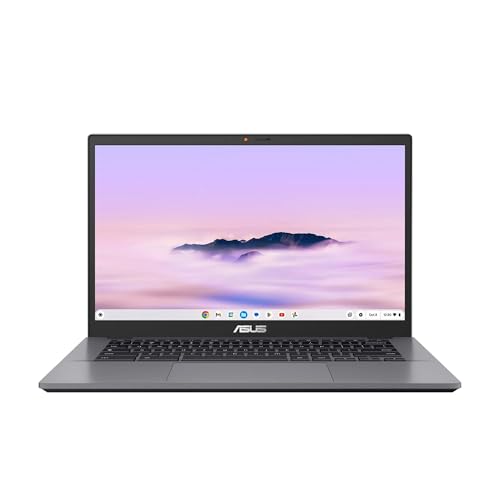
2. ASUS Chromebook Plus CX34 (Best Budget)
Best Budget
Last update on 2026-10-19 / Affiliate links / Images from Amazon Product Advertising API
- ProcessorIntel Core i5-1335U
- GPUIntel Iris Xe (integrated)
- RAM8GB
- Storage128GB
- Display14″ FHD touch, 60Hz
- PortsHDMI 1.4, 2x USB-C (display + PD), 2x USB-A
The evidence here is unusually deep for a budget machine. PCWorld reviewed this exact configuration — Core i5-1335U, 8GB, 128GB — and gave it an Editors’ Choice award, and Notebookcheck’s aggregate for the series sits at 80.41% across 22 scores from 27 reviews.
The port list is the reason it’s here, and it repays a close read. ASUS lists one HDMI 1.4, two USB-C that both carry display output and power delivery, and two USB-A. HDMI 1.4 means 4K arrives at 30Hz, which is fine for a slideshow or a film and unpleasant for moving a mouse pointer around. At 1080p or 1440p the port behaves normally. For a 4K monitor, the better path out of this machine is one of the USB-C ports.
Battery is 50Wh by ASUS’s figure, and PCWorld’s real-world result was roughly seven to eight hours at a normal brightness, stretching past thirteen hours only with the screen turned well down. Two things PCWorld flagged stand out: the plastic shell has a pleasant sheen but the reviewer expected it to show wear, and the keyboard has no backlight — a feature the previous model had, which the reviewer said left them scratching their head.
Pros
- PCWorld Editors’ Choice on this exact configuration
- Two display-capable USB-C ports alongside the HDMI output
- 50Wh battery covering a normal working day at moderate brightness
Cons
- HDMI 1.4 caps 4K output at 30Hz
- Plastic shell PCWorld expected to show wear
- No keyboard backlight, unlike the model it replaces
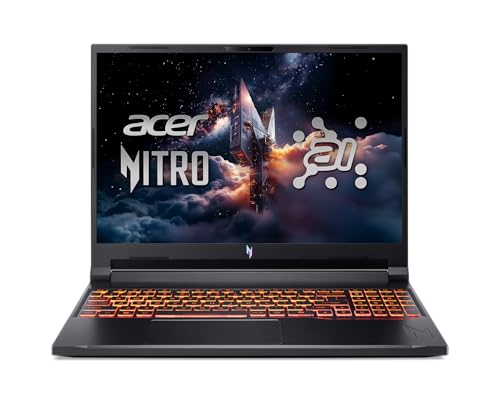
3. Acer Nitro V 16 (Best Budget Gaming)
Best Budget Gaming
Last update on 2026-10-19 / Affiliate links / Images from Amazon Product Advertising API
- ProcessorAMD Ryzen AI 7 350 or Ryzen 7 260 by configuration
- GPUNVIDIA GeForce RTX 4050 to RTX 5070 by configuration
- RAM16GB DDR5
- Display16″ 16:10 IPS — 1920×1200/165Hz or 2560×1600/100Hz
- Battery76Wh
- PortsHDMI 2.1, USB4, 3x USB-A, Gigabit Ethernet
The ANV16-61 ships in configurations different enough that its two best reviews are not describing the same laptop. LaptopMedia tested a Ryzen AI 7 350 with an RTX 4050 and the 165Hz 1920×1200 panel; PC Gamer tested a Ryzen 7 260 with a 95W RTX 5070 and the 2560×1600 100Hz panel. Read the listing carefully before assuming either result applies.
On the RTX 5070 unit, PC Gamer measured 5–10% higher frame rates than a similarly specified Gigabyte Aero X16 across the titles it ran — 67fps against 63 in Baldur’s Gate 3, 74 against 66 in Metro Exodus — with the GPU averaging 74°C and peaking at 79°C. Its PCMark 10 gaming battery test ran 140 minutes where the comparison machines managed 89 to 109. LaptopMedia’s separate video-playback test at 180 nits ran 10 hours 7 minutes on the RTX 4050 unit, which is a playback figure and not a gaming one; nothing runs a discrete GPU for ten hours.
The panels diverge as much as the silicon. LaptopMedia measured the 165Hz base screen at 57% sRGB and 301 nits and called the color coverage limited and the colors visibly muted; PC Gamer described the higher-resolution panel on its unit as a beautiful high-refresh IPS. The cheap configuration is the one with the weak screen.
On the port itself: LaptopMedia lists HDMI 2.1. Neither Acer’s spec page nor either review states whether that output is wired to the GeForce GPU or routed through the Radeon integrated graphics, and that determines what an external gaming monitor can be driven at. Ask Acer before planning a high-refresh second screen around it.
Pros
- PC Gamer measured 5–10% higher frame rates than a comparably specified Aero X16
- GPU held 74°C average, 79°C peak, under PC Gamer’s load testing
- HDMI 2.1 plus USB4 and wired Gigabit Ethernet
Cons
- Base 165Hz panel measured 57% sRGB and 301 nits by LaptopMedia
- Configurations differ enough that reviews don’t transfer between them
- Acer doesn’t publish whether the HDMI output runs off the discrete GPU
4. Razer Blade 14 (RTX 5070) (Best Premium Gaming)
Best Premium Gaming

Last update on 2026-10-19 / Affiliate links / Images from Amazon Product Advertising API
- ProcessorAMD Ryzen AI 9 365 (10-core)
- GPUNVIDIA GeForce RTX 5070, up to 115W TGP
- RAM32GB LPDDR5X (soldered)
- Display14″ OLED, 2880×1800, 120Hz
- PortsHDMI 2.1, 2x USB4 Type-C (DisplayPort 2.1), USB-A, microSD
This is the pick with a full-fat HDMI 2.1 output — 4K120 and variable refresh on an external panel are on the table here in a way they are not on the ASUS or Dell picks — with two USB4 Type-C ports carrying DisplayPort 2.1 beside it. Razer’s own spec puts the RTX 5070 at up to 115W total graphics power, the upper end of NVIDIA’s range for that mobile part.
TechRadar reviewed this configuration and named it its pick for the best thin and lightweight gaming laptop of 2025. The finding that matters most in a 14-inch chassis is the thermal one, and it went the good way: the reviewer wrote that what impressed them most was how cool and quiet the machine stayed under load, rather than the raw performance.
Two things to weigh against that. The keyboard has 1mm of key travel, and TechRadar found typing on it flat next to a MacBook Pro or a Legion — a daily-use cost on a machine at this tier. And the memory is soldered with no upgrade path, so the configuration you buy is the configuration you keep, which is the usual price of a chassis this thin.
Pros
- HDMI 2.1 with the bandwidth for 4K120 on an external display
- TechRadar found it stayed cool and quiet under sustained load
- 2880×1800 120Hz OLED and an RTX 5070 rated to 115W
Cons
- Priced at the top of the 14-inch class
- 1mm key travel; TechRadar called typing flat
- Soldered memory, no upgrade path after purchase
5. Lenovo ThinkPad T14s Gen 6 (Snapdragon X Elite) (Best for Business)
Best for Business

Last update on 2026-10-19 / Affiliate links / Images from Amazon Product Advertising API
- ProcessorSnapdragon X Elite (X1E-78-100 as tested)
- RAMSoldered, no slots, up to 64GB
- StorageM.2 2242 SSD, user-replaceable
- BuildMIL-STD-810H tested
- ConnectivityWi-Fi 7, no onboard Ethernet
- PortsHDMI 2.1 (to 4K/60), 2x Thunderbolt 4, 2x USB-A
Lenovo is unusually plain about what this port does. Its spec sheet prints “HDMI 2.1, up to 4K/60Hz” — the newer version number attached to the older ceiling, spelled out rather than left for the buyer to discover. For a business desk running a 4K monitor, a boardroom display or a projector, 4K60 is the entire requirement, and knowing the number in advance is worth more than the label.
Tom’s Hardware measured 21 hours 3 minutes on the X1E-78-100 configuration, on a test that surfs the web and streams video at 150 nits. That is a measured figure on a defined workload, not a manufacturer rating, and it is the argument for the Snapdragon chip in a machine meant to leave the charger behind.
The compromises are printed in the same spec sheet. Memory is soldered to the board with no slots, so the ceiling is whatever you order, up to 64GB. There is no onboard Ethernet, which matters if the office still hands out desk cables. The SSD is user-replaceable, but in the less common M.2 2242 length rather than the 2280 most spare drives are. Lenovo lists MIL-STD-810H testing and Dolby Audio through the stereo speakers.
Pros
- Lenovo publishes the HDMI ceiling — 4K/60 — rather than only the version
- 21h 3m measured by Tom’s Hardware on a web-and-streaming test at 150 nits
- MIL-STD-810H tested, Wi-Fi 7, Dolby Audio
Cons
- Memory soldered with no slots — 64GB is the hard ceiling
- No onboard Ethernet
- Replacement SSDs must be the less common 2242 length
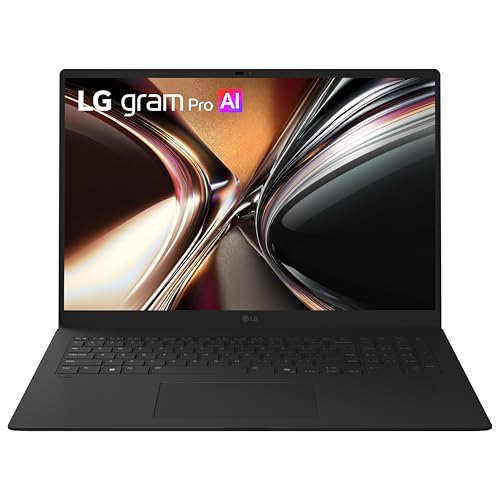
6. LG gram Pro 17 (2026) (Best Lightweight Large-Screen)
Best Lightweight Large-Screen
Last update on 2026-10-19 / Affiliate links / Images from Amazon Product Advertising API
- Display17″ WQXGA (2560×1600) LCD
- GPUIntegrated graphics on this configuration
- ChassisAerominum alloy
- Weight3.8 lb as handled by Tom’s Guide
- PortsHDMI, 2x USB-C, 2x USB-A, headphone jack
LG introduced the 2026 gram line around Aerominum, which it describes as a composition of its own that cuts weight while reinforcing structural strength, with scratch resistance meeting military-grade standards. Tom’s Guide handled the 17-inch model at 3.8 pounds and reported that it felt sturdier than previous grams in hand, while also noting it still gives when you try to bend it — a hands-on impression rather than a lab result, and the only kind of assessment published on this machine so far.
Read LG’s headline claim precisely: it is the world’s lightest 17-inch RTX laptop, a claim about the configurations carrying the GeForce RTX 5050. The listing here runs integrated graphics, so the qualifier that makes LG’s claim true doesn’t describe what’s in this box. What’s left is still the reason to buy it — a 2560×1600 17-inch canvas at the weight of a typical 16-inch machine, for documents, browser work, video and everyday multitasking. Gaming and GPU-accelerated creative work sit outside what this configuration is for.
Two things to confirm with the seller before ordering: which GPU the configuration carries, since the naming across listings runs the RTX and integrated versions together; and what the HDMI port is rated for. LG’s launch material and Tom’s Guide’s hands-on both confirm the port exists, and neither publishes a version number or a maximum resolution for it.
Pros
- 3.8 lb for a 17-inch chassis, handled by Tom’s Guide
- 2560×1600 panel with room for two documents side by side
- Aerominum chassis LG rates for military-grade scratch resistance
Cons
- This configuration runs integrated graphics, not the RTX 5050
- No published HDMI version or maximum output resolution
- Only hands-on impressions published so far, no lab testing
7. Apple MacBook Pro 14-inch (Best for Creators)
Best for Creators
Last update on 2026-10-19 / Affiliate links / Images from Amazon Product Advertising API
- ProcessorApple M5 Pro (15-core) or M5 Max (18-core)
- Display14″ Liquid Retina XDR
- PortsHDMI, Thunderbolt 5, SDXC
- External displaysUp to 6K/60 or 4K/144 across ports
- BatteryUp to 22h (M5 Pro) / 20h (M5 Max) video streaming, Apple’s rating
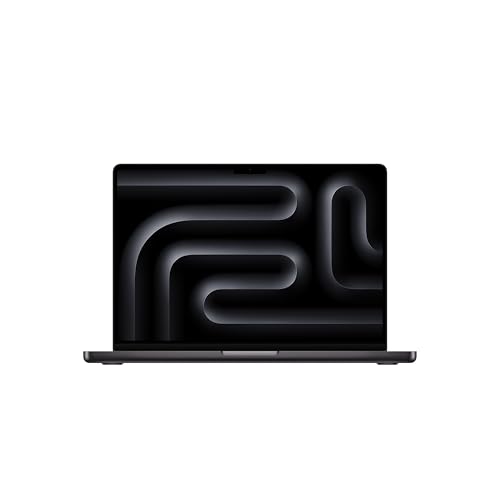
Apple has kept a full-size HDMI port and an SDXC slot on the 14- and 16-inch MacBook Pro since the 2021 redesign, across a period when most machines at this tier moved to Thunderbolt-only. For anyone plugging into a client’s display or pulling a card straight out of a camera, that is two adapters not in the bag.
Apple does not print an HDMI version number. What it publishes instead is the outcome: up to three external displays on M5 Pro and four on M5 Max, at native resolutions up to 6K at 60Hz or 4K at 144Hz, counted across the Thunderbolt and HDMI ports together. Map that against your own monitors before assuming a specific pairing works.
The chip choice deserves more attention than it usually gets. Notebookcheck’s 14-inch M5 Max review is titled around inconsistent performance and throttling — its finding is that the 14-inch chassis struggles to hold the M5 Max at sustained load, and the review does not attribute the inconsistency to any one cause. Apple rates the M5 Pro at up to 22 hours of video streaming and the M5 Max at 20, both manufacturer ratings on a playback workload rather than measured working runtime. If long exports and renders are the job, the 14-inch M5 Max is the configuration to look into rather than assume.
The rest is the expected trade: this sits at the top of the price range in this list, and macOS decides it outright if any part of the workflow is Windows-only.
Pros
- Full-size HDMI and SDXC retained since the 2021 redesign
- Apple publishes external display support to 6K/60 or 4K/144
- Liquid Retina XDR panel and Thunderbolt 5
Cons
- Notebookcheck reports inconsistent sustained performance from M5 Max in the 14-inch chassis
- Battery figures are Apple’s video-streaming ratings, not measured runtime
- Highest price tier here, and macOS rules out Windows-only workflows
8. Dell Inspiron 14 2-in-1 (7445) (Best Budget Convertible)
Best Budget Convertible
Last update on 2026-10-19 / Affiliate links / Images from Amazon Product Advertising API
- ProcessorAMD Ryzen 7 8840HS (8-core)
- GPUAMD Radeon 780M (integrated)
- RAM16GB DDR5
- Display14″ 1920×1200 touch, 300 nits, 360° hinge
- Battery54Wh
- PortsHDMI 1.4 (1080p60 max), 2x USB-C (DisplayPort 1.4), 2x USB-A, SD reader
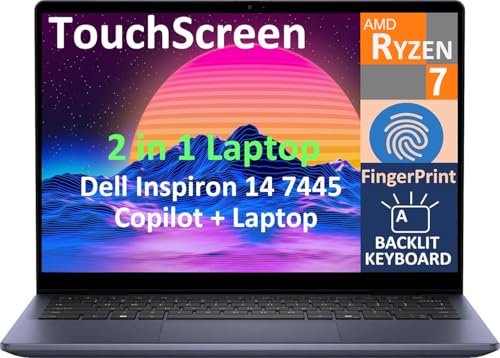
Convertibles drop HDMI more often than clamshells do, so a 360-degree machine that kept the port is worth a category of its own — with the ceiling stated up front. Dell’s own spec sheet rates the HDMI 1.4 output at a maximum of 1920×1080 at 60Hz and says outright that it does not do 4K or 2K, and XDA’s review of the Ryzen 7 8840HS configuration called it “an older HDMI 1.4 port”. Both USB-C ports carry DisplayPort 1.4, so anything above 1080p should leave this machine through USB-C.
XDA measured 9 hours 51 minutes on PCMark 10’s Modern Office battery test — 13 minutes short of the 10:04 Dell rates the machine for, which is closer than most rated figures land. The same review reports Dell passing 17 MIL-STD-810H tests on a chassis that is aluminum and half recycled, with 360-degree hinges XDA found sturdy and slightly stiff.
The 300-nit panel is usable indoors, dim near a window, and no brighter than the base panel LaptopMedia measured on the Acer above. If the convertible hinge and a native port are what you’re buying, that trade reads reasonably.
Pros
- 360° convertible that kept a full-size HDMI port
- Battery measured 13 minutes inside Dell’s own rating by XDA
- Aluminum chassis, 17 MIL-STD-810H tests passed
Cons
- HDMI 1.4 output caps at 1920×1080 at 60Hz by Dell’s own figure
- 300-nit panel, dim in bright rooms
Recommended Accessories
Two accessories finish the setup: a certified HDMI cable rated for the resolution and refresh your port is specified for, and a USB-C-to-HDMI adapter for the machines above where USB-C is the higher-bandwidth path to a 4K display.


Last update on 2026-10-19 / Affiliate links / Images from Amazon Product Advertising API
Which HDMI Laptop Should You Buy?
| Best For | Pick |
|---|---|
| Overall | ASUS Vivobook 16 (2026) |
| Budget | ASUS Chromebook Plus CX34 |
| Budget gaming | Acer Nitro V 16 |
| Premium gaming | Razer Blade 14 (RTX 5070) |
| Business | Lenovo ThinkPad T14s Gen 6 |
| Lightweight, large screen | LG gram Pro 17 (2026) |
| Creators | Apple MacBook Pro 14″ |
| Budget convertible | Dell Inspiron 14 2-in-1 |
HDMI Laptop FAQ
Do laptops still have HDMI ports?
Many do, and the split runs by category rather than by price. Gaming laptops, business machines and 15- and 16-inch mainstream models mostly kept it; sub-1kg ultraportables and premium thin-and-lights are where it disappears. The port also comes and goes between generations of the same model line, so a review of last year’s version is not evidence about this year’s.
Does an HDMI 2.1 port always mean 4K at 120Hz?
No, and this is the single most common misreading of a laptop spec sheet. HDMI 2.1 permits FRL signaling, which is what 4K120 and variable refresh rate need, but it does not require a manufacturer to implement it — the ASUS and Lenovo picks above both carry the 2.1 label without the higher ceiling, and both say so plainly once you read past the version number. A rated cable matters just as much as the port: an HDMI cable sold for the 1.4 spec will bottleneck a 2.1 port’s bandwidth even when the laptop itself can do more, so match the cable’s rating to the port’s, not just the port to the display. Look for the actual number the manufacturer publishes for resolution and refresh, not the version label by itself.
How can I use my laptop as a TV?
You can’t do it through the laptop’s HDMI port — it’s an output. A USB video capture device is the route, and the thing to check when buying one is the resolution and frame rate it captures at, since inexpensive ones cap at 1080p30 and add visible lag on anything interactive. For a console, most people are better served by plugging into the TV.
Why do new laptops not have HDMI ports?
The connector shell is taller than the thinnest chassis designs allow, and a USB-C port that already carries data and charging can carry video too. The trade lands on the buyer at the point of use: one port fewer means one adapter more, and it means the video path now shares bandwidth with whatever else is on that connector.
How can I add an HDMI port to my laptop?
Yes — but only when that specific USB-C port carries DisplayPort Alt Mode or Thunderbolt; a charging-and-data-only port passes no video no matter which adapter is attached. Buy the adapter for the resolution you actually need rather than the cheapest one — many inexpensive adapters cap at 4K30 even on a port that could do more, which puts you back where an HDMI 1.4 port would have left you.
How do I know if my laptop has HDMI output vs. input?
Assume output. HDMI input appears on so few laptops that the manufacturer will say so explicitly — the spec sheet will read “HDMI-in” or “HDMI input” and the marketing will lead with it, because it is the sort of feature a product is sold on. Silence in the port list means output.
What’s better, HDMI or DisplayPort?
For laptop use the practical answer is usually whichever your display already takes, but the tiebreaker on the machines here is bandwidth: several of them pair an HDMI 1.4 port with USB-C ports carrying DisplayPort 1.4 or 2.1, and in those cases DisplayPort over USB-C is the better path for a 4K or high-refresh monitor. The newest HDMI standard closes the gap on paper — HDMI 2.2’s published ceiling is far beyond what any current laptop display or external monitor needs — but it’s too new a spec for any laptop to carry yet, so it doesn’t factor into a purchase today.
How do I connect my laptop to my Smart TV without an HDMI port?
Wireless casting through Miracast, Chromecast or AirPlay depending on the pairing, with the caveat that casting compresses the stream and adds latency — fine for video, poor for gaming or anything with a cursor. A USB-C-to-HDMI adapter gives a wired signal instead if the port supports video.
Can I convert a USB port to HDMI?
No — only a USB-C port wired for Thunderbolt or DisplayPort Alt Mode sends a native video signal to the adapter; a port marked charging-and-data-only does not, regardless of the adapter used. Thunderbolt ports are usually marked with the lightning-bolt icon on the chassis itself, which is a faster check than hunting through a spec sheet. USB-A-to-HDMI adapters exist and work differently: they run a compression chip and a driver, which costs latency and image quality, and on some machines needs software installed before the display appears at all.
Do all USB-C ports support HDMI output?
No, and the ones that don’t are not marked on the chassis. Manufacturers state it in the port list — ASUS writes “USB 3.2 Gen 1 Type-C support display / power delivery” for the Chromebook Plus CX34’s two USB-C ports, for instance. Where a port list names USB-C without mentioning display or DisplayPort, treat it as data and charging only until the manufacturer says otherwise.
Final Thoughts on HDMI Laptops
HDMI used to be a box you didn’t have to tick. Now it needs checking twice — once for the port, once for the figure the manufacturer publishes beside it, because a 2.1 label on a laptop can mean 4K60 and an HDMI 1.4 port can mean 1080p and nothing above it.
Start from the display you already own and work backwards. A 1080p projector or a conference-room screen makes the version question disappear; a 4K or high-refresh monitor is where it decides which of the eight above is the right one, and where the answer sometimes turns out to be the USB-C port rather than the HDMI one.