
A student buys a MacBook for their MBA program, reasoning it will be fine — reliable, well-built, and surely any coursework software has a Mac version by now. Three weeks into the semester a required financial modeling tool or a school-mandated statistics package turns out to be Windows-only, and the choice narrows to buying a second laptop or fighting with a virtual machine mid-case-study.
Columbia Business School’s IT requirements page lists both Windows 11 and macOS as supported, then attaches a caution to one of them: Macs built on Apple’s M-series chips “can only run Windows using emulation software that you will have to purchase separately, and some software developers have not created a compatible version of their applications for it; as such those M (Apple Silicon) Macs may become insufficient for your studies at CBS.” That is one school’s guidance, not a survey of every program, and it stops short of telling students to avoid Macs. It is still the specific thing to check before ordering — the check takes minutes, and the mistake costs a semester.
Six laptops below, matched to different budgets and different amounts of software risk.
Editor’s Pick

Last update on 2026-10-08 / Affiliate links / Images from Amazon Product Advertising API
Native Windows with no emulation question attached, a keyboard Tom’s Hardware measured itself typing 114 words per minute on, and 2.17 pounds to carry between buildings.
- Intel Core Ultra 7 258V
- 32GB RAM
- 2.17 lbs
- 14-inch 2.8K OLED
What’s Inside
- 1 – MBA Student Laptop Buyer's Guide
- 2 – MBA Student Laptop Comparison Table
- 3 – Best Laptops for MBA Students in 2026 — Reviews
- 3.1 – 1. Lenovo ThinkPad X1 Carbon Gen 13 Aura Edition (Best Overall)
- 3.2 – 2. Samsung Galaxy Book6 16-inch (Best Value Windows)
- 3.3 – 3. HP OmniBook 5 Flip (Cheapest)
- 3.4 – 4. MSI Katana 15 HX (Best for Large Spreadsheets)
- 3.5 – 5. LG gram 15 (Best Battery Life)
- 3.6 – 6. Apple MacBook Air 13-inch M5 (Best Mac)
- 4 – Recommended Accessories
- 5 – Which MBA Student Laptop Should You Buy?
- 6 – MBA Student Laptop FAQ
- 7 – Final Thoughts on MBA Student Laptops
MBA Student Laptop Buyer’s Guide
Windows or Mac: What Business School IT Departments Say
Columbia’s page is the one quoted above: both platforms supported, with a warning that Apple Silicon Macs need separately purchased emulation software to run Windows and may prove insufficient for coursework as a result. Whether that applies to your program depends on your program. Business schools differ in how much Windows-only financial modeling, statistics and case-study software they build around, and the only reliable source is your own school’s IT page and required-software list. Read it before ordering rather than after.
Processor and Memory for Spreadsheets and Case Studies
Columbia’s stated minimum specification is an Intel Core i5 or AMD Ryzen 3000-series chip or above, 8GB of RAM, and a 128GB SSD with 50GB free. That is the floor a school sets for software it knows it will ask students to run. Spreadsheets, slide decks, PDF reading and video calls are light work for any current processor, and the money that goes into a faster CPU rarely comes back as a faster day. Where extra memory does pay off is in how many things stay open at once — a workbook with several linked tabs, a browser session of research, a note app and a video call all resident together.
16GB is the figure to buy at rather than the 8GB minimum, and it is what most of the picks below ship with. 32GB is worth the jump if a statistics package or a modeling tool runs alongside everything else for hours at a stretch, and it is close to wasted otherwise.
Battery Life and Portability
Two numbers get quoted for battery and they measure different things. A manufacturer’s figure — LG’s 22 hours, HP’s 21 hours 30 minutes — is usually local video playback at a fixed brightness with the wireless radio off, which resembles no part of a school day. A reviewer’s figure comes from a browsing or office-workload loop, and it lands lower: Tom’s Hardware got 11 hours 28 minutes out of the ThinkPad below and 15 hours 28 minutes out of the MacBook Air. Compare ratings against ratings and measurements against measurements, and treat a rated number as an upper bound.
Weight is the specification that gets felt daily. Under 3 pounds is the line at which a laptop stops competing with textbooks and case packets for space in a bag; the HP pick below sits at 3.58 pounds, a pound and a half heavier — the extra weight is what its lower price costs you.
Storage
512GB is a livable floor for two years of case studies, models and lecture material, and every pick here meets or beats it. Coursework files are small; what fills a drive is everything else a personal laptop accumulates over a program.
MBA Student Laptop Comparison Table



Last update on 2026-10-08 / Affiliate links / Images from Amazon Product Advertising API
Best Laptops for MBA Students in 2026 — Reviews
Five native Windows machines and one Mac, with the compatibility trade-off on the Mac stated rather than brushed past.
1. Lenovo ThinkPad X1 Carbon Gen 13 Aura Edition (Best Overall)
Best Overall
Last update on 2026-10-08 / Affiliate links / Images from Amazon Product Advertising API
- ProcessorIntel Core Ultra 7 258V (8-core)
- GPUIntel Arc Graphics (integrated)
- RAM32GB LPDDR5X, soldered
- Storage2TB PCIe SSD
- Display14-inch 2.8K OLED, 120Hz
- Battery57Wh — 11h28m measured by Tom’s Hardware
Note-taking is what an MBA does to a keyboard, and this is the keyboard on this list with the most testing behind it. Tom’s Hardware, reviewing this exact Core Ultra 7 258V configuration, called the typing experience “nothing short of spectacular” and recorded 114 words per minute at 98% accuracy on it, with 1.5mm of key travel. Notebookcheck, testing the same chip and 32GB configuration, described typing on it as “a joy”.
Tom’s Hardware weighed it at 2.17 pounds and titled the review “Lightest Carbon Yet,” a quarter-pound below the previous generation. The same review measured 11 hours 28 minutes of web browsing at 150 nits, and put the panel at 379 nits.
The audio is the part to plan around. Tom’s Hardware found the output “very loud, but can also be quite tinny,” and described harsh percussion at moderate volume rather than only at the top of the range. For recorded lectures, group calls and anything with music under it, headphones are part of the purchase.
Worth saying about the configuration itself: 32GB of memory and a 2TB drive are well past what Columbia’s own minimum asks for, and past what a spreadsheet-and-slides workload will use. The keyboard, the weight and the OLED panel are what the price is buying here — not the specification list.
Pros
- Keyboard tested at 114 wpm / 98% accuracy by Tom’s Hardware
- 2.17 lbs — the lightest X1 Carbon Lenovo has shipped
- 11h28m measured browsing runtime, 379-nit display
Cons
- Speakers measured loud but tinny, not only at high volume
- Most expensive pick here, for specs the coursework won’t use
- Memory is soldered — 32GB is what it stays at
2. Samsung Galaxy Book6 16-inch (Best Value Windows)
Best Value Windows
Last update on 2026-10-08 / Affiliate links / Images from Amazon Product Advertising API
- ProcessorIntel Core Ultra 7 (Series 3, Panther Lake)
- GPUIntel Graphics (integrated)
- RAM16GB LPDDR5X, soldered
- Storage1TB SSD
- Display16-inch WUXGA (1920×1200), non-touch
- Battery68Wh on the variant TechRadar tested
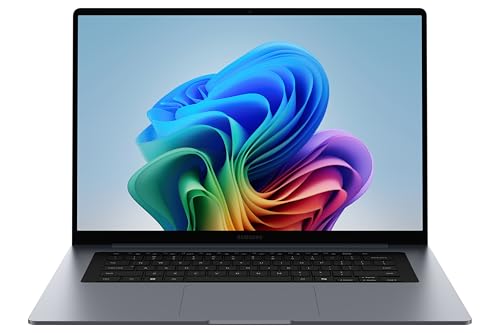
A 16-inch screen is the argument here. Financial models are wide before they are tall, and two spreadsheet panes side by side stop being a compromise at this size in a way they never quite manage on a 13- or 14-inch panel.
The published testing needs a caveat attached. TechRadar reviewed the Galaxy Book6 Enterprise Edition, model NP760VJG — the same 16-inch chassis and the same Core Ultra 7 Series 3 platform, but a business SKU with 32GB rather than the 16GB configuration sold here. On that machine TechRadar recorded 18 hours 4 minutes in PCMark’s battery test, called the trackpad “generously sized for a Windows machine” while noting it is a mechanical rather than haptic pad, and listed two USB-A ports, HDMI and an RJ-45 Ethernet jack alongside the USB-C. No independent lab test of the 16GB consumer configuration turned up; the runtime and the chassis findings should transfer, the memory figure is the one difference that does not.
Ethernet on a 2026 laptop sounds like a leftover until a campus network or a proctored exam asks for a wired connection. TechRadar’s complaint about the same ports is worth carrying too: they are USB 3.2 Gen 2 rather than Thunderbolt or USB4, so a multi-monitor dock is not something to assume.
Pros
- 16-inch 1920×1200 panel — two spreadsheet panes without squinting
- 18h04m measured by TechRadar on the Enterprise variant
- Wired Ethernet retained, alongside HDMI and full-size USB
Cons
- Non-touch panel, and no OLED option at this tier
- USB 3.2 Gen 2 only — no Thunderbolt or USB4 for docking
- The published review covers the 32GB Enterprise SKU, not this 16GB one
3. HP OmniBook 5 Flip (Cheapest)
Cheapest

Last update on 2026-10-08 / Affiliate links / Images from Amazon Product Advertising API
- ProcessorIntel Core 5 120U (10-core)
- GPUIntel Graphics (integrated)
- RAM8GB LPDDR5, onboard (16GB config available)
- Storage512GB PCIe Gen 4 SSD
- Display14-inch 1920×1200 IPS touch, 300 nits, 62.5% sRGB
- Weight3.58 lbs
No independent lab has published measured results for this model, and the sites that appear to have done so are specification summaries rather than testing. What follows comes from HP’s own product sheet for the 14-fp0013dx, and it is labeled as such throughout.
HP rates the 68Wh battery at up to 21 hours 30 minutes of video playback and up to 15 hours on MobileMark 25, the office-workload benchmark — the second figure is the one closer to a day of classes, and both are manufacturer numbers with no third-party check behind them. HP’s own specification also puts the panel at 300 nits and 62.5% sRGB coverage, which is dim and narrow enough that a bright library window will be a problem, so plan on a seat away from direct light.
The weight is the specification to look at twice. At 3.58 pounds this is a pound and a half heavier than the ThinkPad, and the buyer’s-guide advice about staying under 3 pounds points the other way. The 360-degree hinge and bundled pen make it the pick for anyone who annotates case PDFs by hand — that is what the extra weight buys.
Buy the 16GB configuration rather than the 8GB one. Memory is onboard, so the 8GB machine is an 8GB machine for its whole life, and 8GB is Columbia’s floor rather than a comfortable place to sit.
Pros
- Cheapest entry here by a wide margin
- 360-degree hinge plus an included pen for marking up cases
- Two USB-A, two USB-C and HDMI 2.1 on a budget machine
Cons
- No independent measured testing published for this model
- 3.58 lbs — the heaviest thing here to carry all day
- 300-nit, 62.5% sRGB panel by HP’s own specification
- 8GB base memory is onboard and cannot be upgraded later
4. MSI Katana 15 HX (Best for Large Spreadsheets)
Best for Large Spreadsheets
Last update on 2026-10-08 / Affiliate links / Images from Amazon Product Advertising API
- ProcessorIntel Core i9-14900HX
- GPUNVIDIA GeForce RTX 5070 (not needed for MBA coursework)
- RAM32GB DDR5, SODIMM (64GB configs exist)
- Storage1TB NVMe SSD
- Display15.6-inch 2560×1440 IPS, 165Hz
- Battery75Wh
2560×1440 on a 15.6-inch panel is the reason this sits in the list. A model that runs off the right edge of a 1920-wide screen fits on this one, and rows stay legible at 100% scaling rather than forcing a zoom-out. That is the whole case for it — the rest of the machine is a gaming laptop MSI sells across categories, and the RTX 5070 inside it will spend an MBA program idle.
Two things follow from that chassis. CGMagazine tested a Katana 15 HX with the i7-14650HX and an RTX 5060 — the same chassis, cooling and 2560×1440 165Hz panel, a step below this configuration’s CPU and GPU — and found the Cooler Boost 5 fans “simply louder than some other cooling systems I’ve tested,” loud enough in performance mode to want headphones. The same review recorded 5 to 7 hours of battery on productivity work, which is a half day of classes and an outlet hunt, not a full one. No lab test of this specific i9-14900HX and RTX 5070 build turned up; a hotter CPU and GPU in the same cooler is unlikely to make either number better.
The look is its own consideration in a room where laptops open during recruiting events. CGMagazine describes a hard plastic chassis that “feels sturdy” — durable, not discreet.
Pros
- 2560×1440 on 15.6 inches — the most spreadsheet pixels here
- 32GB DDR5 in SODIMM slots, upgradeable rather than soldered
- Sturdy chassis by CGMagazine’s account of the same shell
Cons
- 5–7 hours of productivity battery measured on the sibling config
- Cooler Boost 5 fans run loud under sustained load
- Gaming styling that reads oddly in a recruiting setting
- Paying for an RTX 5070 that coursework will never wake up
5. LG gram 15 (Best Battery Life)
Best Battery Life
Last update on 2026-10-08 / Affiliate links / Images from Amazon Product Advertising API
- ProcessorAMD Ryzen AI 7 350
- GPUAMD Radeon (integrated)
- RAM16GB
- Storage512GB or 1TB SSD by configuration
- Display15.6-inch FHD anti-glare IPS touchscreen
- Battery72Wh — LG rates up to 22h video playback
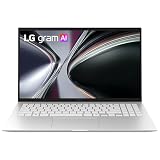
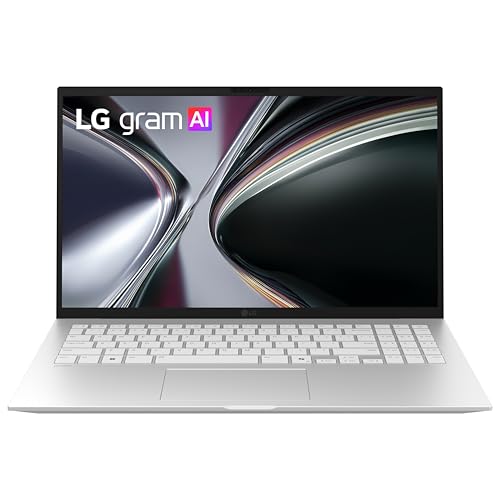
LG’s specification page for the 15Z80T lists a Ryzen AI 7 350, a 72Wh battery, 2.84 pounds, and up to 22 hours of video playback — that last figure measured at Full HD, 150 nits, with wireless switched off. Read it as a ceiling rather than a school day. Among the six picks here it is the highest manufacturer video-playback rating on the list, edging HP’s 21 hours 30 minutes, and no independent measured runtime for this configuration turned up to sit beside it.
What the 72Wh figure does say without any interpretation is that this is the largest battery here inside the second-lightest body. A 57Wh cell in the ThinkPad and 68Wh in the Samsung and HP are the comparison; carrying more capacity per pound is the durable version of the claim.
LG also states the chassis passed seven MIL-STD-810H test methods at an independent laboratory, covering altitude, temperature extremes and vibration among others — a manufacturer statement about a third-party test, which is not the same as a review site dropping one on a desk, but is more than a marketing adjective.
Full HD across 15.6 inches is a coarser pixel pitch than anything else on this list, and after the Samsung’s 16-inch 1920×1200 or the MSI’s 1440p it will look it on a dense spreadsheet.
Pros
- 72Wh — the largest battery here, in a 2.84 lb chassis
- LG’s 22h rating tops every rated figure among these picks
- Touchscreen and anti-glare finish at that weight
- Seven MIL-STD-810H methods passed per LG
Cons
- No independent measured runtime published for this configuration
- Full HD across 15.6 inches — the coarsest panel here
- Priced as a premium ultrabook, not the value pick the gram once was
6. Apple MacBook Air 13-inch M5 (Best Mac)
Best Mac

Last update on 2026-10-08 / Affiliate links / Images from Amazon Product Advertising API
- ProcessorApple M5 (10-core CPU)
- GPUApple M5 (10-core, integrated)
- RAM16GB unified, not upgradeable
- Storage512GB SSD
- Display13.6-inch Liquid Retina
- BatteryApple rates 18h; 15h28m measured by Tom’s Hardware
The software question comes first, and it is answerable in an afternoon: find your program’s required-software list and check each entry for a Mac build. Columbia’s warning quoted at the top of this page is about exactly this, and it applies to the M5 as much as to any Apple Silicon chip. If a required tool is Windows-only, the fix is paid emulation software and the friction that comes with it, arriving in week three of a semester rather than at the point of purchase.
Where the answer comes back clean — Excel, PowerPoint, browser research, video calls — the hardware is well suited to it. Tom’s Hardware measured 15 hours 28 minutes on its mixed browsing and streaming battery test at 150 nits, and 458.8 nits of display brightness, on the 10-core M5 with 16GB. Apple’s own 18-hour figure is the rating; 15h28m is what a test with a browser open produced, and it is still the second-longest measured runtime among these picks. The chassis has no fan, so it makes no noise during a recorded lecture; Tom’s Hardware saw it throttle under a sustained stress load, which is a compiler’s problem rather than a spreadsheet’s.
The 16GB of unified memory is fixed at purchase. For Office and browser work that is enough for years, but there is no later remedy if a concentration turns out to lean on something heavier.
Pros
- 15h28m measured by Tom’s Hardware — second-longest measured here
- 458.8-nit display, the brightest measured on this list
- Fanless and silent through lectures and calls
Cons
- Windows-only coursework software needs paid emulation to run
- Unified memory cannot be changed after ordering
- Throttles under sustained load, per Tom’s Hardware stress testing
Recommended Accessories

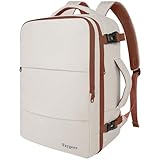


Last update on 2026-10-08 / Affiliate links / Images from Amazon Product Advertising API
Which MBA Student Laptop Should You Buy?
| Best For | Pick |
|---|---|
| Best Overall | Lenovo ThinkPad X1 Carbon Gen 13 |
| Best Value Windows | Samsung Galaxy Book6 16-inch |
| Cheapest | HP OmniBook 5 Flip |
| Best for Large Spreadsheets | MSI Katana 15 HX |
| Best Battery Life | LG gram 15 |
| Best Mac | Apple MacBook Air 13-inch M5 |
MBA Student Laptop FAQ
Is a MacBook a good idea for MBA students?
It depends on a list your school publishes, not on the laptop. The practical move takes an afternoon: open your program’s required-software page, write down every named application, and search each one for a macOS build. Statistics packages, older Excel add-ins and proctoring clients are where the Windows-only entries usually turn up. If the list comes back clean, the platform question is closed and you can choose on hardware. If one entry is Windows-only, price the emulation license into the purchase before deciding it is a small problem.
Do I need a dedicated graphics card for MBA coursework?
No. Excel recalculation is a CPU and memory job, and even large models do not touch a discrete GPU. The MSI pick above carries one because it is a gaming chassis MSI sells into other categories, not because the coursework calls for it. A dedicated card costs weight, heat and battery on every day it goes unused.
How much RAM do I need for business school?
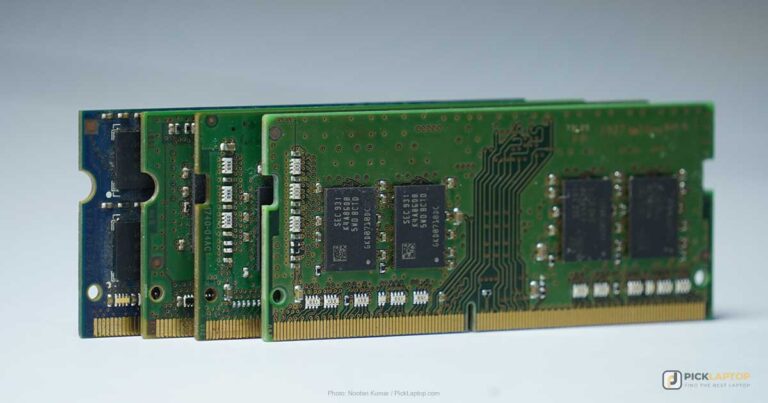
Columbia’s published minimum is 8GB; 16GB is the sensible buy. The distinction that matters more than the number is whether the memory is upgradeable — the MSI Katana uses SODIMM slots you can add to later, while the ThinkPad, MacBook Air, Samsung and HP all ship memory soldered or onboard. On those four, whatever you order is permanent, which makes the decision at checkout the only one you get.
Are 2-in-1 laptops useful for MBA students?
They make sense if you annotate case PDFs by hand rather than typing notes. The trade is usually weight and price: the HP OmniBook 5 Flip here folds flat and ships with a pen, and it is also the heaviest machine on this list at 3.58 pounds. Try annotating a case on a tablet before assuming you will do it on a laptop.
How much battery life do I actually need?
A measured browsing figure of roughly 10 hours covers a full teaching day without an outlet. Two adjustments make that estimate less optimistic in practice. Video calls are the heaviest thing an MBA laptop does to a battery — camera, encode and Wi-Fi running together — and a day with three of them will not resemble a browsing loop. Screen brightness is the other: published results are usually recorded at 150 nits, and a bright classroom pushes a panel well above that. If your days are call-heavy, treat the tested number as the best case and buy above it.
Is it worth buying a more expensive laptop than my program requires?
Not for performance. Spreadsheets, slides, PDFs and video calls run the same on a mid-range chip as on a fast one, and Columbia setting an i5-class minimum is a school stating that outright. Where extra money does buy something you will notice every day: keyboard quality, screen brightness and size, weight, and battery capacity. Those are the four lines on a spec sheet worth paying up for in this category.
Final Thoughts on MBA Student Laptops
Settle the software question first — it decides the platform faster than any benchmark, and it is the one mistake that costs a semester rather than a percentage of performance. After that, this category rewards spending on the parts you touch: the keyboard you will type case notes on, the screen you will read models on, the weight you will carry between buildings, and the battery that decides whether you look for an outlet at 2pm.
Internships and networking trips add their own travel wear to a laptop — our guide to laptops for traveling business gets into that in more detail than fits here.

The Google Pixelbook is perfect for me, thanks for this helpful guide and keep up the good work.
Thanks, Markus! Worth flagging for anyone reading this later: Google has since discontinued the Pixelbook line, so if you’re shopping today we’d point you toward our updated Chromebook guide instead.