AirPods pair with a Windows laptop like any other Bluetooth headset — the pairing itself takes under a minute. The part that catches people out is what happens afterwards: music sounds flatter than it does on an iPhone, and the moment you join a call the audio quality collapses.
This guide covers pairing on Windows 11, the Windows 10 route for anyone still on it, what changed for AirPods 4 and AirPods Pro 3 (they no longer have a setup button), and the specific Apple features that simply do not exist on a PC. Knowing the limits up front saves a lot of pointless troubleshooting.
What’s Inside
- 1 – What AirPods Can and Cannot Do on a Windows Laptop
- 2 – Put Your AirPods Into Pairing Mode
- 3 – How to Connect AirPods to a Windows 11 Laptop
- 4 – How to Connect AirPods to a Windows 10 Laptop
- 5 – Why AirPods Sound Worse on Calls Than on Music
- 6 – Fixing AirPods That Will Not Connect to Windows
- 7 – AirPods on Windows Questions Answered
- 8 – Final Thoughts on Using AirPods With a Windows Laptop
What AirPods Can and Cannot Do on a Windows Laptop
On a PC, AirPods are a generic Bluetooth headset. Stereo playback, the microphone, and the on-bud play/pause and noise-control gestures all work. Everything that depends on Apple’s own pairing layer does not.
- No Siri. Apple states plainly that on a non-Apple device you can’t use Siri, but you can listen and talk.
- No automatic switching. Handing the buds between an iPhone and a Mac mid-song is an Apple-ecosystem feature. To move between your PC and an Apple device you disconnect on one side first.
- Codec depends on your Windows version. Microsoft’s driver documentation lists AAC as supported from Windows 11 version 21H2, and not supported at all on Windows 10. On Windows 10, AirPods fall back to SBC.
- The microphone costs you the stereo audio. This is the big one, and it is covered in its own section below.
- No ear-detection or custom gestures set on an iPhone. Those settings live in iOS and are not exposed to Windows.
Windows 10 changes the maths here. Microsoft ended Windows 10 support on 14 October 2025, and Windows 10 never supported the AAC codec. If your laptop can run Windows 11, upgrading is the single change that most improves how AirPods sound on it.
Put Your AirPods Into Pairing Mode
Do this first, before you touch the Windows settings — the pairing light times out. Leave both buds in the case and keep the lid open throughout.
The gesture is not the same across models any more, which is where most out-of-date instructions go wrong. Apple’s own guide gives three variants:
- AirPods 1, 2, 3, AirPods Pro 1 and 2: press and hold the setup button on the back of the case for about 5 seconds, until the status light flashes white.
- AirPods 4 and AirPods Pro 3: there is no button. Apple’s instruction is to double-tap the front of the case so the status light flashes white.
- AirPods Max: press and hold the listening mode button for about 5 seconds until the light flashes white.
A white flashing light means discoverable. An amber flash means the case is signaling something else — usually a reset in progress or low charge — and Windows will not see the buds in that state.
How to Connect AirPods to a Windows 11 Laptop
Windows 11 moved Bluetooth out of the old Devices page. Microsoft documents the current route as Start > Settings > Bluetooth & devices.
- Open Settings, then Bluetooth & devices, and make sure the Bluetooth toggle is on.
- Select Add device.
- Choose Bluetooth from the three options in the pop-up.
- Put the AirPods into pairing mode now if you have not already, and wait for them to appear in the list.
- Select them, then select Done.
There is a faster route for repeat connections. Microsoft’s guide describes selecting the Network, Sound or Battery icon in the taskbar and then the chevron on the Bluetooth tile to manage and connect devices without opening Settings at all.
Why Swift Pair does not work with AirPods
Swift Pair is the Windows feature that pops a “connect” notification when a nearby accessory enters pairing mode, and Microsoft describes it as a notification asking to allow the use of Swift Pair.
It only fires for accessories that broadcast the Microsoft-defined Swift Pair beacon, which AirPods do not. If you were expecting a pop-up and got nothing, that is not a fault — use Add device instead.
How to Connect AirPods to a Windows 10 Laptop
Windows 10 uses the older Devices page, and the menus look different enough that the Windows 11 steps will not map cleanly. The sequence below still works on any Windows 10 machine.
Turn Bluetooth on in Windows 10 Settings
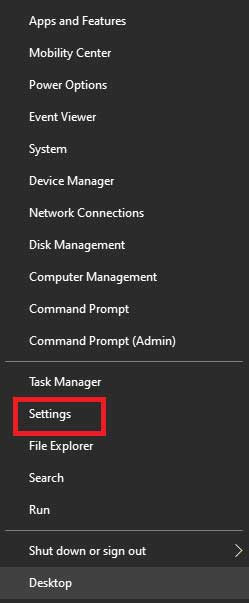
Right-click the Start button and select Settings.
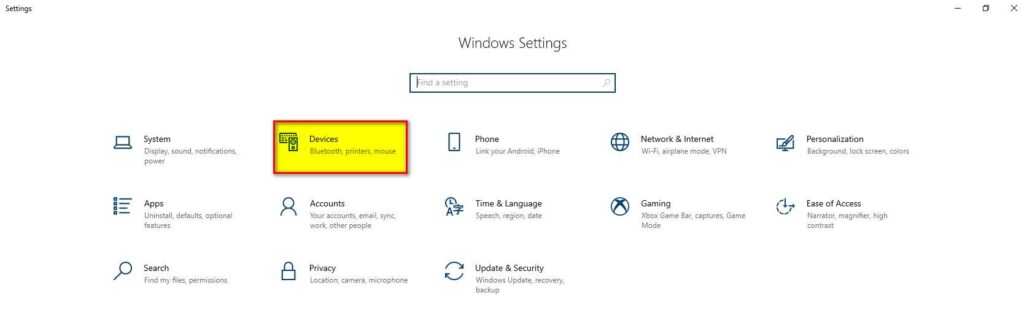
Open Devices.
Select Bluetooth & other devices in the left pane, then toggle Bluetooth On.
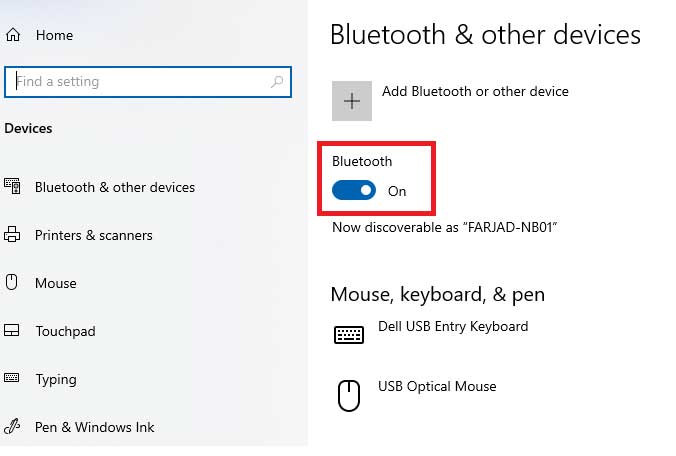
The Action Center shortcut
Click the speech-bubble icon at the bottom right of the screen to open the Action Center.

If no Bluetooth tile is showing, select Expand.
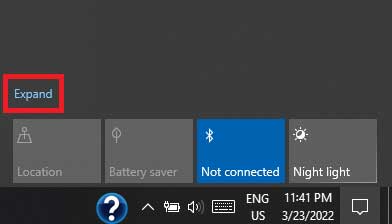
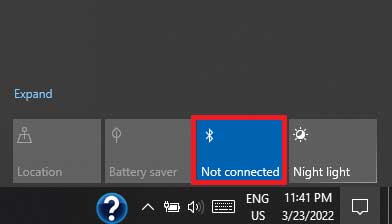
Click the Bluetooth tile. A blue background means it is on. If the tile is absent entirely, Windows has not found a Bluetooth adapter — see the troubleshooting section.
Pair the AirPods in Windows 10
With the buds already flashing white, go back to Settings and open Devices.
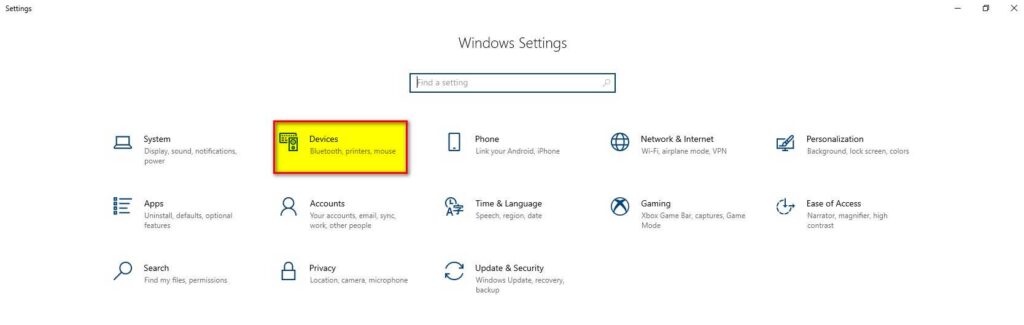
Select Bluetooth & other devices.
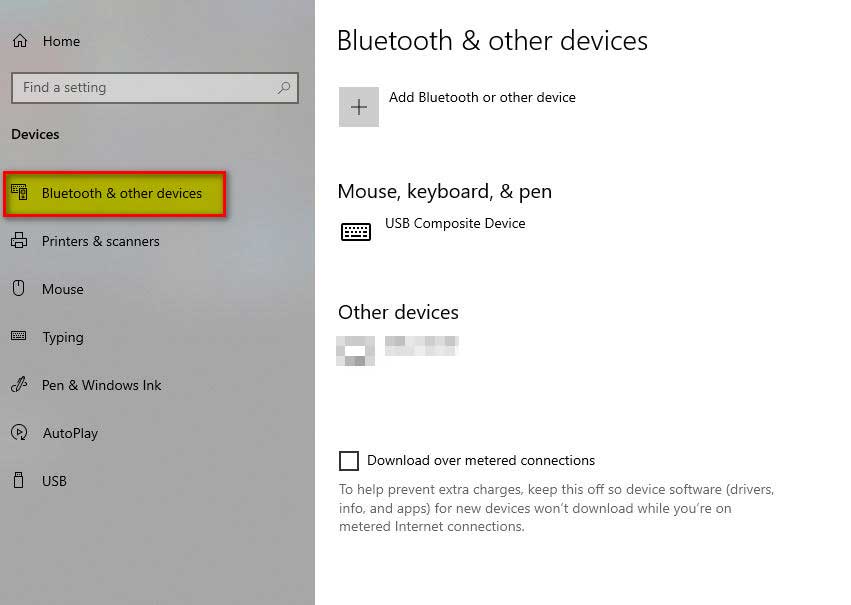
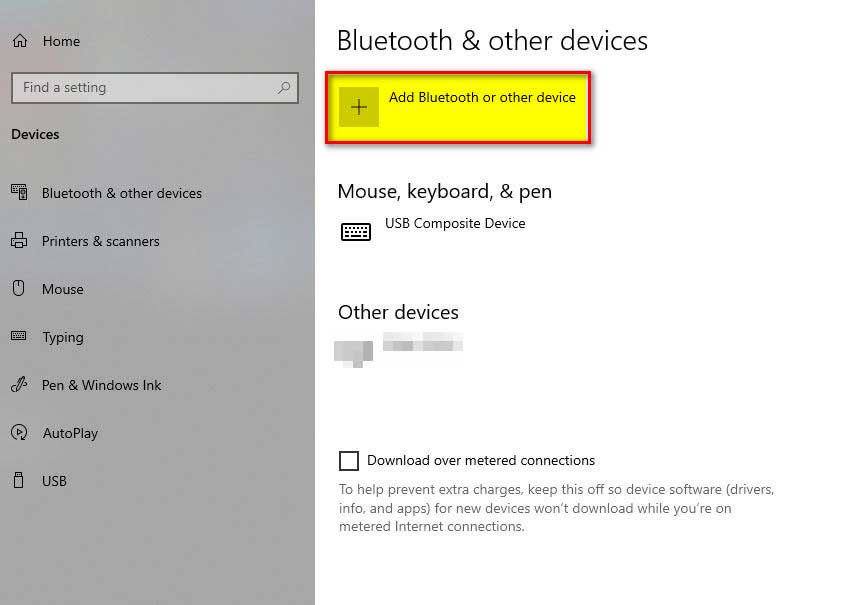
Click Add Bluetooth or other device, choose Bluetooth, and select your AirPods from the list. Follow any extra prompt, then press Done.
Why AirPods Sound Worse on Calls Than on Music
This is the complaint that sends most people looking for a fix that does not exist. It is not a driver fault and it is not the AirPods. It is how Bluetooth Classic audio works on Windows.
Stereo playback uses the A2DP profile. The microphone uses a separate profile, HFP, which is mono. Microsoft’s documentation is explicit about what happens when an app opens the mic: the device switches into HFP mode, and any audio streaming to the stereo output is discarded.
The mic and good audio cannot both be active. Microsoft lists the HFP capture modes as narrowband at 8 kHz and wideband at 16 kHz, and notes that some wideband-capable devices aren’t compatible with certain Windows Bluetooth radios, causing reversion to narrowband mode. That 8 kHz fallback is the tinny, walkie-talkie sound people describe on calls.
The practical workaround is to stop Windows using the AirPods mic. In Settings > System > Sound, set the input device to your laptop’s built-in microphone and leave the AirPods as the output. Conferencing apps also let you set input and output separately, which is worth setting before you join rather than mid-meeting.
You can also check which profile Windows has selected. If your AirPods appear twice in the sound output list — once as “Stereo” and once as “Hands-Free” — pick the stereo entry for listening.
Fixing AirPods That Will Not Connect to Windows
Work through these in order. The first three cover the large majority of failures.
- AirPods are not the selected output. They pair, but the app keeps using the laptop speakers. Check the output device in Settings > System > Sound and inside the app itself, since many apps hold their own device setting.
- The app grabbed the wrong profile. Closing and reopening the app forces Windows to renegotiate, which often restores stereo after a call has ended.
- The buds are not actually in pairing mode. No white flash means Windows will never list them. Check you are using the right gesture for your model — the AirPods 4 and Pro 3 double-tap is not a press-and-hold.
- Outdated or missing Bluetooth driver. Update it through Device Manager or your laptop maker’s support site. If the Bluetooth toggle is missing entirely from Settings, the adapter is not being detected, and the built-in hardware diagnostics will tell you whether the radio itself has failed.
- Stale pairing record. Remove the AirPods from Bluetooth & devices, put them back in the case, close the lid for 15 seconds, then pair from scratch.
- They are still connected to your phone. Without automatic switching, an active iPhone connection can pull the buds away mid-session. Turn Bluetooth off on the phone while you test.
AirPods on Windows Questions Answered
Do I need an Apple ID or any Apple software to use AirPods on a PC?
No. Windows treats them as a standard Bluetooth headset, so no Apple account, iTunes install or driver download is involved. Nothing about the pairing depends on having ever owned an iPhone.
Which AirPods models work with a Windows laptop?
All of them, including AirPods Max. Any Windows laptop with a working Bluetooth adapter can pair with them, because the connection uses standard Bluetooth audio profiles rather than anything Apple-specific.
Why does the microphone sound so bad on Teams and Zoom?
Windows switches the AirPods from the stereo A2DP profile to the mono hands-free profile the moment an app opens the microphone, and Microsoft documents that the stereo stream is discarded when this happens. Setting your laptop’s built-in mic as the input keeps the AirPods in stereo.
Can I use one AirPod while the other charges?
Yes. A single bud connects and works as a mono headset on Windows the same way it does on a phone. The connection stays live when you swap the other bud in and out of the case.
Do noise cancellation and Transparency mode work on Windows?
Yes, because they run on the AirPods themselves rather than on the host device. You switch between them with the on-bud gesture, since the Windows-side control panel that iOS provides does not exist.
Will AirPods sound better if I upgrade from Windows 10 to Windows 11?
For music, usually. Microsoft’s driver documentation lists AAC as supported from Windows 11 version 21H2 and not supported on Windows 10, so a Windows 10 machine is limited to SBC. Call quality is governed by the hands-free profile and does not improve.
Why does Windows show my AirPods twice in the sound settings?
The two entries are the two Bluetooth audio profiles — one stereo, one hands-free. Select the stereo entry for listening; Windows will switch to the other one on its own when an app needs the microphone.
Final Thoughts on Using AirPods With a Windows Laptop
Pairing is the easy part; living with the hands-free profile is what actually shapes the experience. Keep the AirPods as your output and your laptop’s own microphone as the input, and most of the complaints about PC audio quality disappear.
If you are still on Windows 10, the codec gap is one more item on a list that already includes the end of security updates — moving to Windows 11 fixes both at once.