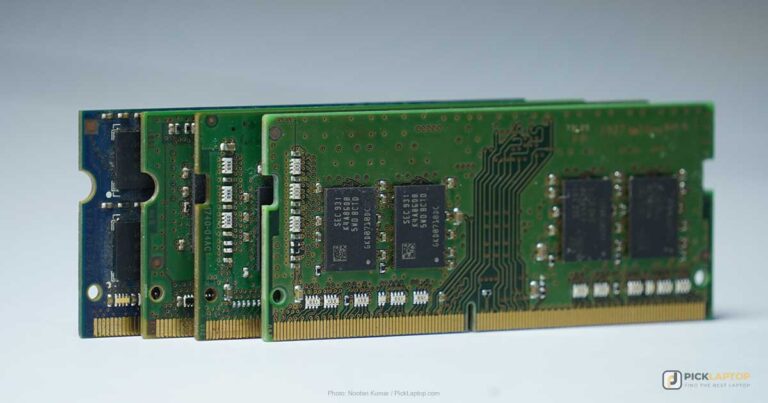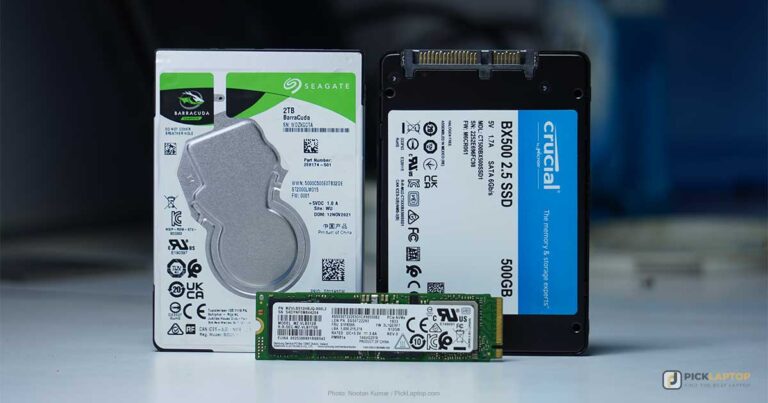
Microsoft’s published system requirements for Power BI Desktop name Windows 10 or later, .NET 4.7.2, at least 2GB of available memory and a display of at least 1440×900 — and no graphics card of any kind. Microsoft’s optimization guide points at the same places when a report runs slowly: the size of the data model, how much data a visual has to return, the number of visuals on a page, and network latency. Graphics hardware appears in neither document.
That reorders the spec sheet for analytics work. Memory holds the model and everything open beside it, and resolution decides how much report canvas survives once Power BI’s side panes are on screen. Memory and resolution lead the six laptops chosen for different kinds of analytics work in 2026.
Editor’s Pick

Last update on 2026-10-17 / Affiliate links / Images from Amazon Product Advertising API
32GB of memory and a 2880×1800 panel — the two specifications Microsoft’s own performance guidance points at — in a chassis Tom’s Hardware weighed at 986 grams, with nothing spent on a graphics card.
- Intel Core Ultra 7 258V
- 32GB LPDDR5X
- 14-inch 2880×1800 OLED
- 2.17 lbs
What’s Inside
- 1 – Business Analytics Laptop Buyer's Guide
- 2 – Business Analytics Laptop Comparison Table
- 3 – Best Laptops for Business Analytics in 2026 — Reviews
- 3.1 – 1. Lenovo ThinkPad X1 Carbon Gen 13 Aura Edition (Best Overall)
- 3.2 – 2. MSI Katana 15 HX (Best Value)
- 3.3 – 3. Samsung Galaxy Book6 Pro (Best Display)
- 3.4 – 4. Gigabyte Aero X16 (Best for Python and R Modeling)
- 3.5 – 5. Apple MacBook Air 13-inch M5 (Best Mac)
- 3.6 – 6. LG gram Pro 17 (Most Portable Large Screen)
- 4 – Recommended Accessories
- 5 – Which Business Analytics Laptop Should You Buy?
- 6 – Business Analytics Laptop FAQ
- 7 – Final Thoughts on Business Analytics Laptops
Business Analytics Laptop Buyer’s Guide
Do You Need a Dedicated GPU?
Standard visuals, tables, KPI cards, and the Excel and Tableau work around them run on integrated graphics. Where a discrete GPU does work in an analytics machine is outside the BI tools altogether: libraries that call CUDA directly, and training a model on the laptop. If that isn’t part of the job, the same money does more as memory, storage or a better panel — and a gaming chassis brings weight, a 720p webcam and RGB lighting into a client meeting along with the GPU.
Screen Resolution and Panel Space
Power BI Desktop opens Filters, Bookmarks, Visualizations and Data panes alongside the report canvas. Microsoft’s 1440×900 minimum exists because controls fall off screen below it — a floor for running the application, not a working target. At 1920×1080 those panes take a visible bite out of the canvas; 2560×1440 and above leaves it usable with three panes open. A 16:10 panel adds vertical rows over a 16:9 panel of the same width, and scaling matters as much as the panel’s native numbers — a 2560×1600 17-inch screen at 100% scaling shows more of a report than a 2880×1800 14-inch screen at 150%.
Processor and Memory
A Core Ultra 5 or Ryzen 5 class chip runs Excel, Power BI and Tableau at typical dataset sizes. Python or R modeling alongside the visualization tools is what makes the step to a Core Ultra 7 or Ryzen 7 worth paying for. Memory is the specification Microsoft’s guidance keeps returning to — an unfiltered table pulled into a model makes, in Microsoft’s words, huge demands on memory, and it competes with the browser tabs and workbooks open next to it. 16GB is the working floor. 32GB is what a large imported model plus a full browser asks for. As a practical rule of thumb, size memory against what runs at the same time rather than against the row count of any one dataset.
Storage
512GB is the floor for most analysts. 1TB is the figure to reach for once local dataset extracts, large .pbix files and archived report versions accumulate. On the MacBook Air below, storage is soldered, so the capacity ordered is the capacity kept; the Windows picks here take a replaceable M.2 drive.
Business Analytics Laptop Comparison Table


Last update on 2026-10-17 / Affiliate links / Images from Amazon Product Advertising API
Best Laptops for Business Analytics in 2026 — Reviews
Six machines, sorted by what the software asks for: canvas area and memory first, with one discrete-GPU pick for the modeling work that sits past the BI tools.
1. Lenovo ThinkPad X1 Carbon Gen 13 Aura Edition (Best Overall)
Best Overall
Last update on 2026-10-17 / Affiliate links / Images from Amazon Product Advertising API
- ProcessorIntel Core Ultra 7 258V (8-core)
- GPUIntel Arc 140V (integrated)
- RAM32GB LPDDR5X (soldered)
- Storage2TB PCIe Gen 5 SSD
- Display14-inch 2880×1800 OLED
- Battery57Wh
The two specifications that matter most here arrive together, in a machine that weighs under a kilogram. Tom’s Hardware measured 379 nits and 82.4% DCI-P3 on the OLED, weighed the machine at 986 grams, and recorded 11 hours 28 minutes on its web-browsing test at 150 nits.
Days spent in Power Query and pivot tables are typing as much as clicking. Tom’s Hardware describes keys with a snappy feel and a relatively deep 1.5mm of travel. Notebookcheck calls this the lightest X1 Carbon Lenovo has built and the lightest 14-inch ThinkPad.
Tom’s Hardware found the speakers loud but tinny, with distortion at maximum volume — serviceable for a conference call, not for anything else. Lunar Lake packages the memory with the processor, so 32GB is a ceiling rather than a starting point: the Gen 12 this replaces offered 64GB. A model that outgrows 32GB has nowhere to go on this machine.
Pros
- 32GB standard with a 2880×1800 OLED measured at 379 nits
- 986 grams — the lightest 14-inch ThinkPad
- 11h28m on Tom’s Hardware’s battery test
Cons
- 32GB is the hard ceiling — memory is packaged with the processor
- Speakers distort at high volume
2. MSI Katana 15 HX (Best Value)
Best Value
Last update on 2026-10-17 / Affiliate links / Images from Amazon Product Advertising API
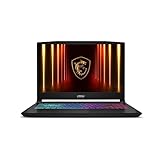
- ProcessorIntel Core i9-14900HX (24-core)
- GPUNVIDIA GeForce RTX 5070 (8GB GDDR7)
- RAM32GB DDR5 (two slots, up to 96GB)
- Storage1TB PCIe Gen 4 SSD
- Display15.6-inch 2560×1440 IPS, 165Hz
- Battery75Wh
A 2560×1440 panel and 32GB of DDR5 sitting in two SODIMM slots rather than soldered to the board. MSI’s specification puts those two slots at 96GB combined, so the memory question stays open after purchase — which is not true of four of the six picks here.
The RTX 5070 arrives with the chassis rather than with the workload. MSI builds this as a gaming laptop and sells it across categories; Power BI and Excel leave the GPU idle. What the chassis costs is on the same specification sheet: 2.4kg and 25.5mm, against 986 grams and 16mm for the ThinkPad above. The webcam is 720p, which shows on the call where you’re also sharing a dashboard, and the keyboard is four-zone RGB.
LaptopMedia’s review of the B14W chassis — the Core i7-14650HX version of the same machine — confirms a single M.2 slot. A second internal drive isn’t an option, so plan the storage at order time and leave the memory for later.
Pros
- 2560×1440 165Hz IPS panel with 32GB of DDR5
- Two SODIMM slots, up to 96GB — user-installed memory
- 75Wh battery
Cons
- 2.4kg and 25.5mm — a gaming chassis carried into a business role
- 720p webcam and a four-zone RGB keyboard
- Single M.2 slot, and the RTX 5070 sits idle in BI tools
3. Samsung Galaxy Book6 Pro (Best Display)
Best Display
Last update on 2026-10-17 / Affiliate links / Images from Amazon Product Advertising API
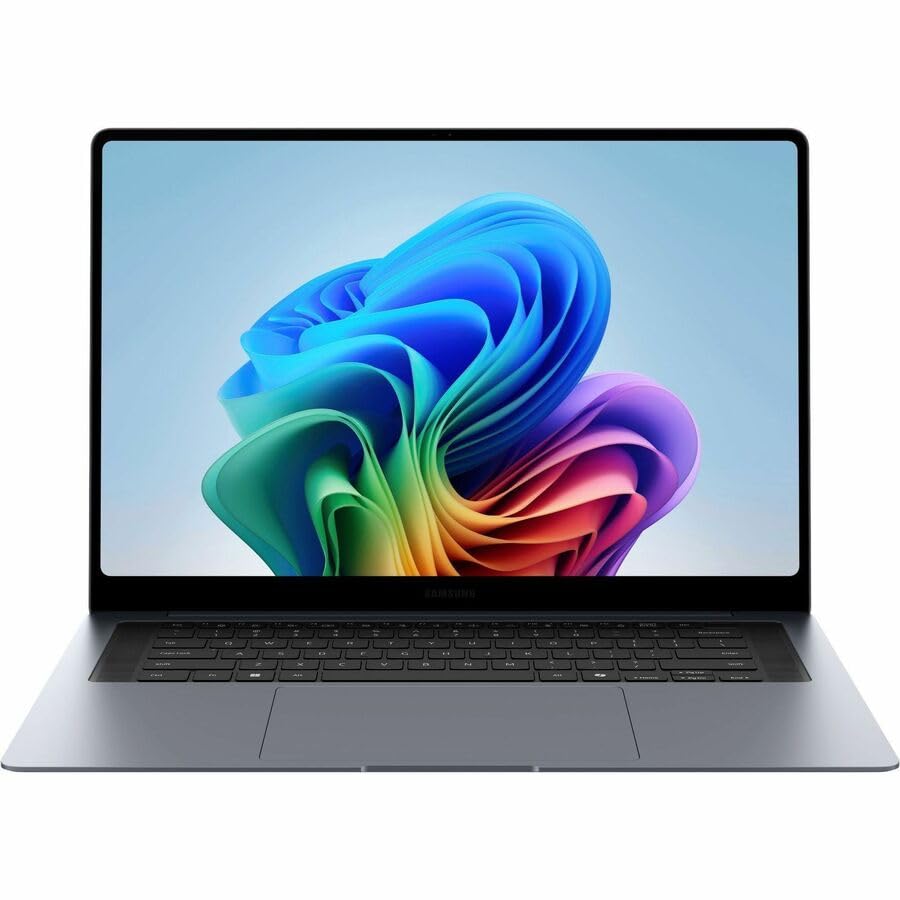
- ProcessorIntel Core Ultra 7 356H
- GPUIntel Arc Graphics (integrated)
- RAM32GB LPDDR5X (soldered)
- Storage512GB NVMe SSD
- Display14-inch 2880×1800 Dynamic AMOLED 2X touch, 30-120Hz
- Battery67.18Wh
Same panel size and same resolution as the ThinkPad above, so the separation is elsewhere. Samsung rates this AMOLED at 500 nits for SDR content and describes the finish as anti-reflective, against Lenovo’s 400-nit rating on the X1 Carbon, and it is the only touchscreen among these six — a report you scroll, pinch and annotate under overhead office lighting is what the coating and the touch layer are for.
The rest of the machine is built around carrying it: 1.24kg, 11.6mm, two Thunderbolt 4 ports and HDMI 2.1 for a second display at a desk. Samsung rates the 67.18Wh battery at up to 30 hours of video playback, which is a manufacturer figure rather than a measured runtime and should be read as one.
Published independent testing covers the 16-inch version of this generation rather than this 14-inch configuration. On that 16-inch unit, Notebookcheck found shallow key travel and PWM flickering with high amplitude on the AMOLED panel. PWM sensitivity varies between people, and it is worth more attention here than on most picks, because a dashboard is a thing you stare at rather than glance over. Memory is soldered at 32GB.
Pros
- 500-nit rated anti-reflective AMOLED at 2880×1800 — the only touchscreen here
- 1.24kg and 11.6mm, with two Thunderbolt 4 ports and HDMI 2.1
- 67.18Wh, rated at up to 30 hours of video playback
Cons
- Notebookcheck found high-amplitude PWM on this panel generation (16-inch unit)
- Shallow key travel; memory soldered at 32GB
- This 14-inch configuration has no published independent testing
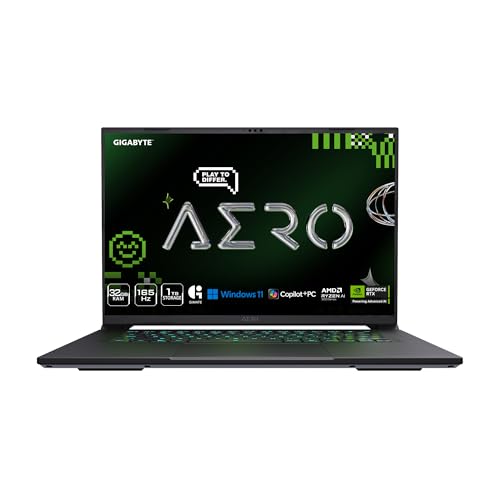
4. Gigabyte Aero X16 (Best for Python and R Modeling)
Best for Python and R Modeling
Last update on 2026-10-15 / Affiliate links / Images from Amazon Product Advertising API
- ProcessorAMD Ryzen AI 9 HX 370 (12-core)
- GPUNVIDIA GeForce RTX 5070 (8GB GDDR7)
- RAM32GB DDR5-5600 (two slots, up to 64GB)
- Storage1TB PCIe Gen 4 SSD (two M.2 slots)
- Display16-inch 2560×1600 IPS, 165Hz
- Battery76Wh
Analysts whose job has grown a second half in Python or R are who this configuration answers. The RTX 5070 is there for libraries that address it directly and for training a model locally instead of queueing for a cluster; Power BI, Excel and Tableau will leave it idle all day.
Tom’s Hardware tested the Ryzen AI 7 350 version of this chassis and measured 369 nits and 78.5% DCI-P3 on the 2560×1600 panel, 1.7mm of key travel it called comfortable, 4.2 pounds, and 9 hours 13 minutes on its mixed-use battery test. Gigabyte rates the panel at 400 nits and 100% sRGB and puts the chassis between 16.75 and 19.99mm. The panel reaches sRGB and stops there — enough for standard business visuals, short of what a color-managed workflow needs.
Gigabyte’s specification also lists two SODIMM slots to 64GB and two M.2 slots, so both the memory and the storage stay open after purchase.
Pros
- RTX 5070 for CUDA-backed Python and R work
- Two SODIMM slots to 64GB and two M.2 slots
- 9h13m on Tom’s Hardware’s battery test at 4.2 pounds
Cons
- Panel stops at sRGB — Tom’s Hardware measured 78.5% DCI-P3
- The RTX 5070 does nothing for Power BI, Excel or Tableau
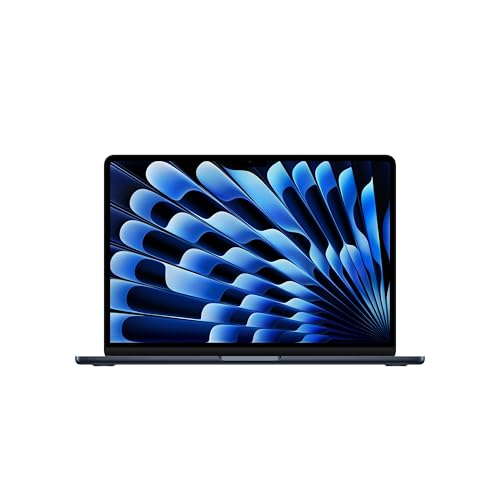
5. Apple MacBook Air 13-inch M5 (Best Mac)
Best Mac
Last update on 2026-10-17 / Affiliate links / Images from Amazon Product Advertising API
- ProcessorApple M5 (10-core CPU)
- GPUApple M5 (integrated)
- RAM16GB unified (configurable to 32GB)
- Storage512GB SSD
- Display13.6-inch 2560×1664 Liquid Retina, 500 nits
- Battery53.8Wh
Power BI Desktop decides this one before anything else does. Microsoft’s requirements list Windows 10 or Windows Server 2016 or later and no other operating system, so a Mac reaches Power BI through the browser-based service or through Windows in a virtual machine. Excel and Tableau run on macOS directly, and for an analyst who lives in those two, the constraint may never come up.
Apple rates the 53.8Wh battery at up to 18 hours of video streaming and 15 hours of wireless web browsing, and the chassis has no fan. Tom’s Hardware watched the M5 open a Cinebench 2026 stress loop at 3,415 and settle in the low 2,300s — a long training run in Python reaches that point; refreshing a dashboard or recalculating a workbook doesn’t.
16GB is the base configuration and it is soldered, which makes 32GB an order-time decision rather than a later one. At 13.6 inches it is also the smallest canvas here, which works against a pane-heavy tool like Power BI more than it does against Excel.
Pros
- Fanless and silent, with a 500-nit display
- Apple rates 18 hours video streaming, 15 hours wireless web
- Excel and Tableau run natively on macOS
Cons
- Power BI Desktop requires Windows — browser service or a VM
- Memory and storage are soldered; 16GB in the base configuration
- Smallest display here at 13.6 inches
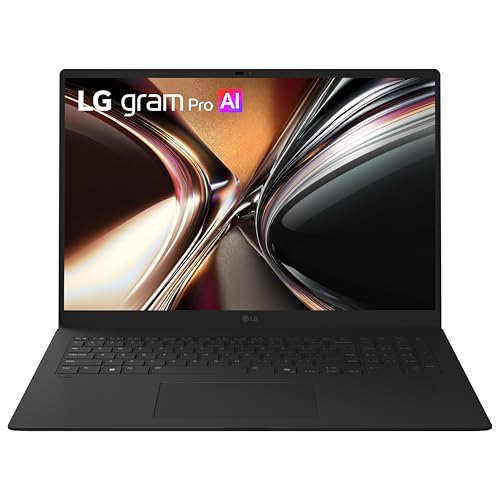
6. LG gram Pro 17 (Most Portable Large Screen)
Most Portable Large Screen
Last update on 2026-10-17 / Affiliate links / Images from Amazon Product Advertising API
- ProcessorIntel Core Ultra 7 355
- GPUIntel Graphics (integrated)
- RAM32GB LPDDR5X
- Storage1TB NVMe SSD
- Display17-inch 2560×1600 IPS
- OSWindows 11 Home
Seventeen inches is the most canvas on this list, and it does not come with the weight that size normally implies. LG’s specification for the 17Z90U-G puts it at 3 pounds and 0.6 inches, and lists seven MIL-STD-810H test methods — roughly what the 14-inch Samsung above weighs, with three extra diagonal inches of report on screen.
Check the graphics line before ordering, because LG sells two machines under this name. The 17Z90U configuration listed here — Core Ultra 7 355, 32GB, 1TB — runs Intel integrated graphics; the separate 17Z90UR variant carries an RTX 5050 and weighs 1.74kg. For Power BI, Excel and Tableau, integrated graphics are what the software asks for, and they are what keeps this one at 3 pounds.
2560×1600 spread across 17 inches works out to roughly 178 pixels per inch, the lowest density here: text sits larger at 100% scaling than it does on the 14-inch panels, and less sharp. The evidence base is thin as well. No independent lab has published a test of this configuration, so LG’s own specification sheet is all there is, and LG’s up-to-27.5-hour battery number is rated video playback rather than measured runtime.
Pros
- 17-inch 2560×1600 panel at 3 pounds and 0.6 inches
- Seven MIL-STD-810H test methods, per LG
- 32GB and 1TB as shipped
Cons
- No independent lab testing published for this configuration
- Roughly 178 pixels per inch — the lowest density on this list
- LG’s 27.5-hour figure is rated video playback, not measured runtime
Recommended Accessories


Last update on 2026-10-17 / Affiliate links / Images from Amazon Product Advertising API
Which Business Analytics Laptop Should You Buy?
| Best For | Pick |
|---|---|
| Overall | Lenovo ThinkPad X1 Carbon Gen 13 |
| Value | MSI Katana 15 HX |
| Display | Samsung Galaxy Book6 Pro |
| Python and R Modeling | Gigabyte Aero X16 |
| Mac | Apple MacBook Air 13-inch M5 |
| Most Portable Large Screen | LG gram Pro 17 |
Business Analytics Laptop FAQ
Does Power BI need a dedicated GPU?
No. When a report does run slowly, the fixes Microsoft names are changes to the report rather than to the machine: apply restrictive filters so a visual returns less data, move detail into drillthrough pages and tooltips instead of adding visuals to a page, and check the storage mode on the model. Buying different hardware appears nowhere on that list.
Can I run Power BI on a Mac?
Only indirectly. Power BI Desktop is a Windows application, so the two routes are the Power BI service in a browser or Power BI Desktop inside a Windows virtual machine. On Apple silicon that VM runs Windows on Arm, and Microsoft’s own requirements page notes that Power BI Desktop on Windows on Arm needs the 2025-09 cumulative update (KB5065789) — worth confirming your VM image is current before you rely on it.
How much RAM do I need for business analytics?
Rather than guessing, measure it: open Task Manager while your normal working set is running — Power BI with your largest model loaded, Excel, a browser with its usual tabs — and look at what’s left. If you’re near the top of 16GB there, a faster processor on the next machine changes nothing, because memory is what ran out. Then check whether the machine you’re looking at will accept more later — most thin-and-light Windows laptops and every Mac solder it.
What screen resolution should I look for?
2560×1440 and above. Microsoft’s stated 1440×900 minimum is a floor for the application launching correctly — below it, some controls render off screen — not a figure to buy against. The number that decides how much report you see is the effective resolution after Windows scaling, not the panel’s native one: a 17-inch 2560×1600 screen at 100% shows more canvas than a 14-inch 2880×1800 screen at 150%, even though the second panel has more pixels.
Do I need Python or R installed for business analytics work?
Only if your role reaches past standard BI tools into statistical modeling. One detail that catches people out: Power BI Desktop can run Python scripts and Python visuals, but it doesn’t ship an interpreter — Microsoft requires a local Python installation plus the pandas and matplotlib packages, and warns that distributions needing an extra environment step, such as Conda, may fail to run.
Final Thoughts on Business Analytics Laptops
Two specifications change an analyst’s day: how much of a report fits on screen, and how much memory the machine holds while everything else stays open. Microsoft’s own performance guidance for Power BI points at the model and the report page, and never at graphics hardware. A graphics card belongs in an analytics laptop when the modeling work has moved onto the machine itself — a different purchase, made for a different reason.
Statistical modeling and machine learning push past what these six are built for — our guide to laptops for TensorFlow is aimed at that heavier end of the work.