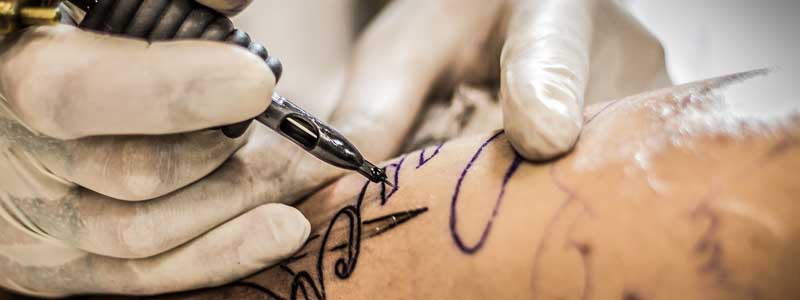
A client sits down, describes what they want, and you need to sketch it live — adjust the linework while they watch, resize it to fit the placement they’re pointing at, then get a clean stencil printed before they change their mind. That moment is what actually decides which device makes sense, more than any spec sheet does.
For that workflow, three things matter most: something portable enough to bring to the chair, a stylus that feels natural rather than laggy, and a display accurate enough that what you see on screen is what actually goes on skin. Everything else — processor, storage, operating system — supports those three things rather than competing with them.
Editor’s Pick

Last update on 2026-10-17 / Affiliate links / Images from Amazon Product Advertising API
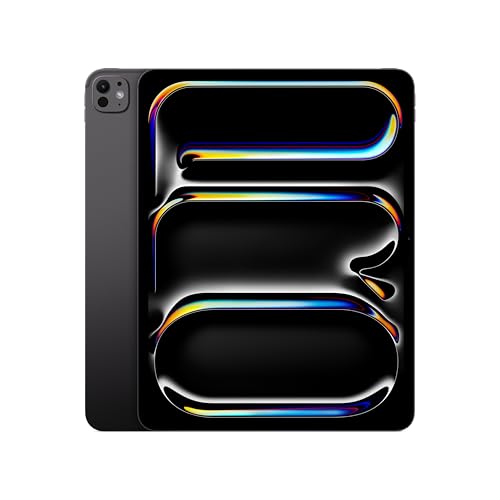
Light enough to hand across the chair, the Apple Pencil Pro feels closest to natural pen-on-paper of anything on this list, and the display is accurate enough to trust before it becomes permanent.
- Apple M5 chip
- 16GB RAM
- 256GB storage
- 13-inch Ultra Retina XDR display
What’s Inside
- 1 – Tattoo Design Laptop Buyer's Guide
- 2 – Tattoo Design Laptop Comparison Table
- 3 – Best Laptops and Tablets for Tattoo Artists in 2026 — Reviews
- 3.1 – 1. Acer Chromebook Plus Spin 714 (Budget Chromebook)
- 3.2 – 2. HP OmniBook 5 Flip (Cheapest Windows)
- 3.3 – 3. Samsung Galaxy Book6 Pro (Best Display)
- 3.4 – 4. Microsoft Surface Pro 13-inch (Best Windows Tablet)
- 3.5 – 5. Apple iPad Pro 13-inch M5 (Best Tablet Overall)
- 3.6 – 6. ASUS Zenbook DUO (Ultimate Dual-Screen Choice)
- 3.7 – 7. Apple MacBook Air 13-inch M5 (Best Mac)
- 4 – Recommended Accessories
- 5 – Which Tattoo Design Laptop Should You Buy?
- 6 – Tattoo Design Laptop FAQ
- 7 – Final Thoughts on Tattoo Design Laptops
Tattoo Design Laptop Buyer’s Guide
Display Quality
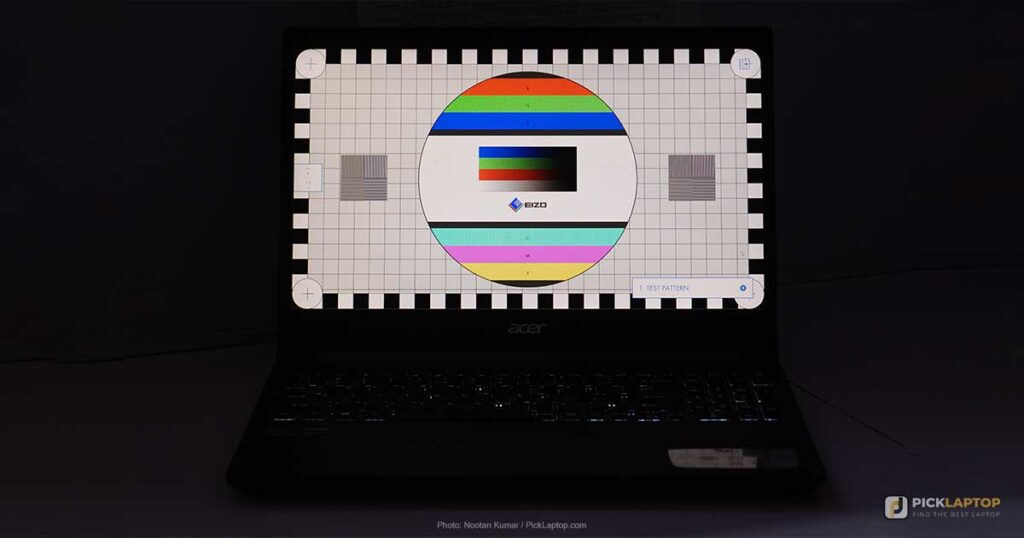
This matters more here than in almost any other laptop category — you’re judging line weight, shading gradients, and color that will become permanent. Look for at least 100% sRGB coverage; OLED or AMOLED panels go further, with true blacks that make it easier to judge how heavy a shaded area reads.
Touchscreen and Stylus Support
A touchscreen only makes sense on a convertible or detachable design — there’s no working a stylus on a laptop that only opens to 90 degrees. Beyond that, pressure sensitivity and low latency matter more than raw resolution: a laggy line between where you draw and where it appears on screen breaks the feel of sketching entirely.
Processor and Memory
An Intel Core 5/i5-class or Ryzen 5-class chip runs Procreate, Illustrator, and Photoshop without slowdown. 16GB of RAM is the practical floor for smooth multitasking between a reference photo, your sketch, and stencil software running at once. You don’t need a dedicated GPU for 2D design work — integrated graphics on any current chip is enough, and it doesn’t become relevant unless you’re also doing 3D rendering.
Storage
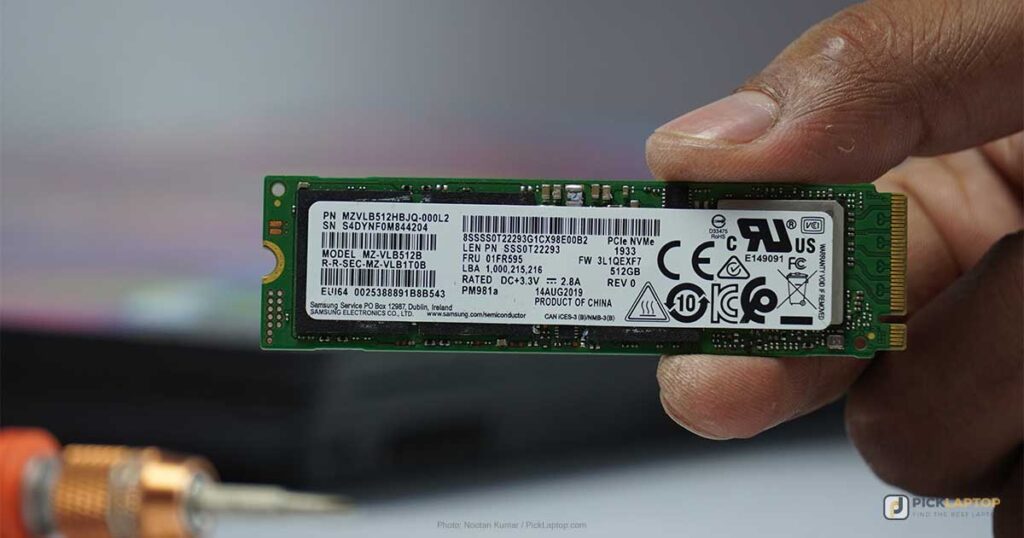
256GB is workable if you keep most files in cloud storage, but a growing library of client references, flash designs, and stencil exports adds up fast. 512GB is the safer starting point, and an SSD is standard on every pick below — load times matter when a client is waiting in the chair.
Battery Life
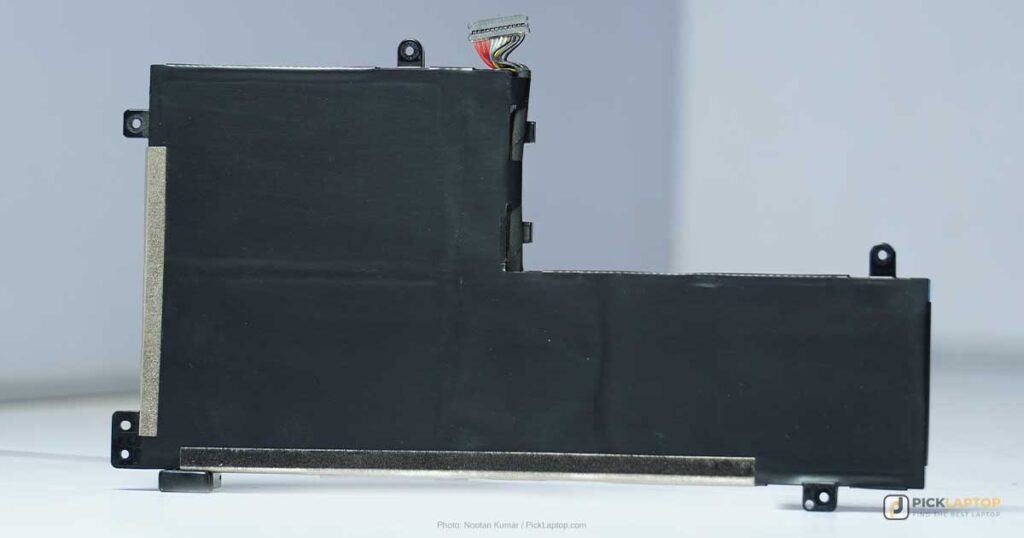
At least 8 hours gets you through a full studio day without hunting for an outlet between clients. Every pick below beats that mark by several hours on its manufacturer rating — treat these as rated figures rather than guaranteed runtime, since actual battery life depends on brightness and what’s running.
Laptop, Tablet, or Standalone Drawing Computer?
The “standalone graphics computer” category — a drawing tablet with a full desktop OS built in, no separate laptop required — has effectively disappeared. Wacom’s own support team confirms the MobileStudio Pro line, last updated in 2019, has no current successor; the company’s current Movink and MovinkPad products require pairing with a separate laptop or phone rather than running full desktop software on their own.
That leaves two practical paths in 2026: an iPad Pro with Apple Pencil Pro (the closest thing to that all-in-one experience, running iPadOS apps like Procreate natively), or a Windows/Mac laptop paired with an external drawing tablet if you prefer desktop-grade Photoshop or Illustrator. Both are covered in the picks below.
Tattoo Design Laptop Comparison Table


Last update on 2026-10-17 / Affiliate links / Images from Amazon Product Advertising API
Best Laptops and Tablets for Tattoo Artists in 2026 — Reviews
Seven picks spanning Chromebook to premium, laptop to tablet — including a proper standalone alternative now that Wacom’s all-in-one category is gone.
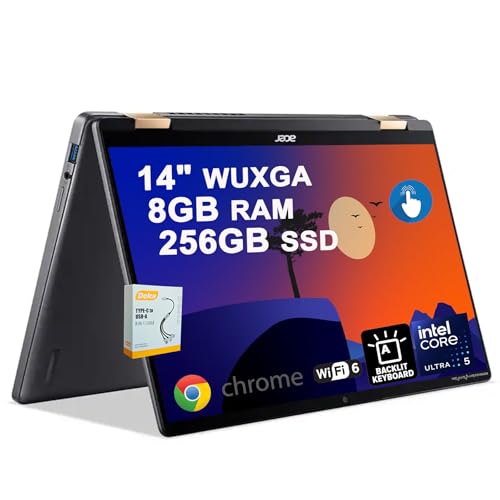
1. Acer Chromebook Plus Spin 714 (Budget Chromebook)
Budget Chromebook
Last update on 2026-10-17 / Affiliate links / Images from Amazon Product Advertising API
- ProcessorIntel Core Ultra 5 115U (8-core)
- GPUIntel Graphics (integrated)
- RAM8GB LPDDR5 (16GB config available)
- Storage256GB SSD (512GB config available)
- Display14-inch WUXGA IPS touchscreen, 100% sRGB
- Battery10 hours rated
Casual sketching and reference work run smoothly here — and unlike most Chromebooks, it includes an Active Stylus with its own garage, so there’s no separate purchase needed to start drawing. One quirk: the stylus can’t be pulled out once the screen is already folded into tablet mode — you need to remove it first, which trips people up the first few times.
The 100% sRGB touchscreen is a strong display for this price tier, and ChromeOS now runs Android drawing apps through the Play Store, though you won’t get desktop Photoshop or Illustrator here.
If your workflow is built entirely around cloud tools and Android-based sketching apps, this is a legitimate budget entry point. If you need desktop-grade software, look at the Windows picks below instead.
Pros
- Active Stylus included, not sold separately
- 100% sRGB touchscreen at a budget price
- MIL-STD-810H durability tested
Cons
- No desktop Photoshop, Illustrator, or CorelDraw
- 8GB RAM on the base configuration
2. HP OmniBook 5 Flip (Cheapest Windows)
Cheapest Windows

Last update on 2026-10-17 / Affiliate links / Images from Amazon Product Advertising API
- ProcessorIntel Core 5 120U
- GPUIntel Graphics (integrated)
- RAM8GB DDR5 (16GB config available — get this one)
- Storage512GB SSD
- Display14-inch 2K IPS touchscreen
- Battery21 hours rated
This is the cheapest way into a real Windows desktop workflow — full Photoshop, Illustrator, or CorelDraw, not an Android or web substitute.
This display covers roughly 62.5% sRGB per HP’s own product spec sheet for this configuration, well under the 100% we recommend above for color-critical work — treat this as a sketching and layout machine rather than your final color reference before committing to ink.
The 16GB configuration is worth the small price difference over the base 8GB for running a design app alongside anything else.
Pros
- Cheapest full-Windows touchscreen pick on this list
- 360° hinge and 21-hour rated battery
- Runs desktop Photoshop, Illustrator, CorelDraw
Cons
- Display covers only ~62.5% sRGB — not for final color decisions
- No stylus included
3. Samsung Galaxy Book6 Pro (Best Display)
Best Display
Last update on 2026-10-17 / Affiliate links / Images from Amazon Product Advertising API
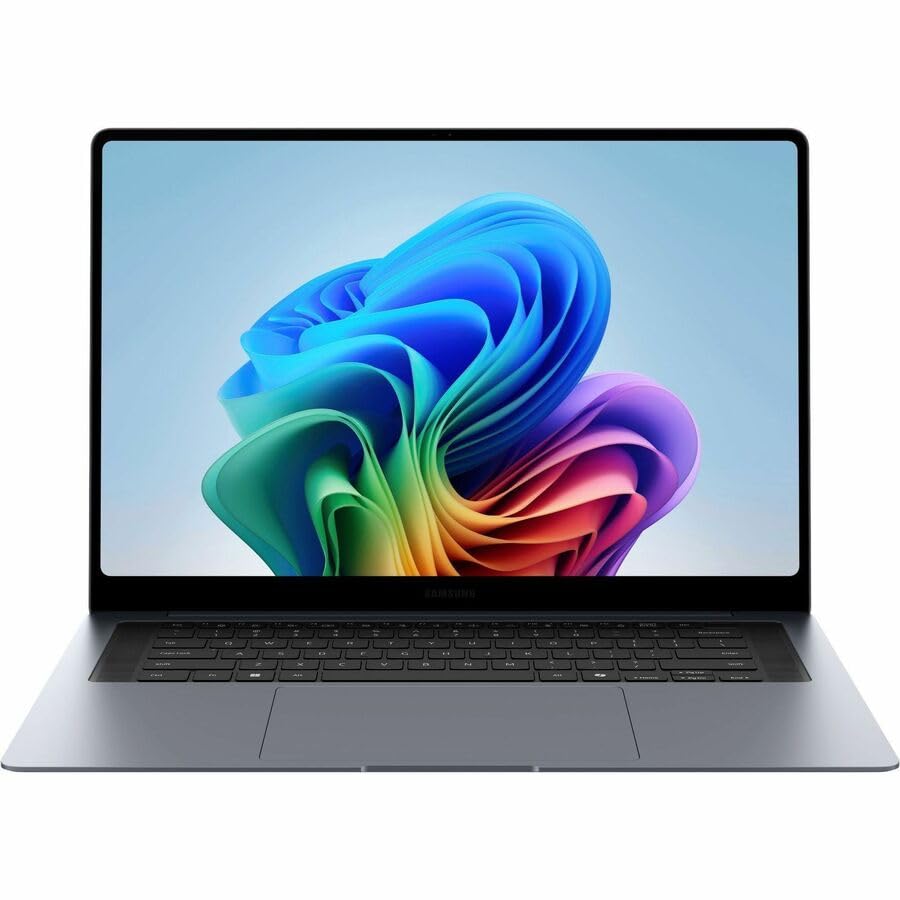
- ProcessorIntel Core Ultra 7 (Series 3)
- GPUIntel Arc (integrated)
- RAM16-32GB configs
- StorageUp to 1TB
- Display16-inch AMOLED touchscreen, adaptive 30-120Hz
- BatteryUp to 30 hours rated
This AMOLED panel is built for judging true color before a design becomes permanent: deep blacks, wide color coverage, and an adaptive refresh rate that also helps battery life during lighter sketching sessions.
16GB of RAM keeps a typical reference-and-design workflow running smoothly, with 32GB configurations available if you’re running something heavier at the same time. The trade-off for that display: Business Standard’s review found the keyboard shallow, with less tactile feedback than expected at this price — a problem if you also use this for extensive client notes, less of an issue if most of your typing is light. That review’s unit ran the Core Ultra X7 chip, a step above the Core Ultra 7 this listing specs within the same Series 3 lineup; the keyboard and display are properties of the chassis rather than the processor, so both findings carry over, but CPU-bound tasks will run somewhat behind what Business Standard measured.
Pros
- Deep-black, wide-gamut AMOLED display for color-critical decisions
- Up to 32GB RAM available
- Long rated battery life with adaptive refresh
Cons
- Priced well above the budget picks here
- Shallow key travel — noticeable during heavy note-taking
4. Microsoft Surface Pro 13-inch (Best Windows Tablet)
Best Windows Tablet
Last update on 2026-10-17 / Affiliate links / Images from Amazon Product Advertising API
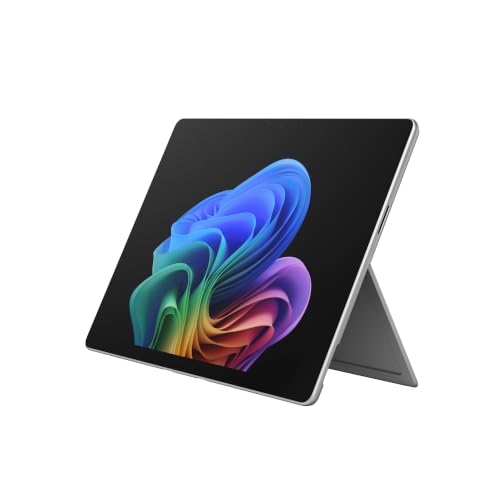
- ProcessorQualcomm Snapdragon X2 Elite
- GPUAdreno (integrated)
- RAM16GB (32GB config available)
- Storage1TB SSD, user-replaceable
- Display13-inch OLED touchscreen
- Battery15.5 hours rated
The detachable design suits tattoo work specifically: pull the keyboard off entirely and you’re holding just the tablet and stylus, which is more natural for sketching directly in front of a client than any laptop hinge.
The OLED touchscreen delivers deep blacks and wide color coverage for color-sensitive sketching work, and this is the one Windows tablet on this list that pairs a proper detachable form factor with desktop-grade software support.
Like the Chromebook Plus above, this runs on ARM (Snapdragon X2 Elite) rather than x86. Per Lenovo’s own FAQ on Snapdragon Windows laptops, Photoshop is one of the apps that now runs natively on ARM rather than through emulation, but tools that depend on legacy or custom device drivers “may still deliver [their] best performance on traditional x86 systems” — check any niche legacy tattoo-specific program for native ARM or emulated compatibility before you buy.
Pros
- True detachable design, not just a convertible hinge
- OLED touchscreen with deep blacks and wide color coverage
- Runs desktop Windows software
Cons
- ARM chip — check native support or emulation compatibility for any niche legacy software
- Keyboard and pen typically sold separately
5. Apple iPad Pro 13-inch M5 (Best Tablet Overall)
Best Tablet Overall
Last update on 2026-10-17 / Affiliate links / Images from Amazon Product Advertising API
- ProcessorApple M5
- GPUApple M5 (10-core integrated)
- RAM16GB
- Storage256GB
- Display13-inch Ultra Retina XDR
- BatteryAll-day rated
This is the closest match to what the discontinued MobileStudio Pro used to offer — Procreate, one of the most widely used tattoo design apps, runs natively here.
The Ultra Retina XDR display is trustworthy for color work, and Parkablogs’ artist-focused review of the Pencil Pro backs up Apple’s claims: minimal activation force even on thin lines, no jitter on slow diagonal strokes, and reliable palm rejection — the fundamentals that matter most when you’re drawing rather than just tapping.
One practical catch: this model’s redesigned body means older Apple Pencils and Magic Keyboards don’t fit — if you’re upgrading from an earlier iPad Pro, budget for new accessories rather than assuming your old ones carry over. The trade-off versus a full laptop is app ecosystem — you’re working in iPadOS apps rather than full desktop Photoshop or Illustrator, though Procreate alone supports most tattoo design workflows.
Pros
- Closest available equivalent to a standalone drawing computer
- Runs Procreate natively with excellent Pencil Pro precision
- Ultra Retina XDR display, color-trustworthy for design work
Cons
- iPadOS apps only — no desktop Photoshop or Illustrator
- Older Pencils and Magic Keyboards aren’t compatible — budget for current-gen accessories
6. ASUS Zenbook DUO (Ultimate Dual-Screen Choice)
Ultimate Dual-Screen
Last update on 2026-10-17 / Affiliate links / Images from Amazon Product Advertising API
- ProcessorIntel Core Ultra 9 386H (Panther Lake)
- GPUIntel Arc (integrated)
- RAM32GB LPDDR5X
- StorageUp to 2TB across two M.2 slots
- DisplayDual 14-inch OLED touchscreens
- Battery12 hours rated
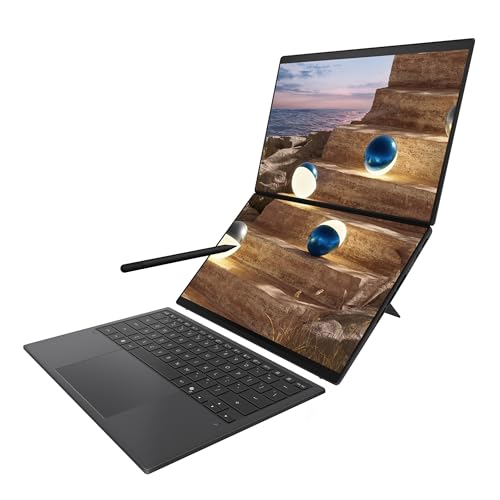
The dual-screen design solves a specific problem for tattoo work: reference photos and client mood boards on one screen while you sketch directly on the other, no alt-tabbing between windows mid-session. The 2026 redesign’s hinge cuts the gap between the two panels from 25.3mm to 7.6mm, and ITPro’s review found the two-screen layout more seamless than the previous generation — though a thin seam is still visible if a single window spans both screens. ITPro’s unit was configured with the range-topping Core Ultra X9 388H; this listing specs the Core Ultra 9 386H, one tier down on the same Panther Lake platform. The hinge and screen-gap findings are chassis-level and apply either way; CPU-bound performance will run somewhat behind the tested unit.
32GB of RAM and a Panther Lake chip mean design software and reference material stay open side by side without lag, and both panels are OLED — no display-quality trade-off between the two. Included ASUS Pen 3.0 means no separate stylus purchase, and this is the most expensive pick here, priced for artists who’ve decided the dual-screen workflow is worth it.
Pros
- Dual OLED touchscreens — reference and canvas simultaneously
- 32GB RAM, current-gen Panther Lake chip
- ASUS Pen 3.0 included
Cons
- Most expensive pick on this list
- Dual-screen form factor takes adjustment if you haven’t used one
7. Apple MacBook Air 13-inch M5 (Best Mac)
Best Mac
Last update on 2026-10-17 / Affiliate links / Images from Amazon Product Advertising API
- ProcessorApple M5 (10-core CPU)
- GPUApple M5 (integrated)
- RAM16GB unified
- Storage512GB SSD
- Display13.6-inch Liquid Retina
- Battery18 hours rated (Apple)
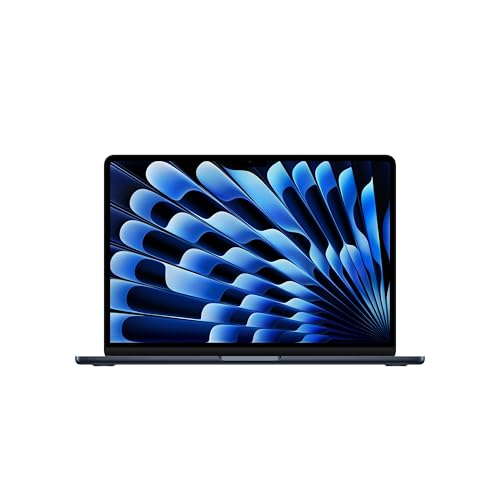
MacBooks still don’t have a touchscreen, so this isn’t a direct-on-screen sketching pick — instead, connect one of the graphics tablets in the accessories section below if you want desktop Photoshop or Illustrator with Mac’s color-accurate display.
The Liquid Retina display holds accurate color for design review, and 16GB of unified memory makes this a workable studio-and-travel machine for artists who don’t need to draw directly on the laptop screen itself. Apple rates the battery at 18 hours; Tom’s Hardware measured roughly 15 hours 28 minutes on its mixed web-browsing and video test, so plan around the lower figure for real-world use. That same testing shows the fanless chip throttling under sustained heavy load — irrelevant for design work, which matters if you also batch-export large image files regularly.
Pros
- Silent, fanless operation
- 18-hour Apple-rated battery; ~15.5 hours measured by Tom’s Hardware
- Color-accurate display for design work
Cons
- No touchscreen — requires an external drawing tablet for on-screen sketching
- 16GB is fixed, not upgradeable
Recommended Accessories




Last update on 2026-10-17 / Affiliate links / Images from Amazon Product Advertising API
Which Tattoo Design Laptop Should You Buy?
| Best For | Pick |
|---|---|
| Budget Chromebook | Acer Chromebook Plus Spin 714 |
| Cheapest Windows | HP OmniBook 5 Flip |
| Best Display | Samsung Galaxy Book6 Pro |
| Best Windows Tablet | Microsoft Surface Pro 13-inch |
| Best Tablet Overall | Apple iPad Pro 13-inch M5 |
| Ultimate Dual-Screen | ASUS Zenbook DUO |
| Best Mac | Apple MacBook Air 13-inch M5 |
Tattoo Design Laptop FAQ
Is a laptop or a tablet better for tattoo design work?
Both work well. Tablets like the iPad Pro are more portable and pair naturally with a stylus for direct sketching. Laptops offer wider desktop software compatibility (full Photoshop, Illustrator, CorelDraw) if that matters more to your workflow than portability.
Do I need a dedicated graphics card for tattoo design?
No, for standard 2D design work. Procreate, Photoshop, and Illustrator all run well on integrated graphics — that’s true across every pick in this guide, including the budget Chromebook. A dedicated GPU only becomes relevant if your studio work branches into 3D rendering or animation, which none of the software above requires.
What happened to standalone graphics tablets like the Wacom MobileStudio Pro?
It was discontinued. Wacom’s own community post comparing the MovinkPad Pro and MobileStudio Pro explains the replacement lineup: the MovinkPad Pro runs Android rather than a full desktop OS, and both it and the smaller MovinkPad are display/input devices meant to connect to a computer or phone rather than machines you’d design on standalone. That’s the functional gap the iPad Pro now fills for artists who want one device rather than a tablet-plus-laptop setup.
How much RAM do I need for tattoo design software?
16GB runs Procreate, Photoshop, or Illustrator smoothly alongside reference material; 8GB is workable for lighter sketching but leaves little multitasking room. Whether you can add more later depends on the machine: the Galaxy Book6 Pro above configures up to 32GB, while the MacBook Air and iPad Pro ship with fixed memory and no upgrade path.
Can I use a MacBook for tattoo design if it doesn’t have a touchscreen?
Yes — connect a graphics tablet like a Wacom Intuos over USB or Bluetooth and draw on that while the software runs on the Mac. Many professional artists prefer this setup over an all-in-one touchscreen device.
Final Thoughts on Tattoo Design Laptops
The real decision here isn’t budget first — it’s whether you want to sketch directly on a touchscreen or pair a laptop with an external drawing tablet, and how much you’re willing to spend on display color accuracy versus other features. Any of the seven picks above will run the actual software; the differences are in form factor, display quality, and price.
If your studio work extends into photo editing for portfolio shots or healed-tattoo documentation, the color-accuracy question comes up again, from that angle, in our guide to laptops for Adobe Lightroom.

Hi, it’s incredibly helpful, thanks for sharing.
Thanks for the kind words, Bob!