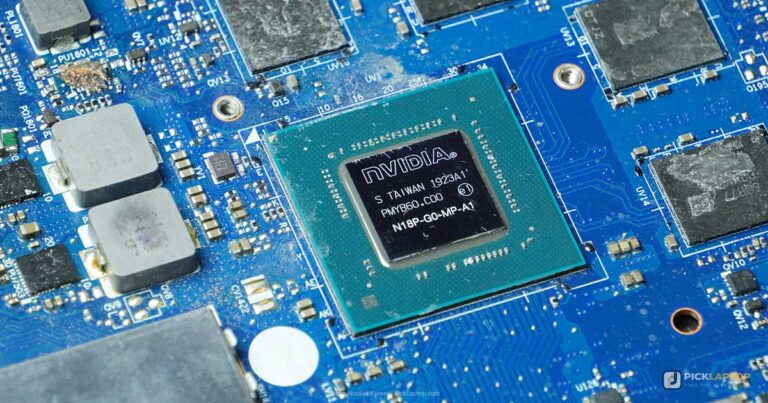
Adobe lists 2GB of GPU memory as the minimum to run Lightroom Classic, and in the same document asks for 8GB of dedicated GPU memory, or 16GB of shared memory, for full GPU acceleration and AI features such as Denoise, Lens Blur, and Reflection Removal. A machine can clear the first figure by a wide margin and still sit below the second.
That gap is where most Lightroom laptop decisions get made. Here’s what Adobe’s documentation and Puget Systems’ workstation testing say to check, then seven laptops matched to different kinds of photo work.
Editor’s Pick
Last update on 2026-10-15 / Affiliate links / Images from Amazon Product Advertising API
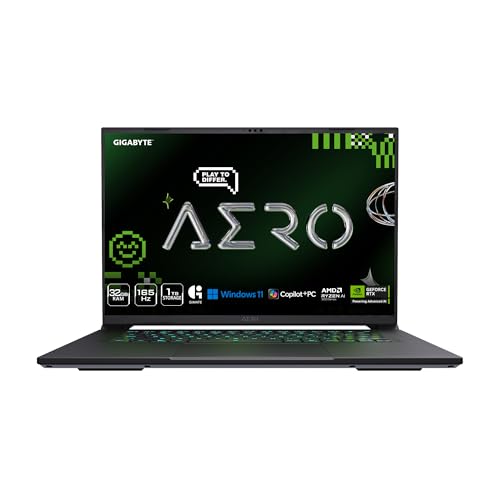
Clears Adobe’s stated memory and VRAM thresholds for the AI tools, in a 1.9kg chassis light enough to carry to a shoot — with a panel that measures better for screen delivery than for print.
- AMD Ryzen AI 9 HX 370
- NVIDIA RTX 5070 (8GB)
- 32GB DDR5
- 16-inch WQXGA IPS, 165Hz
What’s Inside
- 1 – Best Laptops for Adobe Lightroom Buyer's Guide
- 2 – Adobe Lightroom Laptop Comparison Table
- 3 – Best Laptops for Adobe Lightroom in 2026: In-Depth Reviews
- 3.1 – 1. Gigabyte Aero X16 (Best Overall)
- 3.2 – 2. Acer Nitro V 16S AI (Best Budget)
- 3.3 – 3. MSI Stealth 16 AI+ (Best Thin-and-Light)
- 3.4 – 4. Lenovo Legion Pro 7i Gen 10 (Best for AI-Powered Editing)
- 3.5 – 5. Apple MacBook Pro 14-inch (Best for macOS)
- 3.6 – 6. LG gram Pro 17 (Best for Field and On-Location Work)
- 3.7 – 7. MSI Raider 18 HX AI (Best for Massive Catalogs)
- 4 – Recommended Accessories
- 5 – Which Adobe Lightroom Laptop Should You Buy?
- 6 – Adobe Lightroom Laptop FAQ
- 7 – Final Thoughts on Adobe Lightroom Laptops
Best Laptops for Adobe Lightroom Buyer’s Guide
Lightroom Classic and cloud-based Lightroom are separate products with separate hardware demands. Cloud Lightroom moves more processing to Adobe’s servers, so local hardware carries less of the work. Everything below is written for Lightroom Classic, which does its processing on the machine in front of you.
Performance
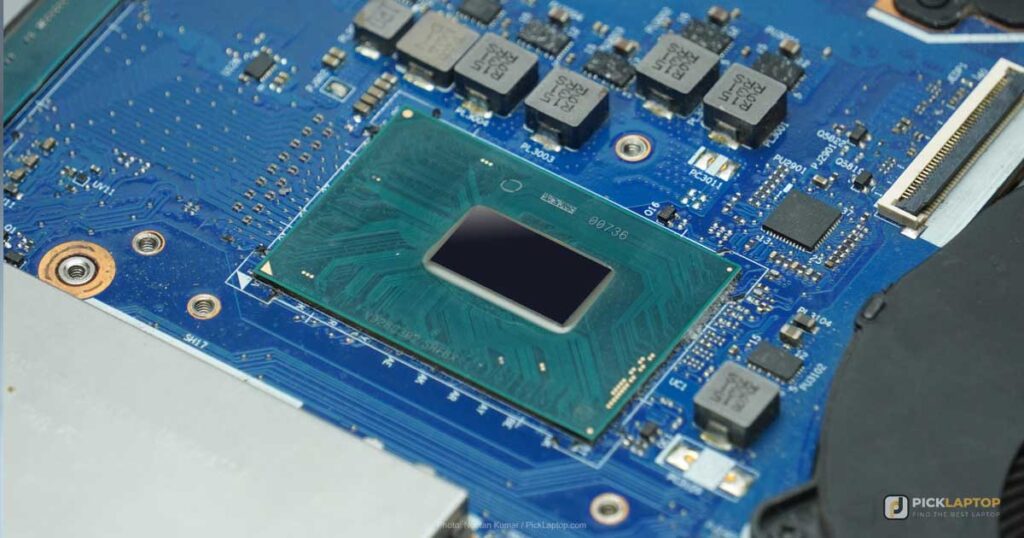
Core count and clock speed do not split the work evenly here. Puget Systems, which builds and benchmarks workstations for this software, says most tasks in Lightroom Classic are only lightly threaded, and that going past roughly eight cores helps with a short list of jobs — exporting and generating previews. Culling a shoot, moving sliders in Develop and working a catalog lean on per-core speed instead.
An Intel Core Ultra 7 or 9, or a Ryzen 7 or 9, puts eight or more cores behind the export queue without giving up single-core speed on everything else. A 24-core chip moves the export column and leaves the rest of the day where it was.
Adobe’s published minimum is 8GB of RAM, with 16GB or more listed as recommended. As a practical rule of thumb, treat 32GB as the target instead — Puget Systems configures that as its own minimum for Lightroom Classic systems, and suggests 64GB for most users so the page file stays out of the way. Catalogs past 100,000 images, or a Photoshop session running alongside Lightroom, are where 64GB stops being surplus.
Display Quality
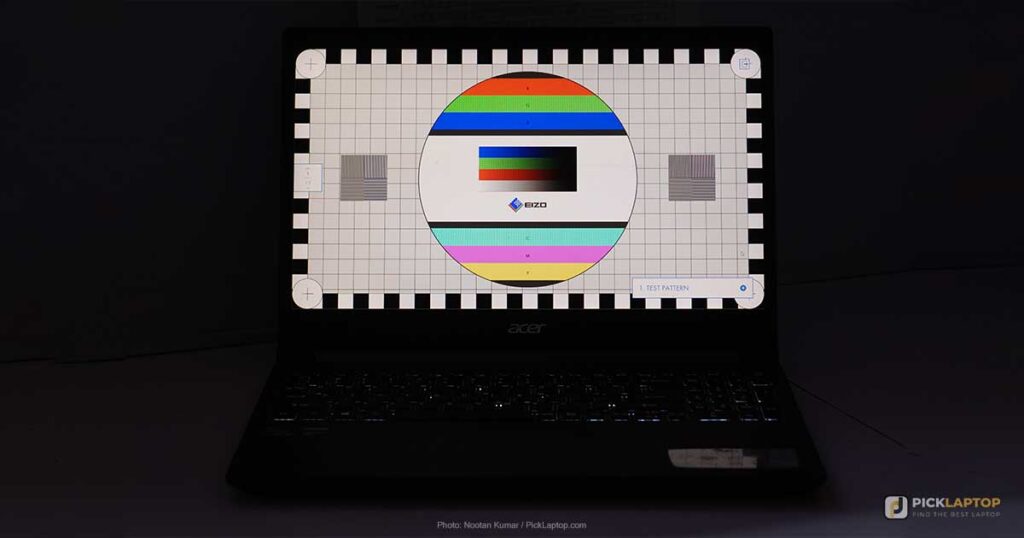
If the panel misreports color and exposure, every edit made on it is wrong somewhere else. Aim for 100% sRGB at a minimum, and check DCI-P3 or Adobe RGB coverage if the files are going to print.
IPS and OLED name a mechanism, not a result. IPS describes viewing-angle behavior; OLED describes how contrast is produced. Neither settles coverage, brightness or accuracy, and the picks below show the spread — one IPS panel here measured 78.5% DCI-P3, one OLED measured 100%. The four figures to look for are gamut coverage, measured brightness in nits, Delta E, and whether the finish is matte or glossy. A glossy panel throws back whatever is behind you, which changes more about a bright room than any refresh rate figure.
Dedicated GPU
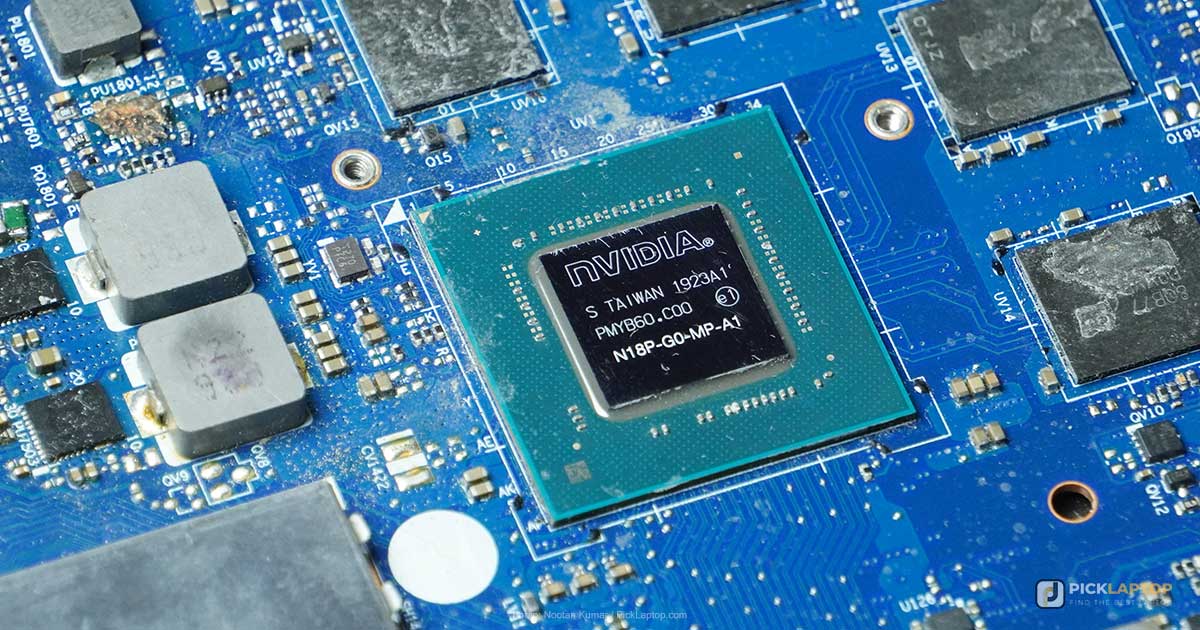
The GPU does two separate jobs here, at two thresholds. Adobe’s GPU FAQ describes the first as speeding up display and adjustment in the Develop module and in Library’s Grid, Loupe and Filmstrip views, with the largest gains on 4K and 5K displays. The second is the AI tools, where the VRAM figure above applies — and Puget Systems recommends 16GB of VRAM for that work, double what Adobe asks for.
A faster GPU is not automatically a faster Lightroom. Adobe says so in the same FAQ: a very high benchmark score does not mean great results in Lightroom Classic, because performance depends on multiple factors. Lightroom Classic also uses only one graphics processor, and it does not accelerate the secondary window at all. Buy VRAM capacity for the AI tools; the rest of a GPU’s rating tracks gaming benchmarks more closely than it tracks an export queue.
Storage and Connectivity
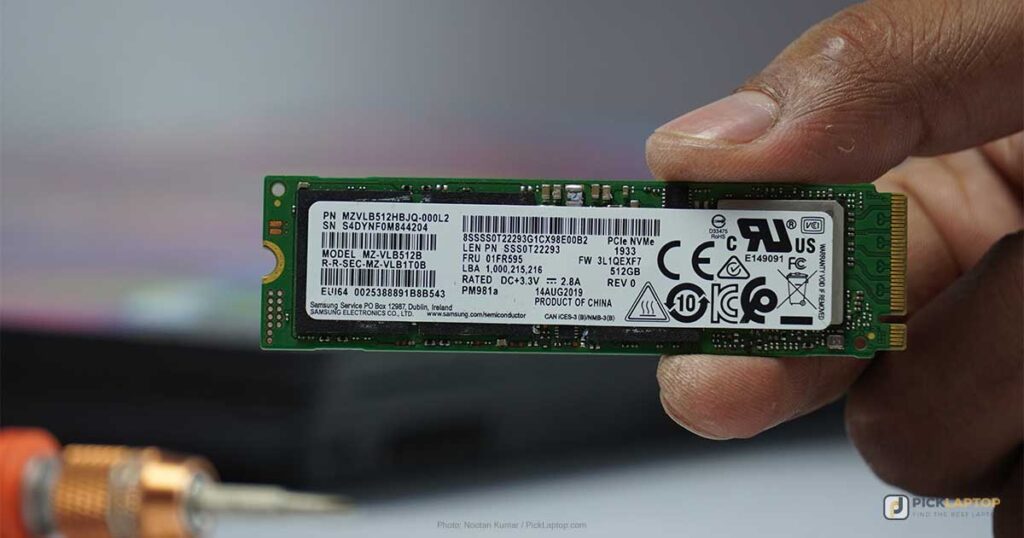
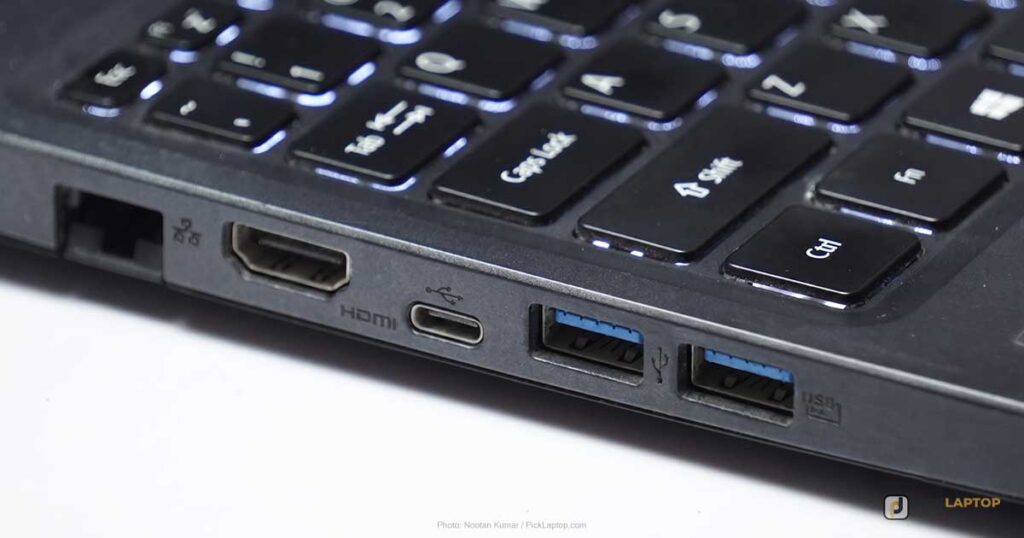
An NVMe SSD is the baseline, and capacity is the specification to prioritize. 512GB holds the OS, the catalog and its previews; 1TB leaves the preview cache somewhere to grow. Most photographers with a large library keep originals on external or NAS storage and the catalog internal, since the catalog is what Lightroom reads and writes constantly through a session.
Check the card slot on the spec sheet before ordering, and check which size it takes. Among the picks below, the MacBook Pro 14 and the Raider 18 are the two with a full-size SD slot; the Nitro V 16S reads microSD only, and the Aero X16, Stealth 16 AI+, Legion Pro 7i and gram Pro 17 list no reader at all. For anyone shooting full-size SD, that puts a USB-C reader in the bag permanently.
Adobe Lightroom Laptop Comparison Table


Last update on 2026-10-22 / Affiliate links / Images from Amazon Product Advertising API
Best Laptops for Adobe Lightroom in 2026: In-Depth Reviews
Seven machines, each answering a different question — from a budget chassis that clears Adobe’s VRAM figure to a 17-inch field laptop that runs a full day off the battery.
1. Gigabyte Aero X16 (Best Overall)
Best Overall
Last update on 2026-10-15 / Affiliate links / Images from Amazon Product Advertising API
- ProcessorAMD Ryzen AI 9 HX 370
- GPUNVIDIA RTX 5070 (8GB)
- RAM32GB DDR5
- Storage1TB SSD
- Display16″ WQXGA, 165Hz
- OSWindows 11 Home (Copilot+ PC)
32GB of system RAM and an RTX 5070 carrying 8GB of VRAM clear both of Adobe’s stated thresholds, in a chassis Gigabyte puts at 16.75mm and 1.9kg — 4.19 pounds, light enough to move between a desk and a shoot without planning around it.
The panel is where the spec line and the measurements disagree. Gigabyte rates it 100% sRGB and factory-calibrated, which is enough for web and screen delivery. Tom’s Hardware, testing the Ryzen AI 7 350 build of the same chassis and the same 2560×1600 165Hz panel, measured 369 nits and 78.5% DCI-P3, called the screen minimum quality for its class, and named the incomplete DCI-P3 coverage as a limitation for creative users. Files headed for print need more than that, and an external monitor is how this machine gets there.
Tom’s Hardware also described the speakers as muddy, with distant vocals and barely adequate volume, so client calls want headphones. There is no card reader either.
Pros
- Meets Adobe’s stated RAM and VRAM figures
- Portable for a discrete-GPU 16-inch, at 1.9kg
- Factory-calibrated to 100% sRGB, per Gigabyte
Cons
- Measured DCI-P3 coverage falls short for print work
- 369 nits is modest for editing near a window
- No card reader; weak speakers
2. Acer Nitro V 16S AI (Best Budget)
Best Budget
Last update on 2026-10-22 / Affiliate links / Images from Amazon Product Advertising API
- ProcessorAMD Ryzen 7 260
- GPUNVIDIA RTX 5060 (8GB)
- RAM32GB DDR5
- Storage1TB PCIe Gen4 SSD
- Display16″ WUXGA IPS, 180Hz
- OSWindows 11
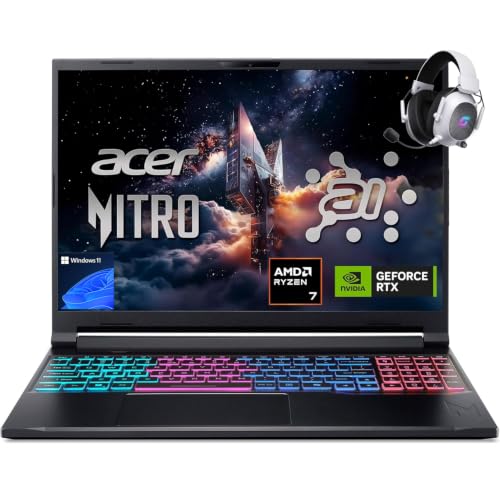
32GB of RAM alongside 8GB of VRAM used to be a premium-tier pairing. Here it arrives at the budget tier, so the AI tools run on the hardware Adobe specifies rather than on a slower fallback path.
PCVenus reviewed this exact model — the ANV16S-41-R2AJ, with the same Ryzen 7 260 and 85W RTX 5060 — and measured the panel at close to 300 nits, around 98.5% sRGB and 1150:1 contrast. That clears the sRGB baseline. No DCI-P3 or Adobe RGB figure has been published for it, and PCVenus found the screen struggled in direct sunlight. Budget for a colorimeter if color accuracy is billable.
PCVenus also found the keyboard area stayed cooler than expected through long sessions, while the rear exhaust ran very warm in Turbo mode — the right way round for a machine that edits on a desk rather than a lap.
Pros
- 32GB RAM and 8GB VRAM at the entry tier
- Panel clears the sRGB baseline, measured
- Keyboard area stays cool through long sessions
Cons
- No published DCI-P3 or Adobe RGB figure for the panel
- Around 300 nits — hard to use in direct sunlight
- microSD reader only, no full-size SD slot
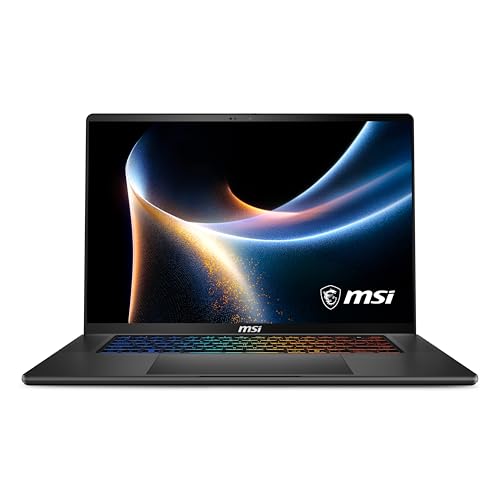
3. MSI Stealth 16 AI+ (Best Thin-and-Light)
Best Thin-and-Light
Last update on 2026-10-22 / Affiliate links / Images from Amazon Product Advertising API
- ProcessorIntel Core Ultra 9 386H
- GPUNVIDIA RTX 5070
- RAM32GB DDR5-7200
- Storage1TB NVMe SSD
- Display16″ QHD+ OLED, 240Hz
- OSWindows 11 Home
MyFixGuide measured this QHD+ OLED at 100% sRGB, 100% DCI-P3 and 98% Adobe RGB, with an average Delta E of 0.52 and a maximum of 2.12, at 395 nits in SDR. Adobe RGB coverage at that level is what print work needs, and an average Delta E under 1 means the panel reports color close to correctly out of the box rather than after a calibration pass — and it is the only panel here with a published Delta E figure at all.
MSI lists 16.65 to 19.99mm and 1.99kg with the battery — close enough to the Aero X16’s 1.9kg that neither is the one you notice in a bag. The difference is what fits inside that envelope: a measured wide-gamut panel and an RTX 5070-class GPU.
TechRadar recorded 14 hours 15 minutes on its looping-movie test, using the RTX 5070 Ti build of this chassis. That is a video-playback number rather than an editing one, but it is a long result for a machine carrying a discrete GPU. TechRadar found the base flexes under a firm press, and MSI’s spec sheet lists no card reader.
Pros
- The best measured color figures here, including 98% Adobe RGB
- 14h15m on TechRadar’s movie-playback test
- 1.99kg, 16.65-19.99mm
Cons
- No card reader on MSI’s spec sheet
- Some flex in the base
- Premium price for the portability tier
4. Lenovo Legion Pro 7i Gen 10 (Best for AI-Powered Editing)
Best for AI-Powered Editing
Last update on 2026-10-22 / Affiliate links / Images from Amazon Product Advertising API
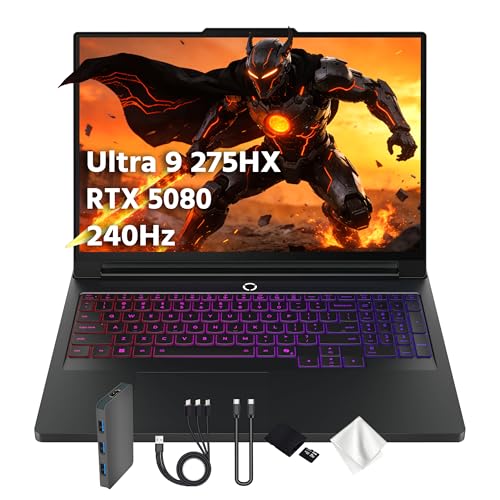
- ProcessorIntel Core Ultra 9 275HX
- GPUNVIDIA RTX 5080 (16GB)
- RAM32GB DDR5
- Storage1TB SSD
- Display16″ WQXGA OLED, 240Hz
- OSWindows 11 Home
The RTX 5080’s 16GB of VRAM is double Adobe’s stated figure and lands exactly on Puget Systems’ recommendation for this software. Running Denoise across a whole shoot rather than the occasional frame is the workload that spends it.
Tom’s Hardware tested this configuration — Ultra 9 275HX, RTX 5080, 32GB DDR5-6400, 16-inch 2560×1600 OLED — and measured 465 nits and 138.9% DCI-P3 — the highest brightness figure published for any Windows pick here. The finish is glossy, and the same review flagged reflections and dust in bright rooms.
Battery is where it gives ground. Tom’s Hardware recorded 4 hours 37 minutes, last in its comparison group behind the Gigabyte at 5:02, the Asus at 6:30 and the Razer at 7:21, despite a 99.9Wh pack; the reviewer put that down to power management rather than capacity. The fans, though, were described as impressively unobtrusive under gaming load. At 5.67 pounds with no SD reader, this one lives beside an outlet.
Pros
- 16GB VRAM — double Adobe’s figure, on Puget Systems’ recommendation
- Brightest measured panel of the Windows picks here
- Fan noise described as unobtrusive under load
Cons
- 4h37m measured — the shortest runtime of any pick here
- Glossy panel, awkward in bright rooms
- 5.67 pounds, and no SD card reader
5. Apple MacBook Pro 14-inch (Best for macOS)
Best macOS Pick
Last update on 2026-10-22 / Affiliate links / Images from Amazon Product Advertising API
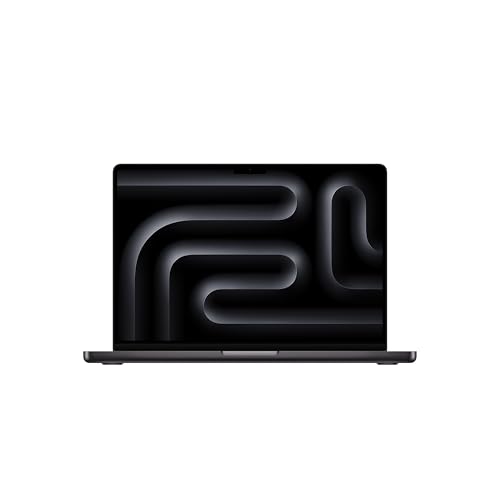
- ProcessorApple M5 Pro / M5 Max
- GPUIntegrated (up to 40-core)
- RAM24-128GB unified
- Storage1TB / 2TB SSD
- Display14.2″ Liquid Retina XDR
- BatteryUp to 22 hours (Apple-rated)
Adobe’s macOS requirements take a different route to the same place: instead of dedicated VRAM they name 16GB of unified memory for full GPU acceleration and the AI features. Every configuration here starts above that — 24GB on the M5 Pro, 36GB on the M5 Max — so Denoise is covered from the base model up.
Tom’s Hardware measured 529.4 nits and 87% of DCI-P3 color volume on the M5 Max build; Apple rates the XDR panel at 1000 nits sustained full-screen with 1600-nit peaks in HDR. On battery, keep the two kinds of figure apart: Apple’s rating is up to 22 hours of video streaming on the M5 Pro and 20 on the M5 Max, while Tom’s Hardware measured 17 hours 58 minutes on its own test — ahead of everything else it had in the field at the time.
The chassis is the constraint on the top chip. Notebookcheck recorded the M5 Max in the 16-inch MacBook Pro running 18% ahead of the same chip in the 14-inch on Cinebench 2024 multi-core, with performance fluctuating on the 14-inch even in High Power mode while the 16-inch held steady — a difference it attributes to thermal limits. Those are synthetic loops rather than export queues, but a long batch export is the nearest thing Lightroom has to that kind of sustained load, and the 16-inch is the answer if that is most of your week.
Pros
- Every configuration exceeds Adobe’s unified-memory threshold
- 529.4 nits measured, plus an SDXC slot for card offloads
- 17h58m measured; Apple rates up to 22 hours
Cons
- M5 Max is thermally limited in this chassis — the 16-inch, same chip, ran 18% ahead on sustained multi-core work
- Memory and storage are fixed at purchase
6. LG gram Pro 17 (Best for Field and On-Location Work)
Best for Field Work
Last update on 2026-10-22 / Affiliate links / Images from Amazon Product Advertising API
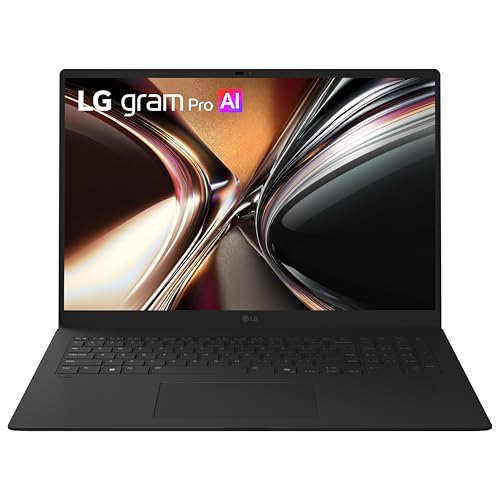
- ProcessorIntel Core Ultra 7 355
- GPUIntel integrated
- RAM32GB LPDDR5X
- Storage1TB NVMe SSD
- Display17″ WQXGA touch
- BatteryUp to 26.5 hours (LG-rated)
Culling is a different job from editing. Sorting a card, flagging keepers and running rough exposure passes wants screen area and battery, and asks very little of a GPU. LG puts this 17-inch machine at 3.3 pounds and 0.6 inches, rated for up to 26.5 hours of video playback — with the conditions LG attaches: 1080p video, wireless off, screen at 150 nits. Editing brightness and live Wi-Fi will land under that, but the starting point is high enough to make a full shooting day off one charge the realistic expectation rather than the optimistic one.
32GB of LPDDR5X puts it above the shared-memory route Adobe names, so the AI tools are not locked out. They run on Intel integrated graphics rather than dedicated VRAM, though, and no independent lab has published Lightroom timings for this configuration to say how far apart those two paths land in practice. Plan on finishing AI-heavy work at the desk.
The 2560×1600 touch panel has no published gamut or Delta E measurements either: LG quotes no coverage figure, and no independent review of this configuration has appeared. Judge color on a screen you have measured. There is also no card slot on this chassis, which for a laptop bought to work off the back of a shoot means the reader is part of the kit. What it does well is show focus and composition at size, in the field, without an outlet.
Pros
- A 17-inch screen in a 3.3-pound body, per LG
- Rated for a full field day on one charge
- 32GB clears Adobe’s shared-memory threshold
Cons
- No dedicated VRAM, and no published Lightroom timings for it
- No color measurements published for the panel, and no card slot
- A 17-inch laptop is still a 17-inch laptop in a bag
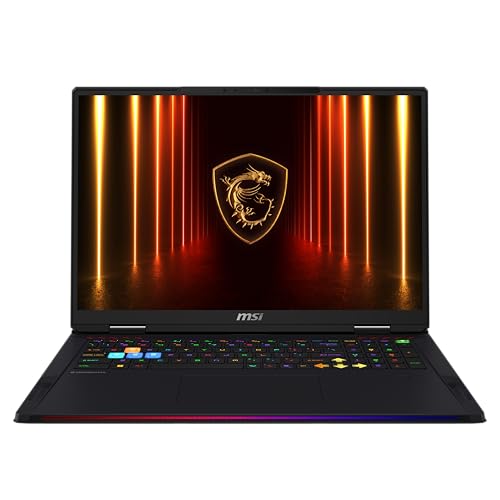
7. MSI Raider 18 HX AI (Best for Massive Catalogs)
Best for Massive Catalogs
Last update on 2026-10-22 / Affiliate links / Images from Amazon Product Advertising API
- ProcessorIntel Core Ultra 9 285HX
- GPUNVIDIA RTX 5090 (24GB)
- RAM64GB DDR5-6400
- Storage2TB SSD
- Display18″ UHD+ Mini LED, HDR1000
- OSWindows 11 Home/Pro
64GB is what Puget Systems suggests for most Lightroom Classic users, so paging never becomes the limit — and that is what this machine is here for. Past 100,000 images, or with Photoshop open alongside, that is where the catalog stops waiting on you. The 24GB of VRAM sits well beyond both Adobe’s and Puget’s numbers, and 2TB holds a catalog that size with its previews.
The 18-inch Mini LED panel runs 3840×2400 with a matte finish — less contrast punch than the Legion’s glossy OLED, and fewer reflections across a long grading session. It carries an SD card reader, which neither 16-inch Windows pick above does.
This is a desktop replacement rather than something you travel with: at 7.94 pounds with a 99.9Wh battery in an 18-inch shell, it makes sense only if your setup stays in one place. PCWorld, reviewing the RTX 5080 configuration of this 18-inch chassis, found the key feel a miss and the touchpad unresponsive with a hollow button action, and concluded the machine is best used with a mouse. Budget for one.
Pros
- 64GB RAM, the amount Puget Systems points most users toward
- 24GB VRAM, past every threshold named in this guide
- Matte 3840×2400 Mini LED, and an SD card reader
Cons
- Keyboard and touchpad sit a step below the rest of the hardware
- 7.94 pounds — the heaviest laptop here, priced to match
Recommended Accessories

Last update on 2026-10-22 / Affiliate links / Images from Amazon Product Advertising API
Which Adobe Lightroom Laptop Should You Buy?
| Best For | Pick |
|---|---|
| Overall | Gigabyte Aero X16 |
| Budget | Acer Nitro V 16S AI |
| Thin-and-Light | MSI Stealth 16 AI+ |
| AI-Powered Editing | Lenovo Legion Pro 7i Gen 10 |
| macOS | Apple MacBook Pro 14-inch |
| Field/On-Location Work | LG gram Pro 17 |
| Massive Catalogs | MSI Raider 18 HX AI |
Adobe Lightroom Laptop FAQ
How much RAM do I need for Adobe Lightroom?
Adobe publishes 8GB as the minimum and 16GB or more as the recommendation; Puget Systems builds these machines with 32GB as its own floor. The useful test is your own catalog rather than either number. Open Task Manager or Activity Monitor through a normal session — Lightroom, a browser, whatever else stays open — and watch whether memory pressure climbs as the hours pass. If it does, more cores on the next machine will not fix it.
Do I need a dedicated graphics card for Lightroom?
Not to run the program — Adobe’s stated minimum is 2GB of GPU memory. The AI tools set the threshold that matters, and a machine with 32GB of system RAM and integrated graphics already clears Adobe’s shared-memory route. So the question is how fast those tools run, not whether they run at all, and nobody has published Lightroom timings that put a number on the gap between integrated and discrete for these features.
Is Lightroom Classic different from regular Lightroom for hardware needs?
Yes, and the split matters most for the GPU. Lightroom Classic processes locally, so the VRAM figures apply directly to it. Cloud-based Lightroom moves more of the work to Adobe’s servers, which shifts the constraint toward upload bandwidth and your storage plan rather than what is inside the laptop.
Is a Mac or Windows laptop better for Lightroom?
Adobe supports both, and writes its GPU requirement once per platform: dedicated VRAM on Windows, unified memory on macOS. The practical difference is the ceiling and whether you can move it. Windows picks here reach 24GB of VRAM on a discrete card; Apple’s memory is fixed at purchase, so the configuration you order is the one you keep for the life of the machine.
How important is display color accuracy for Lightroom?
Enough that the measurement matters more than the panel type — two picks here are both sold as sharp 16-inch screens and land more than 20 points apart on DCI-P3. If no figure has been published for the configuration you are buying, a colorimeter costs a fraction of the laptop and settles it. For print work, an external monitor is the usual answer regardless of what the laptop measures.
What storage setup works best for a large photo catalog?
Catalog and previews internal, originals external or on a NAS. That split follows the access pattern: Lightroom touches the catalog and preview cache constantly, and the original files only when it renders or exports. Previews are the part that grows unnoticed — a large catalog with 1:1 previews built can occupy more space than the raw files themselves.
Final Thoughts on Adobe Lightroom Laptops
Two numbers narrow this list faster than any benchmark comparison: how much VRAM the machine has for Denoise, Lens Blur and Reflection Removal, and what the panel measures rather than which technology it uses. Past roughly eight cores, the processor stops being the variable. For visual work beyond photography, our GoPro video editing laptop guide and tattoo artist laptop guide cover the adjacent ground.