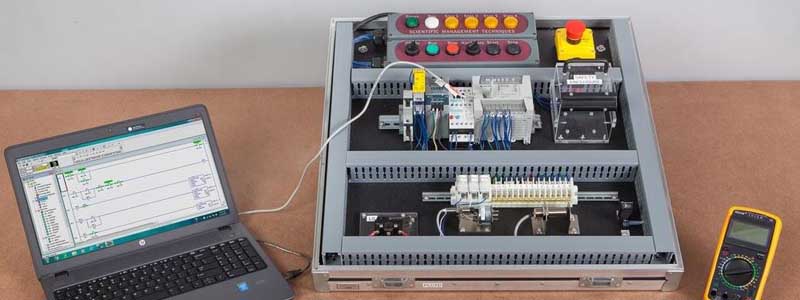
Siemens’ own documentation lists 8GB of RAM as the minimum for TIA Portal. That’s not the hard part of choosing a laptop for PLC programming — the hard part is that generic laptop advice completely misses the two things that matter here: whether your CPU throttles under sustained compilation loads, and how you’re going to connect to a PLC that only speaks RS-232 from 1998.
Whether you’re an automation engineer commissioning equipment on a factory floor, a control systems technician troubleshooting in a control room, or a student working through your first Siemens or Rockwell coursework, this guide covers the specifics that determine whether a laptop works for PLC programming — not just whether it runs Windows.
Editor’s Pick
Last update on 2026-10-22 / Affiliate links / Images from Amazon Product Advertising API
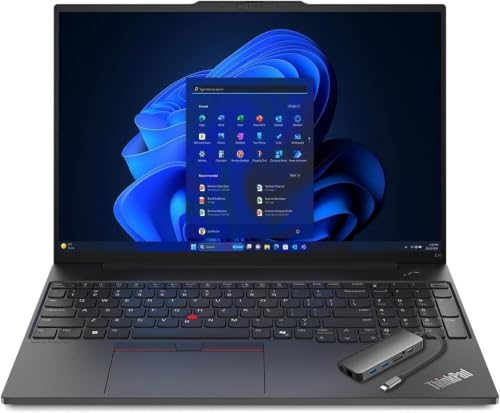
An H-series processor that won’t throttle mid-compile, MIL-STD-810H durability testing, and a business-appropriate chassis — the safe, well-rounded default for most PLC programming work.
- AMD Ryzen 7 7735HS
- 16-32GB DDR5
- Windows 11 Pro
- MIL-STD-810H tested
What’s Inside
- 1 – PLC Programming Laptop Buyer's Guide
- 2 – PLC Programming Laptop Comparison Table
- 3 – Best Laptops for PLC Programming, Reviewed
- 3.1 – 1. Lenovo LOQ 15i/15a (Best Budget)
- 3.2 – 2. Lenovo ThinkPad E16 Gen 2 (Best Business/Portable)
- 3.3 – 3. Lenovo Legion Pro 7i Gen 10 (Best for Heavy Multi-App Work)
- 3.4 – 4. HP ZBook X G1i (Best Workstation)
- 3.5 – 5. Panasonic Toughbook FZ-40 MK2 (Best Rugged/Field)
- 3.6 – 6. Gigabyte Aero X16 (Best Large Display)
- 3.7 – 7. HP Omen 16 (Best for Multi-Monitor Setups)
- 4 – Recommended Accessories
- 5 – Which PLC Programming Laptop Should You Buy?
- 6 – PLC Programming Laptop FAQ
- 7 – Final Thoughts on PLC Programming Laptops
PLC Programming Laptop Buyer’s Guide
H-series or HX-series, not U-series
Avoid ultrabook-class U-series processors if you’re compiling and simulating PLC programs regularly. They’re built for efficiency, not sustained performance, and throttle heavily during TIA Portal or Studio 5000 compilations, block downloads, and simulation runs. H-series and HX-series mobile processors hold their clock speed under exactly this kind of extended load. Siemens officially recommends Intel Core i5 or better; in practice, the processor class matters more than the exact model number.
How much RAM do you need?
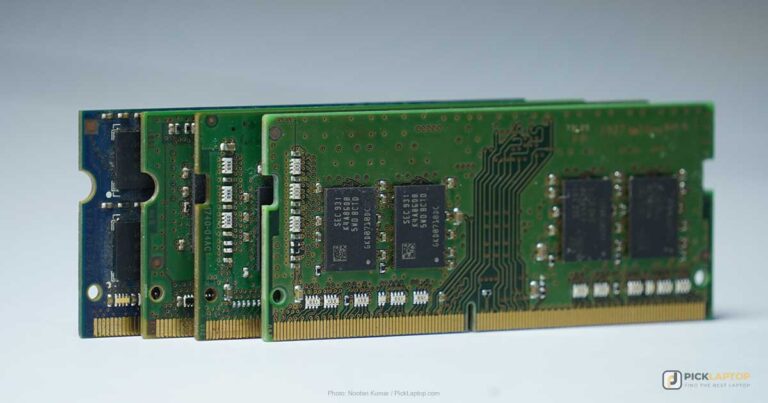
Per Siemens’ own TIA Portal system requirements documentation, 8GB is the stated minimum, but 16GB is realistic for actual project work, and 32GB is worth it if you’re running multiple vendor IDEs simultaneously or keeping separate virtual machines for different software versions — a fairly common setup for engineers who support both legacy and current PLC hardware.
An important warning: keep it plugged in
High-performance H-series laptops throttle CPU and GPU clock speeds on battery power to preserve runtime — a documented behavior across workstation-class laptops generally, not a flaw specific to any one brand. If you’re doing compilation or simulation work rather than quick monitoring checks, keep the laptop plugged in. Battery-only performance numbers on a spec sheet don’t reflect what you’ll get compiling in TIA Portal.
The serial port problem, and why the adapter chipset matters
No current laptop has a built-in RS-232 serial port, but plenty of legacy PLCs — older Allen-Bradley, older Siemens S7-200/300 — still require one for programming. A USB-to-serial adapter solves this, but not all of them are equally reliable. Adapters built on an FTDI chipset maintain a stable, real-time connection; generic adapters using Prolific or CH340 chipsets are widely reported to drop connections or introduce timing issues during PLC communication specifically. The difference comes down to chipset design, not brand loyalty — check which chipset is inside before buying, not just the price.
Ethernet still matters more than you’d think
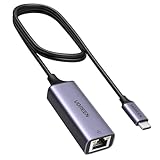
Many current PLCs (Allen-Bradley, Siemens) use hardwired Ethernet for programming and commissioning, and a native RJ45 port is more reliable in practice than a USB-C dongle for this specific task. If your laptop doesn’t have one built in, budget for a dedicated adapter rather than treating it as optional.
Do you need a dedicated GPU?
Generally no — Siemens, Rockwell, and Omron’s PLC programming software don’t require discrete graphics. A dedicated GPU only matters if you’re also doing 3D modeling, complex HMI graphics work, or CAD alongside your PLC work.
PLC Programming Laptop Comparison Table



Last update on 2026-10-22 / Affiliate links / Images from Amazon Product Advertising API
Best Laptops for PLC Programming, Reviewed
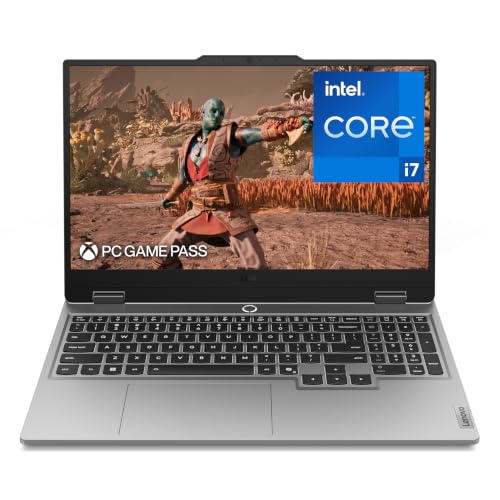
1. Lenovo LOQ 15i/15a (Best Budget)
Best Budget
Last update on 2026-10-22 / Affiliate links / Images from Amazon Product Advertising API
- ProcessorIntel Core i7-13650HX
- RAM16GB
- Storage1TB SSD
- Display15.6-inch FHD IPS
- BatteryNot officially disclosed
- OSWindows 11
This is the entry point that clears the H-series bar rather than settling for a U-series chip that looks similar on a spec sheet but throttles the moment you compile a sizable project. The HX suffix marks Intel’s sustained-performance tier, distinct from the lower-power U-series chips that throttle under continuous load.
16GB of RAM covers TIA Portal and Studio 5000 on their own; add a virtual machine alongside your main IDE and you’ll be using most of that 16GB — a real constraint if you’re supporting legacy software versions.
This is a gaming-marketed laptop rather than a business one, which shows in the styling more than the substance. No independent lab has tested this exact i7-13650HX configuration; PCWorld’s review of the related AMD-based LOQ 15 (Ryzen 7 250) found the chassis adequate but unremarkable — reasonably rigid with some flex around the keyboard and hinge, using the same faux-metallic plastic panels shared across Lenovo’s Intel and AMD LOQ 15 variants. That’s a reasonable proxy for what to expect from the shared chassis, not a substitute for testing on this specific configuration. The hardware underneath is well-suited to sustained IDE compilation work, at a price advantage over the business-branded alternatives.
Pros
- Sustained-performance HX-series CPU, not throttle-prone U-series
- Lowest price in this guide
- 16GB RAM covers typical single-IDE work
- SSD-only storage
Cons
- Gaming-oriented styling, not business-branded
- Battery life not officially disclosed
2. Lenovo ThinkPad E16 Gen 2 (Best Business/Portable)
Best Business/Portable
Last update on 2026-10-22 / Affiliate links / Images from Amazon Product Advertising API
- ProcessorAMD Ryzen 7 7735HS (up to Ryzen 5 7535U/7535HS, Intel Ultra 5-125U)
- RAM16GB DDR5 (up to 64GB across two SODIMM slots)
- StorageConfigurable SSD
- Display16-inch
- BatteryNot officially disclosed
- OSWindows 11 Pro
The 7735HS configuration is the one to choose specifically — this line is also sold with weaker U-series options, so check the exact model before buying. Done right, this gives you sustained compilation performance in a chassis that looks like it belongs in a control room rather than a gaming setup.
ThinkPad’s MIL-STD-810H durability testing is a documented spec here, not a marketing checkbox. The Ryzen 7 7735HS configuration itself hasn’t been reviewed by an independent lab. Notebookcheck’s review of the same chassis with the lower-tier Ryzen 5 7535HS found a robust aluminum-and-plastic build that shows fingerprints easily and has a tight display hinge, plus a keyboard and TrackPoint that trail Lenovo’s premium ThinkPad lines on feel — useful context on the chassis, though it isn’t a test of the 7735HS configuration itself.
Windows 11 Pro ships standard, which matters for IT-managed deployments requiring Group Policy or BitLocker support that some Home editions handle less cleanly.
Pros
- MIL-STD-810H durability testing
- Configurable up to 64GB RAM
- Windows 11 Pro standard
- Business-appropriate chassis and keyboard feel
Cons
- Confirm the HS-series CPU config specifically, not the weaker U-series option sold under the same name
- No dedicated GPU
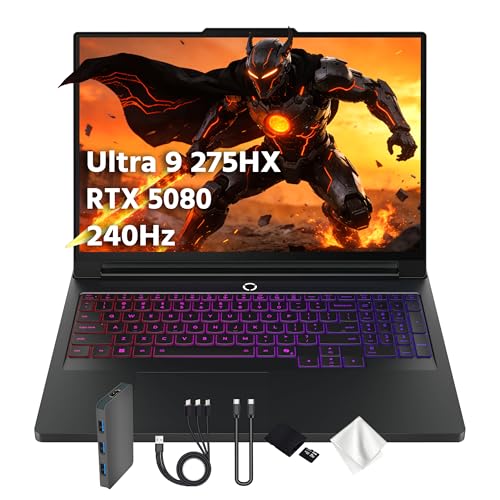
3. Lenovo Legion Pro 7i Gen 10 (Best for Heavy Multi-App Work)
Best for Heavy Multi-App Work
Last update on 2026-10-22 / Affiliate links / Images from Amazon Product Advertising API
- ProcessorIntel Core Ultra 9 275HX (24-core)
- RAM32GB
- Storage1TB PCIe SSD
- Display16-inch WQXGA OLED, 240Hz
- BatteryRated 6 hours
- OSWindows 11
Engineers running TIA Portal, RSLogix, and a virtualization layer for legacy software simultaneously — the exact scenario several PLC hardware guides specifically call out as demanding — benefit from the 24-core HX-series CPU here, well beyond what a single IDE needs on its own. Tom’s Hardware’s review described the fan noise as impressively unobtrusive at everyday loads, which matters for control-room use, where a loud fan mid-meeting is a distraction.
The RTX 5080 is overkill for PLC software itself but the extra GPU power pays for itself if your work spans into HMI 3D visualization, CAD, or simulation tools that do lean on GPU acceleration.
Battery life is the tradeoff for that much sustained CPU power — plan on using this at a desk or in a control room, not disconnected in the field for a full day.
Pros
- 24-core CPU handles multiple simultaneous IDEs and VMs
- RTX 5080 available for GPU-accelerated visualization work
- 32GB RAM standard
- 240Hz OLED display
Cons
- Battery life is the weakest in this guide
- Overkill if you’re only running one PLC IDE at a time
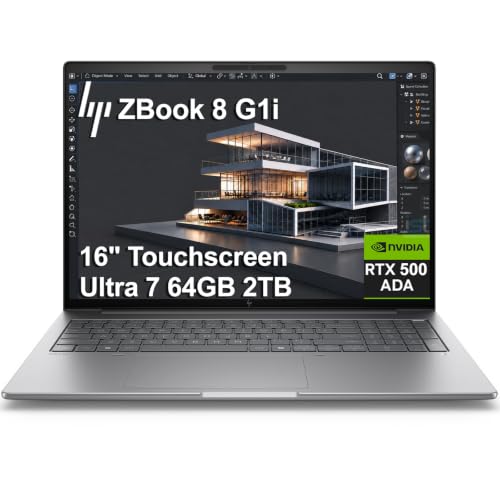
4. HP ZBook X G1i (Best Workstation)
Best Workstation
Last update on 2026-10-22 / Affiliate links / Images from Amazon Product Advertising API
- ProcessorIntel Core Ultra 7 265H (16-core)
- RAM64GB DDR5
- Storage1TB PCIe NVMe SSD
- Display16-inch FHD+
- Battery83Wh (hours not disclosed)
- OSWindows 11 Pro
HP’s own listing certifies this for AutoCAD, SolidWorks, Revit, ANSYS, and MATLAB — PLC-specific IDEs like Studio 5000 and TIA Portal aren’t named in that list. The hardware profile still fits engineers whose work spans PLC programming alongside CAD or simulation software, since 64GB of RAM is well beyond what any single PLC IDE asks for.
The multi-threaded performance stands out: ITPro’s review scored it at 16,103 in multi-threaded testing, ahead of comparable workstations.
TechRadar’s review of this workstation singled out the battery life and port selection, useful for anyone connecting field devices, docks, or multiple peripherals during commissioning work.
Pros
- 64GB RAM standard — well beyond any single PLC IDE’s needs
- Scored 16,103 in multi-threaded testing in ITPro’s review
- Strong port selection for field work
- ISV certified for major CAD/engineering applications
Cons
- PLC-specific IDEs aren’t named among the listed ISV certifications
- The priciest pick in this guide
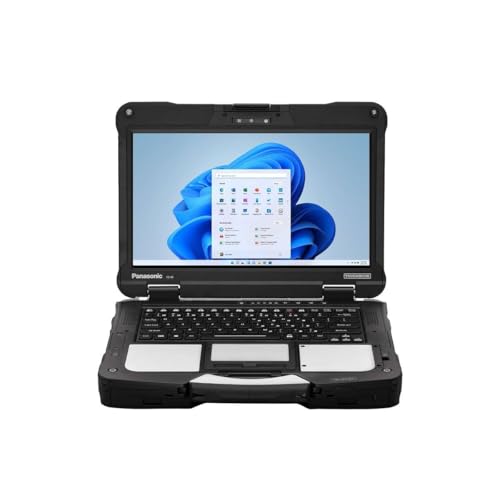
5. Panasonic Toughbook FZ-40 MK2 (Best Rugged/Field)
Best Rugged/Field
Last update on 2026-10-22 / Affiliate links / Images from Amazon Product Advertising API
- ProcessorIntel Core Ultra 7 165H vPro
- RAM32GB DDR5
- Storage512GB OPAL SSD
- Display14-inch FHD, glove-compatible touch, 1200 nits
- BatteryNot officially disclosed (hot-swappable design)
- OSWindows 11 Pro
MIL-STD-810H and IP66 certification is what sets this one apart for harsh field conditions: dust, vibration, temperature extremes, and drops are accounted for, not something you’re hoping a standard laptop survives by luck. Independent testing confirms the fully rugged build and modular design, though the same review flags it as bulky and heavy — a real tradeoff for that durability. If your work involves commissioning equipment outdoors or in an industrial environment rather than a climate-controlled office, the higher price of this category of laptop is justified.
The Toughbook’s modular xPAK expansion bays include an optional serial port module, meaning you can add native RS-232 connectivity for legacy PLCs directly, without relying on a USB dongle at all.
The 1200-nit, glove-compatible touchscreen matters for anyone working outdoors in direct sunlight or wearing safety gloves — not a spec that shows up on a typical business laptop at any price.
Pros
- MIL-STD-810H and IP66 certified
- Optional modular serial port bay — no USB dongle needed
- 1200-nit glove-compatible display for outdoor/field use
- 32GB RAM standard
Cons
- Heavier and thicker than a standard business laptop, confirmed by independent testing
- Battery life not officially disclosed
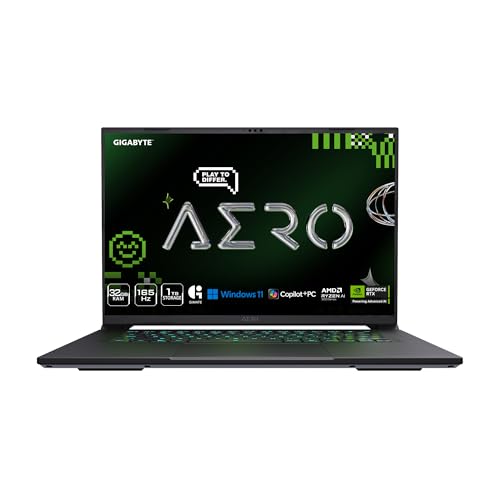
6. Gigabyte Aero X16 (Best Large Display)
Best Large Display
Last update on 2026-10-15 / Affiliate links / Images from Amazon Product Advertising API
- ProcessorAMD Ryzen AI 9 HX 370 (12-core)
- RAM32GB DDR5
- Display16-inch WQXGA, 165Hz
- StorageSSD
- Battery9h13m measured on the Ryzen AI 7 350 config
- OSWindows 11 Home
The 16-inch WQXGA panel gives extra working room for side-by-side ladder logic and HMI design compared with the 15.6-inch FHD panels common at this price tier — screen real estate that directly affects how much of a program you can see at once for control-room desk work.
Tom’s Hardware tested this chassis in its Ryzen AI 7 350 configuration, not the Ryzen AI 9 HX 370 listed here, and measured 9 hours and 13 minutes of battery life in mixed daily use plus 78.5% DCI-P3 coverage at 369 nits — calling the display “serviceable” rather than suited to color-critical work. The Ryzen AI 9 HX 370 configuration sold under this listing hasn’t been independently tested, so treat both figures as a reference point for the chassis rather than a measurement of this specific config.
The HX-suffix Ryzen AI 9 370 is the sustained-performance variant of this chip family, in contrast to non-HX mobile parts that throttle sooner under extended load — the concern this guide leads with.
Pros
- 16-inch WQXGA display, more working room than 15.6-inch FHD panels
- HX-series CPU built for sustained load, not just peak clocks
- 9h13m battery measured by Tom’s Hardware on the Ryzen AI 7 350 variant of this chassis
- 32GB RAM standard
Cons
- Consumer-branded, not a business/industrial line
- No native Ethernet confirmed — budget for an adapter
- The HX 370 configuration sold here hasn’t been independently tested; measured figures above are from a lower-tier config of the same chassis
- 78.5% DCI-P3 / 369 nits measured on that config — not a color-accurate display for HMI graphics work
7. HP Omen 16 (Best for Multi-Monitor Setups)
Best for Multi-Monitor Setups

Last update on 2026-10-22 / Affiliate links / Images from Amazon Product Advertising API
- ProcessorIntel Core Ultra 9 285H (16-core)
- RAM16GB DDR5 (up to 64GB configs available)
- Storage1TB PCIe SSD
- Display16-inch WQXGA, 240Hz
- BatteryNot officially disclosed
- OSWindows 11 Home
For engineers running a fixed desk setup with TIA Portal open alongside SCADA screens and reference documentation across multiple monitors, this H-series chip holds up well without stepping into full workstation pricing. This exact Core Ultra 9 285H / RTX 5070 configuration hasn’t turned up in an independent lab review yet. HP’s own listing confirms a built-in RJ45 Ethernet port alongside the USB and HDMI array, which for a fixed desk setup means a full peripheral spread doesn’t require a USB hub — a manufacturer-confirmed spec rather than a tested claim.
The RTX 5070 handles HMI 3D graphics work and simulation visualization alongside your programming environment, without being the primary reason to buy this specific machine.
Configurable up to 64GB RAM if your setup calls for it — an upgrade path most consumer-branded laptops don’t offer at this price point.
Pros
- Core Ultra 9 285H sustains clock speed under compilation load, unlike U-series chips
- Configurable up to 64GB RAM
- Built-in RJ45 Ethernet, per HP’s listing — no dongle needed for wired PLC connections
- RTX 5070 available for visualization work
Cons
- Base 16GB config is the minimum comfortable tier, not the ideal one
- Battery life not officially disclosed
Recommended Accessories

Last update on 2026-10-22 / Affiliate links / Images from Amazon Product Advertising API
Which PLC Programming Laptop Should You Buy?
| Best For | Pick |
|---|---|
| Budget | Lenovo LOQ 15i/15a |
| Business/Portable | Lenovo ThinkPad E16 Gen 2 |
| Heavy Multi-App Work | Lenovo Legion Pro 7i Gen 10 |
| Workstation | HP ZBook X G1i |
| Rugged/Field | Panasonic Toughbook FZ-40 MK2 |
| Large Display | Gigabyte Aero X16 |
| Multi-Monitor Setups | HP Omen 16 |
PLC Programming Laptop FAQ
What are the minimum system requirements for a laptop for PLC programming?
Requirements vary by software, but Siemens states an 8GB RAM minimum for TIA Portal, and 16GB is realistic for day-to-day project work. An H-series or HX-series processor is strongly preferred over U-series ultrabook chips, which throttle under sustained compilation loads.
Is 8GB RAM enough for PLC programming?
Technically, yes — 8GB will run TIA Portal without crashing. But Siemens’ figure only accounts for the IDE itself, not Windows 11’s background overhead or a second monitor’s worth of SCADA screens open alongside it, so 16GB is the realistic floor for project work. Several picks in this guide let you add RAM later instead of buying it all upfront — the ThinkPad E16 Gen 2 supports up to 64GB across two SODIMM slots.
Should I choose a laptop with a dedicated GPU for PLC programming?
Generally no — integrated graphics (Intel Iris Xe, Arc, or an AMD Radeon iGPU) run the 2D ladder logic and function block editors in TIA Portal, RSLogix, or Studio 5000 without issue. It changes for virtual commissioning tools like Factory I/O or Emulate3D, or any 3D digital-twin simulation software: those do lean on a discrete GPU, so check your specific simulation software’s requirements before assuming integrated graphics will cover it.
Which is the best way to connect a laptop with a serial port for PLC programming?
An FTDI-based USB-to-serial adapter is the reliable choice for legacy RS-232 PLCs. Windows 11 doesn’t always install the FTDI driver automatically, so download it directly from FTDI’s site if the adapter isn’t recognized out of the box. A connection that drops intermittently mid-download, rather than failing to connect at all, is the classic symptom of a cheaper Prolific or CH340 chipset rather than a bad cable. Some rugged laptops, including the Panasonic Toughbook line, sidestep the adapter question entirely with an optional modular serial port bay.
Should I choose a Windows or Linux laptop for PLC programming?
Windows is the practical answer for nearly all industrial automation software — Siemens TIA Portal, Rockwell Studio 5000, and most other major PLC platforms are Windows-only. Linux can suit open-source or custom automation tooling, but isn’t a realistic primary choice if you’re using mainstream vendor software.
Do I need Windows 10 or an older version for PLC programming software?
No — this is outdated advice that circulates in older guides. Current TIA Portal versions (V18 and later) officially support Windows 11. Windows 10 itself has reached end of support, so buying new hardware specifically to run an older Windows version is the wrong direction for a laptop you intend to keep for years.
Is Mac or Windows better for PLC programming?
Windows, without much debate. Nearly all major PLC programming software — Siemens, Rockwell, Omron — is Windows-only. A Mac can technically run Windows via Boot Camp or a virtual machine, but that adds complexity most engineers don’t need when a Windows laptop handles it natively.
Can I connect multiple monitors to a laptop for PLC programming?
Yes. Most laptops in this guide support at least one external display in extend mode, and several support two or more simultaneously, letting you keep your IDE, SCADA screen, and reference documentation visible at once.
Is investing in a rugged or durable laptop for PLC programming worth it?
If you’re commissioning equipment outdoors, in industrial environments, or anywhere dust, vibration, or temperature extremes are a factor, yes — a MIL-STD-810H certified laptop is built for exactly that, not just marketed toward it. For office or control-room-only work, a standard business laptop is fine.
Final Thoughts on PLC Programming Laptops
PLC programming software doesn’t demand much by modern standards — Siemens’ own 8GB RAM minimum makes that clear. What separates a good laptop for this work from a bad one is a CPU that holds its clock speed under sustained compilation instead of throttling, a reliable way to connect to legacy serial hardware, and a chassis that matches where you’ll be using it, whether that’s a control room desk or a factory floor. Any of the seven picks above clear that bar for PLC work; the differences between them come down to your environment, not the software’s demands.
thanks for this amazing article on best laptops for plc programming