
Safe Mode starts Windows with a minimal set of drivers and no third-party startup programs. That makes it the right place to remove a driver that causes a blue screen, uninstall software that will not close, or run a malware scan on a machine that misbehaves the moment it reaches the desktop.
The instruction most people arrive with — restart and tap F8 — has not worked by default for well over a decade. This guide covers the routes that do work on Windows 11 and Windows 10, split by whether your laptop still boots.
F8 was disabled by default in Windows 8 and it is still off in Windows 11. Microsoft moved boot options into the graphical recovery environment and shortened POST so far that a legacy key poll was no longer practical. Tapping F8 at startup on a modern laptop does nothing at all unless someone has manually re-enabled the legacy boot menu.
What’s Inside
- 1 – What Changed, and Why F8 Stopped Working
- 2 – Safe Mode From Shift + Restart
- 3 – Safe Mode Through the Settings App
- 4 – Safe Mode With msconfig (System Configuration)
- 5 – Safe Mode When the Laptop Will Not Boot
- 6 – Do HP, Dell and Lenovo Need Different Steps?
- 7 – How to Exit Safe Mode
- 8 – What to Do if Safe Mode Still Will Not Start
- 9 – Final Thoughts on Booting a Laptop Into Safe Mode
What Changed, and Why F8 Stopped Working
Windows 7 and earlier polled for F8 during a comparatively long POST phase on mechanical hard drives. Windows 8 replaced that with the Windows Recovery Environment — the blue “Choose an option” screen — and set the boot menu policy to standard, which means no key polling.
Fast Startup compounded it. Windows hibernates the kernel session on shutdown rather than powering down, so a subsequent start skips most of the initialization in which a key press could be caught. On an SSD, the window shrinks to a fraction of a second.
The current documented routes all go through that recovery environment instead. Microsoft’s own guidance is to reach Troubleshoot > Advanced options > Startup Settings > Restart, then press F4 for Safe Mode or F5 for Safe Mode with Networking. Dell documents the same six routes for both Windows 11 and Windows 10, noting that the number keys 4, 5 and 6 select the Safe Mode variants on the startup options screen.
The startup options screen offers three Safe Mode variants:
- 4 or F4 — Safe Mode: minimal drivers, no networking. The right default for driver problems.
- 5 or F5 — Safe Mode with Networking: adds network drivers, so you can download a driver or update a scanner. It also means malware can reach the internet.
- 6 or F6 — Safe Mode with Command Prompt: no desktop shell, useful when Explorer itself is the thing crashing.

The Legacy F8 Route, and What It Looked Like
The legacy boot menu can still be switched back on, and the screenshots below are from the Windows 10 era when this was the method most guides taught. Open Command Prompt as administrator, then run bcdedit /set {default} bootmenupolicy legacy. Microsoft documents bootmenupolicy among the bcdedit boot entry options.


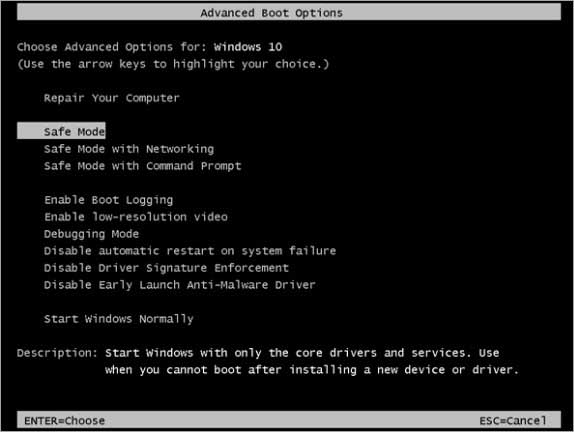
Two things make this a poor first choice today. The key has to be caught during a POST phase that an NVMe SSD reduces to a fraction of a second, and Fast Startup skips most of the phase anyway. Turn the policy back off with bcdedit /set {default} bootmenupolicy standard.
Safe Mode From Shift + Restart
This is the fastest route on a laptop that still boots, and it works from the sign-in screen as well as the desktop — so a forgotten password does not block it. It is identical on HP, Dell, Lenovo, Acer, ASUS and every other brand, because nothing brand-specific is involved.
- Click the Power icon on the Start menu or the sign-in screen.
- Hold Shift and click Restart. Keep Shift held until the blue recovery screen appears.
- Choose Troubleshoot.
- Choose Advanced options.
- Choose Startup Settings, then Restart.
- When the numbered list appears, press 4 for Safe Mode or 5 for Safe Mode with Networking.


If Startup Settings is missing from Advanced options, the machine booted from recovery media rather than its own installation. Use the Command Prompt option there instead and run bcdedit /set {default} safeboot minimal, then restart.
Safe Mode Through the Settings App
Same destination, longer path, useful when the Power menu is unresponsive. The Windows 11 path differs from the Windows 10 one, and this is where most 2022-era instructions go wrong.
Windows 11
Open Settings with Windows key + I, go to System > Recovery, and select Restart now next to Advanced startup. Then follow Troubleshoot > Advanced options > Startup Settings > Restart and press 4 or 5.
Windows 10
The Recovery page sits in a different branch: Settings > Update & Security > Recovery > Advanced startup > Restart now. From the recovery screen onward it is identical. Bear in mind that Windows 10 stopped receiving security updates in October 2025, so if Safe Mode is part of cleaning up an infection, the operating system itself is now part of the problem.
Safe Mode With msconfig (System Configuration)
This one sets a persistent flag rather than making a single trip. Use it when you need several restarts inside Safe Mode — uninstalling a stubborn driver, for instance — and read the exit steps before you start.
- Press Windows key + R, type msconfig, and press Enter.
- Open the Boot tab.
- Tick Safe boot. Leave it on Minimal, or choose Network for the networking variant.
- Click OK and restart. Every boot from now on enters Safe Mode.


The msconfig flag does not clear itself. Tick Safe boot, and the laptop keeps booting into Safe Mode until you untick it. Do that before you use this method, not after you have discovered the loop, and never combine it with BitLocker changes or a driver rollback that might prevent you reaching msconfig again.
System Configuration remains a supported tool — it does not appear on Microsoft’s list of deprecated and removed Windows features, unlike WMIC, which was removed from Windows 11 version 24H2 and above.
Safe Mode When the Laptop Will Not Boot
If Windows never reaches the sign-in screen, you have to make it fail its way into recovery. This is the method the original version of this guide called the brute-force one, and it remains the correct answer.
- Press the power button to start the laptop.
- As soon as the manufacturer logo or the spinning dots appear, hold the power button for about five seconds until it powers off.
- Repeat twice more, three interrupted starts in total.
- On the fourth start, Windows enters Automatic Repair. Let it finish preparing, then choose Advanced options.
- Follow Troubleshoot > Advanced options > Startup Settings > Restart, and press 4 or 5.
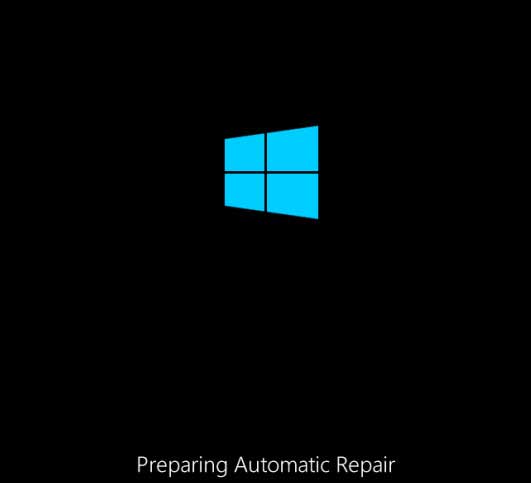
Interrupting a boot mid-write is not risk-free. Do it deliberately, three times, and stop — not as a repeated attempt to get past a problem. If the laptop is already in a boot loop it is arriving at this state on its own anyway.
Where even Automatic Repair does not appear, a Windows installation USB is the fallback. Boot from it using the one-time boot menu — F12 on Dell and Lenovo, Esc then F9 on HP — choose Repair your computer rather than Install, then Troubleshoot > Advanced options > Command Prompt, and run bcdedit /set {default} safeboot minimal. Reaching that boot menu is covered in our walkthrough of getting into BIOS and boot menus on each laptop brand.
Do HP, Dell and Lenovo Need Different Steps?
For Safe Mode itself, no. It is a Windows feature, so the routes above are identical regardless of who made the laptop.
The brand only matters for the keys that get you to a boot menu or firmware screen — F12 on Dell and Lenovo ThinkPads, Esc then F9 on HP, F12 on Acer — and for the recovery partitions vendors add alongside Windows. Lenovo’s Novo button, pressed with a paperclip while the laptop is off, opens a menu that includes System Recovery; HP’s F11 route reaches HP Recovery Manager on models that still ship it. Those restore the machine rather than starting Safe Mode, so do not mistake one for the other.
How to Exit Safe Mode
If you got in through Shift + Restart, Settings or the three-failed-boots route, simply restart. Those are one-time trips and Windows returns to normal on its own.
If you used msconfig, the flag is still set. Press Windows key + R, run msconfig, open the Boot tab, untick Safe boot, click OK and restart. Microsoft gives the same steps for a machine that keeps starting in Safe Mode unexpectedly.
Stuck in a loop where msconfig will not open or the setting will not stick? Open Command Prompt as administrator and run bcdedit /deletevalue {default} safeboot, then restart. That clears the same flag directly.
What to Do if Safe Mode Still Will Not Start
A laptop that cannot reach Safe Mode is usually telling you something other than “wrong key”. Work through these in order.
- Repair the system files. From the recovery environment’s Command Prompt, run sfc /scannow, then DISM /Online /Cleanup-Image /RestoreHealth if that reports unrepairable files.
- Try Startup Repair. Troubleshoot > Advanced options > Startup Repair fixes damaged boot configuration data, a common reason the Startup Settings option is missing.
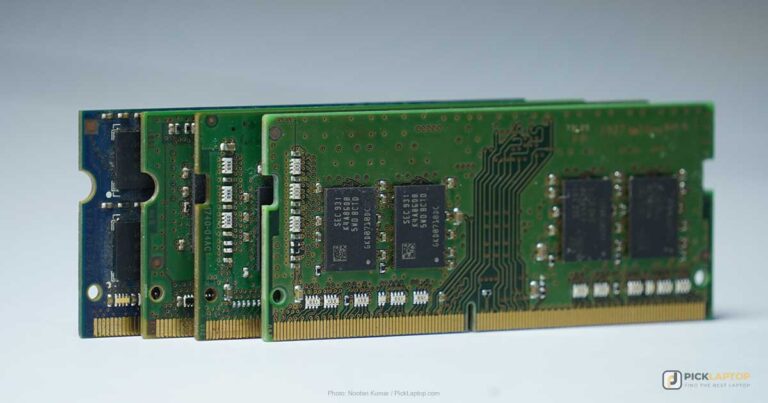
- Check for a hardware fault. Failing memory or a dying SSD produces boot failures that no Windows option resolves. Vendor firmware diagnostics run before Windows loads, so they still work here — our guide to running hardware diagnostics on a laptop covers the preboot tests for each brand.
- Have your BitLocker recovery key ready. On an encrypted drive, entering recovery often prompts for it, and without the key you cannot proceed. It is stored in the Microsoft account you set the laptop up with.
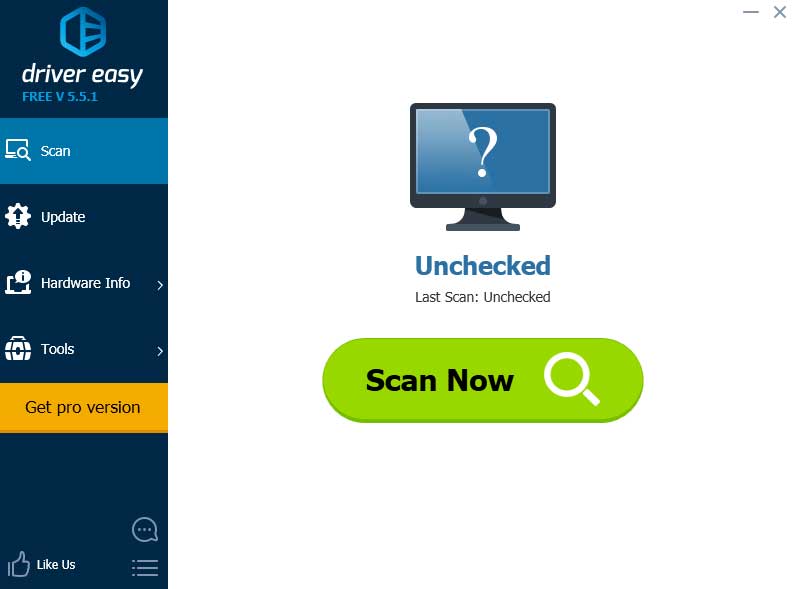
Outdated graphics drivers do genuinely cause boot problems, which is what the older version of this article was reaching for. Get replacements from the laptop manufacturer’s support page or the GPU vendor directly. Driver-updater utilities that scan and then charge to install are a category worth avoiding — several have been the subject of regulatory action, including the $26 million FTC settlement with the operators of Restoro and Reimage over deceptive PC repair marketing.
Does F8 still work to enter Safe Mode?
Not by default, and it has not since Windows 8. Microsoft moved boot options into the graphical recovery environment and turned off the legacy key polling. You can re-enable it by running bcdedit /set {default} bootmenupolicy legacy from an administrator Command Prompt, but on an SSD with Fast Startup on, the window to catch the key is often too short to be useful. The routes through the recovery environment are more reliable.
How do I start an HP laptop in Safe Mode on Windows 11?
Exactly as on any other brand. Hold Shift while clicking Restart on the Start menu or sign-in screen, then Troubleshoot > Advanced options > Startup Settings > Restart, and press 4 or 5. Safe Mode is a Windows feature, so HP, Dell, Lenovo and Acer all use the same steps.
What is the difference between Safe Mode and Safe Mode with Networking?
Networking adds the network adapter drivers, so you get internet access. Use it when you need to download a driver or update security software. Use plain Safe Mode when you are troubleshooting an infection, since networking also lets malware reach the internet.
My laptop keeps booting into Safe Mode. How do I stop it?
The Safe boot flag in System Configuration is still set. Press Windows key + R, run msconfig, open the Boot tab, untick Safe boot, click OK and restart. If msconfig will not open, run bcdedit /deletevalue {default} safeboot from an administrator Command Prompt instead.
Can I get into Safe Mode if my laptop will not boot at all?
Yes, in most cases. Interrupt the boot three times by holding the power button as the logo appears, and the fourth attempt starts Automatic Repair, from which Troubleshoot > Advanced options > Startup Settings leads to Safe Mode. If that never appears, boot from a Windows installation USB and choose Repair your computer.
Why is Startup Settings missing from Advanced options?
Usually because you booted from recovery media rather than the laptop’s own installation, or because the boot configuration data is damaged. Try Startup Repair first. Otherwise use the Command Prompt option and run bcdedit /set {default} safeboot minimal, then restart — remembering to clear that flag afterwards.
Is it safe to force shut down the laptop three times on purpose?
It carries a small risk of filesystem damage, because you are cutting power during writes. Do it deliberately three times to trigger recovery, then stop. A laptop already stuck in a boot loop is reaching this state on its own regardless.
Will I lose files by using Safe Mode?
No. Safe Mode only changes which drivers and startup programs load for that session. Your files are untouched. The things that can cost data are the other options on the same Troubleshoot menu — Reset this PC in particular — so read each screen before selecting it.
Final Thoughts on Booting a Laptop Into Safe Mode
Shift + Restart is the route to reach for first; it works from the sign-in screen, needs no timing, and behaves the same on every brand. Keep msconfig for jobs that need several restarts, and untick the box the moment you are done.
If none of the routes reach Safe Mode, stop treating it as a Windows problem and test the hardware — that pattern points at storage or memory far more often than at software.


Thank you very much, it saved my life.
So glad to hear that, Amily! Thanks for taking the time to comment.