Cricut’s own system requirements page states that Design Space is not supported on Chromebooks, or Unix / Linux computers. Cricut’s Design Space FAQ says the same thing in different words — Chromebooks run ChromeOS, which is not compatible with Design Space. That rules out an entire shelf of the laptop aisle before any spec comparison starts, and it is the single most common mistake in Cricut laptop shopping.
Past that, the software asks for very little. Cricut’s stated Windows minimum is Windows 10 or later, an Intel dual-core or equivalent AMD processor, 4GB of RAM, a 1024×768 display, a spare USB port or Bluetooth, and broadband; on macOS, version 12 or later. Almost every new laptop clears that, which means the specification that decides your purchase is not the one Design Space needs — it is the one your other software needs while Design Space is open.
Editor’s Pick

Last update on 2026-10-15 / Affiliate links / Images from Amazon Product Advertising API
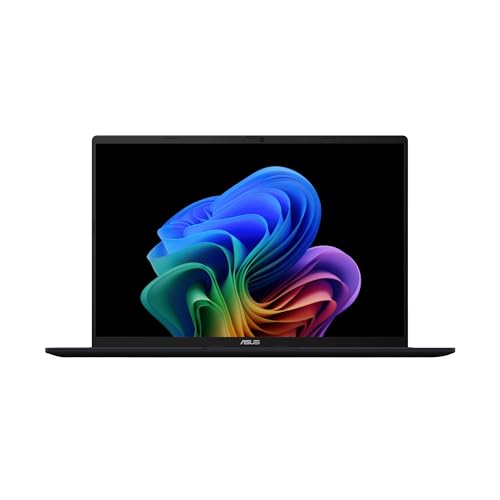
Eight Zen 5 cores and 16GB of DDR5 for crafters who keep Photoshop, Illustrator or Canva open beside the Design Space canvas — far more than the cutting software alone asks for.
- AMD Ryzen AI 7 350
- 16GB RAM
- 1TB SSD
- 16-inch WUXGA display
What’s Inside
- 1 – Cricut Laptop Buyer's Guide
- 2 – Cricut Laptop Comparison Table
- 3 – Best Laptops for Cricut Maker in 2026 — Reviews
- 3.1 – 1. ASUS Vivobook 16 (Best Overall)
- 3.2 – 2. HP OmniBook 5 Flip (Cheapest Pick)
- 3.3 – 3. Acer Aspire Go 15 AI (Budget, Non-Touch)
- 3.4 – 4. Lenovo Yoga 7i 2-in-1 (Best Big-Screen 2-in-1)
- 3.5 – 5. LG gram 15 (Most Portable)
- 3.6 – 6. Samsung Galaxy Book6 16-inch (Most Powerful)
- 3.7 – 7. Apple MacBook Air 13-inch M5 (Best Mac)
- 3.8 – 8. Apple MacBook Neo (Budget Mac)
- 4 – Recommended Accessories
- 5 – Which Cricut Laptop Should You Buy?
- 6 – Cricut Laptop FAQ
- 7 – Final Thoughts on Cricut Laptops
Cricut Laptop Buyer’s Guide
Processor
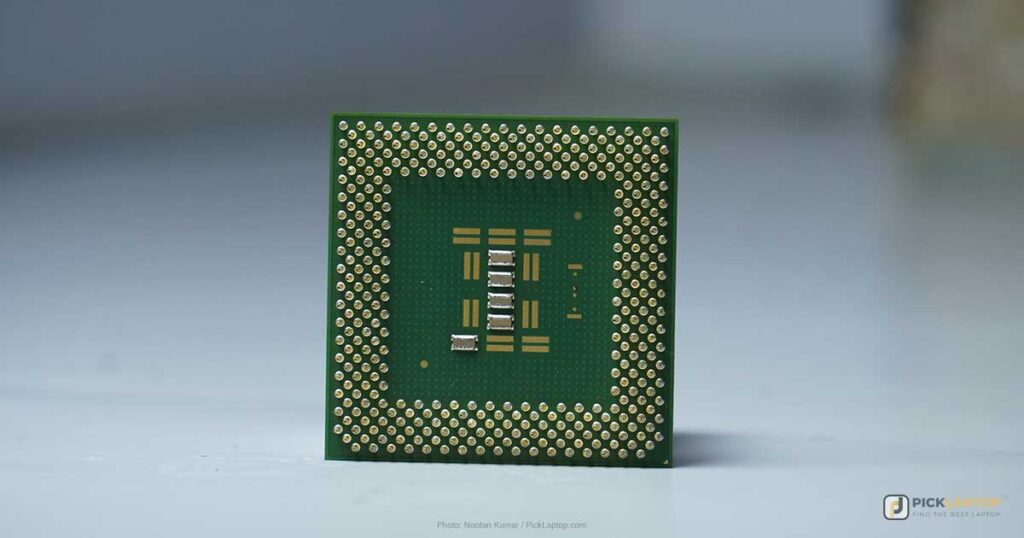
The Windows floor is a dual-core chip; on macOS, 1.83 GHz. Those are floors a laptop from several years ago already sits above, and no current chip on this list comes close to being the limiting factor for cutting work.
The processor choice is decided by everything else on the machine. Print-Then-Cut work, tracing scanned artwork, or building a design from scratch usually means Photoshop, Illustrator or Canva running at the same time as the canvas. A Core i5 or Ryzen 5 and above is a sensible target for that combination — not for Design Space, which would run on the entry chip either way.
Memory (RAM)
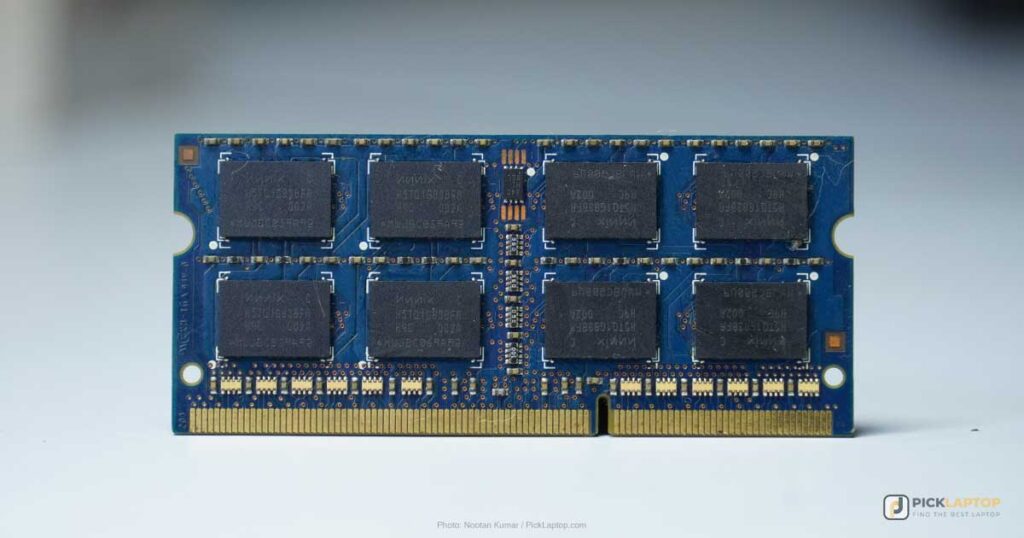
Cricut lists 4GB as the minimum on both Windows and macOS. 8GB is the sensible buying floor, because a design app and a browser full of reference tabs sit in memory alongside the canvas for the whole session. 16GB is the point at which you stop closing things to make room. None of the picks below ship with less than 8GB.
Display
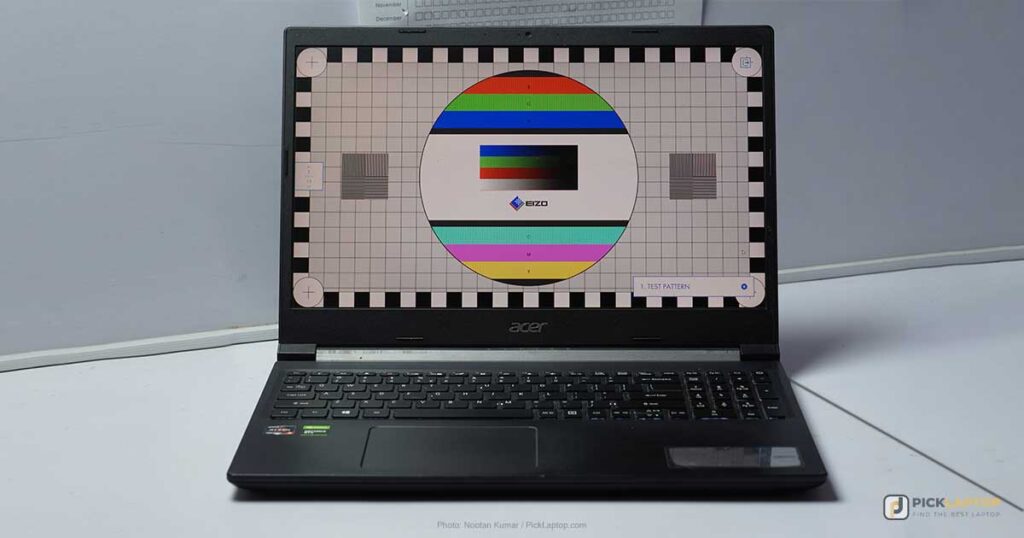
Cricut’s stated minimum is 1024×768, which every laptop here clears several times over. Screen size does more for this work than resolution does: a 15- or 16-inch panel keeps a multi-layer layout and the layers sidebar on screen together, where a 13-inch panel has you scrolling between them.
Two things worth separating. A touchscreen is not required, but tapping and dragging on the canvas suits some crafters better than a trackpad, and four picks here have one. Color accuracy is a different question — a laptop panel is a poor judge of how a Print-Then-Cut sheet will look against cardstock or fabric, and none of the machines here have published gamut measurements to change that. Check the physical proof, not the screen.
Storage
The install itself wants 2GB free. Your own library is what fills a drive: SVG collections, purchased fonts, scanned artwork and finished project files. 256GB is workable, 512GB removes the housekeeping. Every pick here is on an SSD.
Connectivity Options
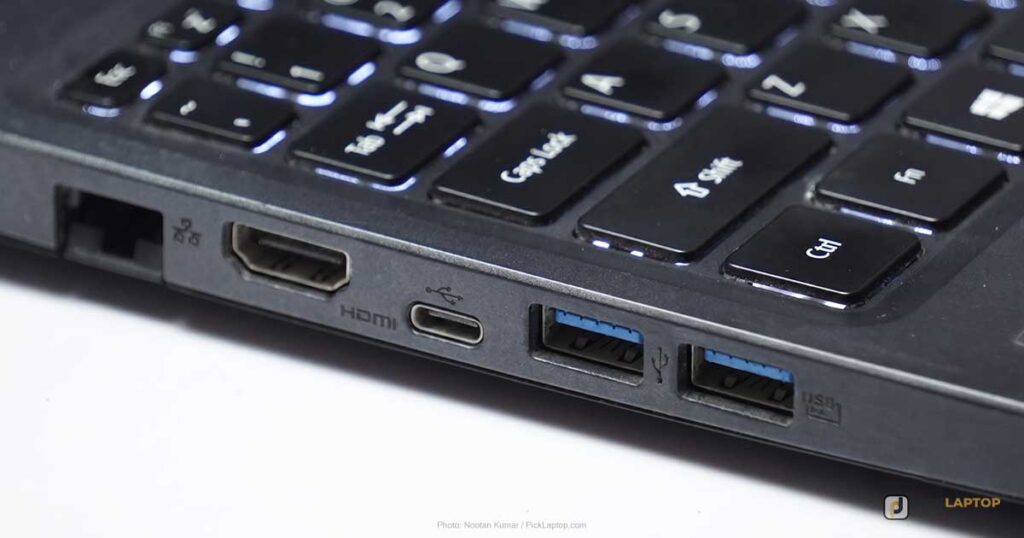
Cricut’s requirement is “an available USB port or Bluetooth connection” — it names no Bluetooth version, so a minimum-version claim is not something Cricut supports. The machine matters more than the laptop here: Cricut states that Joy, Joy 2, Joy Xtra and AutoPress 2 connect over Bluetooth only, while machines supplied with a USB cable can use it. If a Joy is your machine, the wired fallback does not exist and Bluetooth has to work.
For everyone else, a USB-A port is the thing to look for on the spec sheet, since Cricut’s own cables are USB-A. Two picks below have no full-size USB port at all and need an adapter.
Does Design Space Work on a Chromebook?
No. Cricut’s system requirements page lists Chromebooks as unsupported alongside Unix and Linux computers, and the Design Space FAQ answers the question directly: Design Space requires a Windows or Mac operating system, and ChromeOS is not compatible with it. The Android app is not a way around this — Cricut lists it for mobile devices and tablets.
Cricut publishes no browser-based alternative for ChromeOS. A Chromebook already in the house can stay a Chromebook; the cutting has to happen from a Windows or Mac machine, or from an iPhone, iPad or Android tablet running the mobile app.
Cricut Laptop Comparison Table


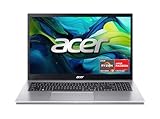

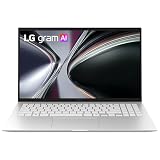


Last update on 2026-10-24 / Affiliate links / Images from Amazon Product Advertising API
Best Laptops for Cricut Maker in 2026 — Reviews
Eight machines that meet Cricut’s requirements, separated by what else you run beside Design Space, whether you want touch, and how far the laptop travels. Two are Macs.
1. ASUS Vivobook 16 (Best Overall)
Best Overall
Last update on 2026-10-15 / Affiliate links / Images from Amazon Product Advertising API
- ProcessorAMD Ryzen AI 7 350
- GPUAMD Radeon (integrated)
- RAM16GB
- Storage1TB SSD
- Display16-inch WUXGA (1920×1200)
Notebookcheck’s entry for the M1607KA documents the configuration this listing sells: a Ryzen AI 7 350 with four Zen 5 cores to 5.0 GHz and four Zen 5c cores to 3.5 GHz, 16GB of DDR5-5600, and a 16-inch 1920×1200 IPS panel with a matte finish at 60 Hz.
Design Space will never ask a chip like this for anything. The reason to buy it is the other half of the workflow — vector editing in Illustrator, retouching a Print-Then-Cut image in Photoshop, a browser of reference tabs — open beside the canvas rather than taken in turns. A matte 16-inch panel is the other practical piece: a craft table near a window is a glare problem, and this one doesn’t reflect it back.
Notebookcheck has published the specification but not a measured review of this model, so brightness, color coverage and speaker output are undocumented. If Design Space is the only thing you plan to run, the cheaper picks below do that job identically and this one is more machine than the task needs.
Pros
- Eight Zen 5 cores and 16GB DDR5-5600 for design work beside the canvas
- 16-inch matte 1920×1200 IPS panel
- 1TB SSD for fonts, SVG libraries and finished projects
Cons
- Specifications far exceed anything Design Space requires
- No published measurements for the display or speakers
2. HP OmniBook 5 Flip (Cheapest Pick)
Cheapest Pick

Last update on 2026-10-17 / Affiliate links / Images from Amazon Product Advertising API
- ProcessorIntel Core 5 120U
- GPUIntel Graphics (integrated)
- RAM8GB DDR5
- Storage512GB SSD
- Display14-inch FHD+ IPS touchscreen (1920×1200)
The 360° hinge is the whole argument for this one. Folded flat, the canvas becomes something you drag layers around on with a finger instead of a trackpad — closer to how the iPad app behaves, on a machine that also runs the full desktop Design Space the iPad cannot.
8GB is double Cricut’s minimum and the point where the buying advice above starts. It runs the canvas and a handful of browser tabs. It is not the machine to add Photoshop to, and 8GB in this chassis is soldered, so that ceiling is permanent.
No independent lab has published a tested review of the Core 5 120U configuration — the pages that come up in a search are specification aggregators reprinting HP’s own numbers. Battery life, brightness and speaker output on this model are undocumented, and the specification sheet is the only evidence available for it.
Pros
- 360° hinge and touchscreen for working the canvas by hand
- 512GB SSD at the entry tier
- 8GB DDR5 — twice Cricut’s stated minimum
Cons
- 8GB is soldered — no upgrade path if the workload grows
- No independent testing published for this configuration
3. Acer Aspire Go 15 AI (Budget, Non-Touch)
Budget Non-Touch
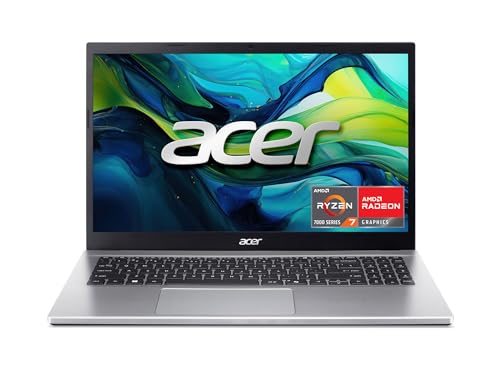
Last update on 2026-10-24 / Affiliate links / Images from Amazon Product Advertising API
- ProcessorAMD Ryzen 7 7730U
- GPUAMD Radeon (integrated)
- RAM16GB DDR4
- Storage512GB PCIe NVMe SSD
- Display15.6-inch Full HD IPS (1920×1080)
Skip the touchscreen and the money buys screen and memory instead: 15.6 inches against the OmniBook’s 14, and 16GB against its 8, at a similar tier. For a crafter who works from a chair at a desk with a mouse, that is the better distribution of the same budget.
The evidence base is thin: Notebookcheck’s page for the AG15-42P chassis carries a Ryzen 7 5825U variant, not the 7730U sold here, and no lab has published measurements for this configuration. Nothing about the display’s brightness or color coverage is documented, which is a reason to keep judging Print-Then-Cut color off the printed proof rather than the panel.
Pros
- 16GB at a budget tier, twice the memory of the OmniBook
- 15.6-inch Full HD IPS panel
- 512GB NVMe SSD
Cons
- No touchscreen
- DDR4 rather than DDR5, and no published testing of this configuration
4. Lenovo Yoga 7i 2-in-1 (Best Big-Screen 2-in-1)
Best 2-in-1
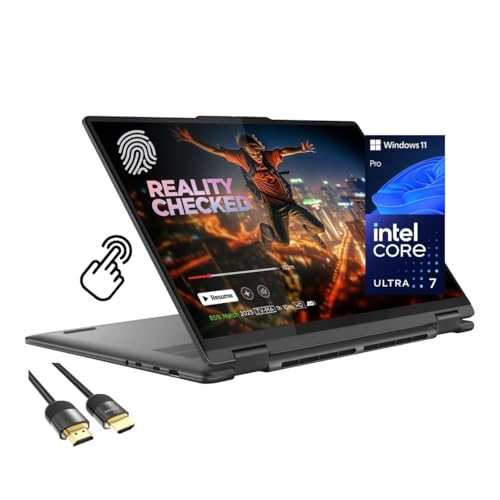
Last update on 2026-10-24 / Affiliate links / Images from Amazon Product Advertising API
- ProcessorIntel Core Ultra 7 155U
- GPUIntel Graphics (integrated)
- RAM16GB DDR5
- Storage1TB PCIe SSD
- Display16-inch WUXGA touchscreen (1920×1200)
This is the OmniBook’s idea at 16 inches. Folding a 14-inch convertible flat gives you a tablet the size of a sheet of paper; folding this one flat gives you something closer to a drafting surface, which is a different experience when a design has eight layers stacked on it. 16GB and 1TB mean a design app can sit open beside the canvas, unlike the cheaper touch pick.
Independent testing of this exact chip is what’s missing. Windows Central’s Yoga 7i 16 review covers the Gen 10 machine with a Core Ultra 7 256V — a later generation and a different chip from the Core Ultra 7 155U here — and its findings on that unit’s hinge stiffness and 62% sRGB panel describe hardware this listing does not sell. Treat them as a reason to check the hinge in a store rather than as measurements of this model.
Pros
- 16-inch touchscreen — the largest touch canvas here
- 16GB DDR5 and 1TB, so a design app fits alongside Design Space
- Folds flat for hands-on layout work
Cons
- Heavier and bulkier than a 14-inch convertible
- Published reviews cover a later generation, not this Core Ultra 7 155U configuration
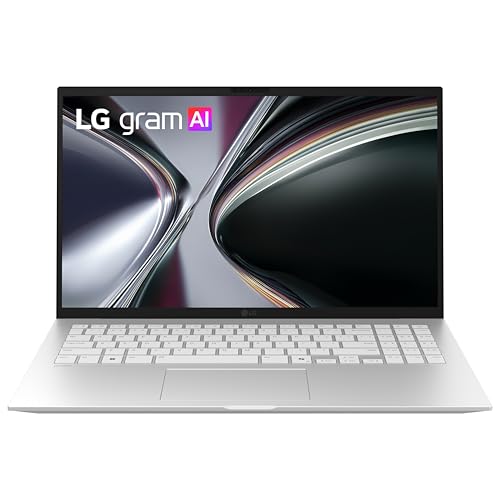
5. LG gram 15 (Most Portable)
Most Portable
Last update on 2026-10-24 / Affiliate links / Images from Amazon Product Advertising API
- ProcessorAMD Ryzen AI 7 450
- GPUAMD Radeon (integrated)
- RAM16GB
- Storage512GB SSD
- Display15.6-inch Full HD IPS touchscreen (1920×1080)
The gram is no longer a budget line. Older Cricut laptop round-ups place it among the cheap picks; LG’s 2026 US pricing announcement puts the 15.6-inch gram at premium-ultrabook money, well above the gram Book model sold beneath it. If a round-up still calls it a bargain, it is quoting an old price.
What the price buys is weight. LG’s line has always traded chassis material for grams, and the same announcement states that the 2026 lineup meets MIL-STD-810H durability testing — the specific test count is in LG’s per-model specifications rather than the announcement, so treat any figure quoted elsewhere as coming from LG rather than from an independent lab. The battery rating and weight for this configuration likewise come from LG’s own specification sheet; no third-party lab result has been published for it.
Buy it if the laptop moves — between a craft room and a kitchen table, to a friend’s house, to a market stall. For Design Space at a fixed desk, this is the wrong place to spend the money; the Acer above does the same cutting work.
Pros
- 15.6-inch touchscreen in the lightest chassis here
- MIL-STD-810H tested, per LG’s 2026 lineup announcement
- 16GB alongside the touch panel
Cons
- Premium pricing that Design Space alone does not justify
- Battery and weight figures come from LG, not from independent testing
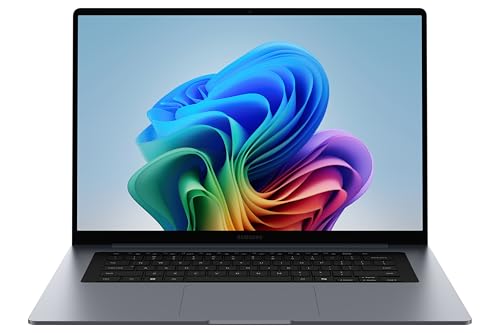
6. Samsung Galaxy Book6 16-inch (Most Powerful)
Most Powerful
Last update on 2026-10-24 / Affiliate links / Images from Amazon Product Advertising API
- ProcessorIntel Core Ultra 7 355
- GPUIntel Graphics (integrated)
- RAM16GB LPDDR5X
- Storage1TB
- Display16-inch WUXGA IPS anti-glare (1920×1200), non-touch
The port list is the reason this one is here rather than a thin-and-light. Samsung’s specification page for the 16-inch Book6 lists two USB Type-C, two USB 3.2 Type-A, HDMI, an RJ45 Gigabit Ethernet jack and a microSD slot. Cricut’s cables are USB-A, so plugging a machine in is a cable rather than a dongle — and the Ethernet jack matters at a craft fair, where Design Space needs to reach the internet to sign in and the venue Wi-Fi frequently will not.
Samsung rates the 61.2Wh battery at up to 24 hours of video playback, and states the conditions: its own internal lab, 1080p local video, 150 nits, airplane mode. That is a manufacturer figure under favorable settings rather than a mixed-use result, so read it as an upper bound.
Nothing in Design Space needs a Core Ultra 7. A craft laptop that doubles as the main computer — photo editing, video for a shop listing, twenty browser tabs — is what the Core Ultra 7 is doing here, and the anti-glare 16-inch panel is non-touch, so if hands-on canvas work is the appeal, the Yoga above is the machine, not this one.
Pros
- Two USB-A ports, HDMI and Gigabit Ethernet alongside two USB-C
- 61.2Wh battery with a favorable-conditions rating from Samsung
- 16-inch anti-glare IPS panel
Cons
- Non-touch display
- Specified well beyond what cutting work asks for
7. Apple MacBook Air 13-inch M5 (Best Mac)
Best Mac

Last update on 2026-10-24 / Affiliate links / Images from Amazon Product Advertising API
- ProcessorApple M5 (10-core CPU)
- GPUApple M5 (integrated)
- RAM16GB unified
- Storage512GB SSD
- Display13.6-inch Liquid Retina (2560×1664)
- BatteryUp to 18 hours rated
Cricut’s macOS floor is version 12, which the M5 Air clears by a decade of releases. The fanless chassis is the part that suits a craft room: no fan noise, and nothing to pull dust, vinyl offcuts or glitter through a vent while it sits next to a cutting mat.
Tom’s Hardware watched the chip open a Cinebench 2026 stress loop at 3,415 and settle in the low 2,300s over a sustained run. Design Space never generates that kind of sustained load — the throttling point matters only if this machine also does long video exports or batch image processing.
Two practical trade-offs. The 13.6-inch panel is the smallest working area here, which shows on a layered layout. And there is no USB-A port, so connecting a Cricut by cable means a USB-C adapter or a hub — Bluetooth pairing avoids that, and on a Joy it is the only option anyway.
Pros
- Fanless and silent — nothing pulling craft debris through a vent
- 18 hours rated battery life
- 16GB unified memory as standard
Cons
- No USB-A — a wired Cricut connection needs an adapter
- Smallest display here for multi-layer layouts
8. Apple MacBook Neo (Budget Mac)
Budget Mac

Last update on 2026-10-24 / Affiliate links / Images from Amazon Product Advertising API
- ProcessorApple A18 Pro
- GPUApple A18 Pro (integrated)
- RAM8GB unified (not upgradeable)
- Storage256GB–512GB SSD
- Display13-inch Liquid Retina (2408×1506)
The Neo is the cheapest route to running Design Space on macOS. 8GB of unified memory is twice Cricut’s minimum and is fixed at purchase, which puts the boundary in a clear place: the canvas plus a browser, yes; the canvas plus Photoshop as a daily habit, no. Buy the Air instead if the second description is you.
9to5Mac reported in May 2026 that demand had pushed ship dates weeks out, with estimates moving from late May to mid-May over a few days as supply improved. Availability has had months to settle since, so check the current ship date at checkout rather than assuming either the delay or its resolution.
Pros
- The least expensive way onto macOS for Design Space
- 8GB unified memory — twice Cricut’s stated minimum
- All-day battery life
Cons
- 8GB is fixed at purchase; a design app alongside the canvas will crowd it
- Ship dates were still moving as of May 2026 — verify before ordering to a deadline
Recommended Accessories



Last update on 2026-10-24 / Affiliate links / Images from Amazon Product Advertising API
Which Cricut Laptop Should You Buy?
| Best For | Pick |
|---|---|
| Overall | ASUS Vivobook 16 |
| Cheapest | HP OmniBook 5 Flip |
| Budget, Non-Touch | Acer Aspire Go 15 AI |
| Big-Screen 2-in-1 | Lenovo Yoga 7i 2-in-1 |
| Most Portable | LG gram 15 |
| Most Powerful | Samsung Galaxy Book6 16-inch |
| Best Mac | Apple MacBook Air 13-inch M5 |
| Budget Mac | Apple MacBook Neo |
Cricut Laptop FAQ
Does Cricut Design Space work on a Mac?
Yes, on macOS 12 or later. The version number is the part to check on a hand-me-down Mac: a machine stuck below macOS 12 is outside Cricut’s stated support, and on older Intel Macs that limit is set by Apple’s update policy rather than by anything you can change.
Does Cricut Design Space require an internet connection?
For downloading, installing, signing in and some search functions, yes. Cricut’s FAQ describes an Offline feature for Design Space for Desktop and for the iOS app, and states that the Android app does not currently have one. Cricut’s stated broadband minimum is 2-3 Mbps down and 1-2 Mbps up — undemanding, but a reason to check venue Wi-Fi before relying on it at a market or class.
Does Cricut Design Space cost money?
The software is free. Cricut Access is a separate subscription covering fonts and images, and it is optional — your own SVGs and fonts upload and cut without it. No laptop specification changes that either way.
What’s the difference between Cricut Maker 3 and Cricut Explore 3?
Material range and tooling. Creative Bloq’s side-by-side comparison sets out the split: the Maker 3 adds the adaptive tool system for sewing, engraving and debossing across a much wider material range, where the Explore 3 covers a smaller set with fewer tools. Both connect the same way and place identical demands on a laptop, so the machine decision does not change which laptop you need.
Can I use an iPad instead of a laptop with my Cricut?
Yes — Cricut lists iOS 17 or later for the mobile app, and it includes the offline feature the Android app lacks. The reason people still buy a laptop is uploading and cleaning up your own artwork: file management, tracing scanned images and running a design app beside the canvas are all easier on a desktop OS.
Will a cheap laptop slow Design Space down?
Rarely, because Design Space leans on Cricut’s servers for a large part of what it does and on a 4GB, dual-core floor for the rest. When people report the canvas crawling, memory pressure and connection quality are the usual causes rather than the processor — which is why the buying advice here is 8GB minimum and a stable connection, not a faster chip.
Final Thoughts on Cricut Laptops
Two questions settle this list. Not a Chromebook — Cricut states that outright. And then: what else is open while you cut? If the answer is a browser, the cheapest picks here are the whole shopping list, and the money is better spent on materials. If the answer is Illustrator or Photoshop, that is what the 16GB machines are for, and it is the design work paying for them, not the cutting.
Related reading: our guide to laptops for clothing design and laptops for Adobe Lightroom cover the design-app side in more depth, and the detachable keyboard laptop guide goes further into touch-first machines.