The advice you’ll hear about laptops for economics is usually some version of “you don’t need much, it’s not engineering.” That holds for the coursework itself. It stops holding at the point where your department’s software decides which machines are even eligible — and at the point where R has four copies of the same dataset resident at once and the allocation fails.
Econometrics software isn’t demanding the way CAD or video editing is. It’s fussy in a different direction: about operating systems, about processor architecture, and about memory. Two of the packages economics departments commonly assign won’t install on an Apple silicon Mac at all. That single compatibility question comes before price on all seven machines below, each suited to a different kind of economics coursework in 2026.
Applied data analysis rather than economic theory is a closely related, Excel-heavy case — there is more on it in our business analytics laptop guide.
Editor’s Pick
Last update on 2026-09-28 / Affiliate links / Images from Amazon Product Advertising API
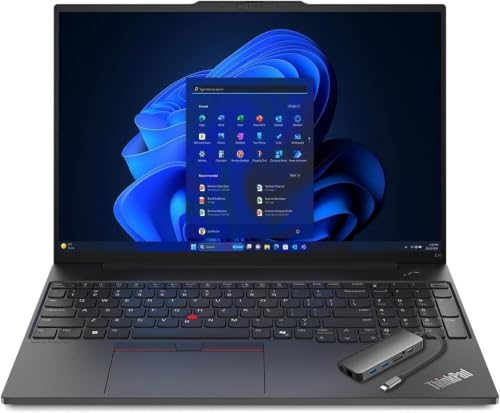
Windows keeps every econometrics package on the table, and two DDR5 SODIMM slots mean 16GB now can become 32GB later without buying a second laptop.
- AMD Ryzen 7 7735HS
- 16GB DDR5, two SODIMM slots
- MIL-STD-810H tested
- Windows 11 Pro
What’s Inside
- 1 – Best Laptops for Economics Majors Buyer's Guide
- 2 – Economics Laptop Comparison Table
- 3 – Best Laptops for Economics Students in 2026: In-Depth Reviews
- 3.1 – 1. Lenovo ThinkPad E16 Gen 2 (Best Overall)
- 3.2 – 2. Dell 14 Laptop (Best Budget)
- 3.3 – 3. LG gram Pro 17 (Best for Large Datasets)
- 3.4 – 4. LG gram 15 (Best Ultraportable)
- 3.5 – 5. Apple MacBook Air 13-inch (Best for macOS)
- 3.6 – 6. Lenovo Yoga 9i 2-in-1 (Best Convertible)
- 3.7 – 7. Apple MacBook Air 15-inch (Best Large-Screen macOS)
- 4 – Recommended Accessories
- 5 – Which Economics Laptop Should You Buy?
- 6 – Economics Laptop FAQ
- 7 – Final Thoughts on Economics Laptops
Best Laptops for Economics Majors Buyer’s Guide
Which Statistical Package Your Program Uses
“Statistical software” is not one category with one set of requirements. The five packages economics departments assign most often differ from each other on the two things a laptop purchase can’t undo: which operating system they run on, and whether they have an Apple silicon build.
R is the flexible one — Windows, macOS and Linux, with arm64 builds on CRAN. Stata lists Windows 10 and 11, macOS 13 through macOS 26, and 64-bit Linux, and Stata’s own FAQ says Stata 19 runs natively on Apple silicon as a universal application. MATLAB is cross-platform too, though the Apple silicon build is recent: MathWorks says native Apple silicon MATLAB starts at R2023b, and anything older runs through Rosetta 2 using the Intel installer.
Two packages break the pattern, and both break it against Macs. The EViews 14 system requirements page lists Windows only — Windows 8 through 11 and Windows Server, with no macOS entry. And SAS states in its own knowledge base that SAS 9.4 “is not currently supported on any MacBook with an Apple silicon Chip”, because its binaries are built for Intel x64 rather than ARM. If your department’s econometrics sequence is built on either one, that decides the operating system before any spec does. Ask which package your first econometrics module uses before you order, not after.
Processor
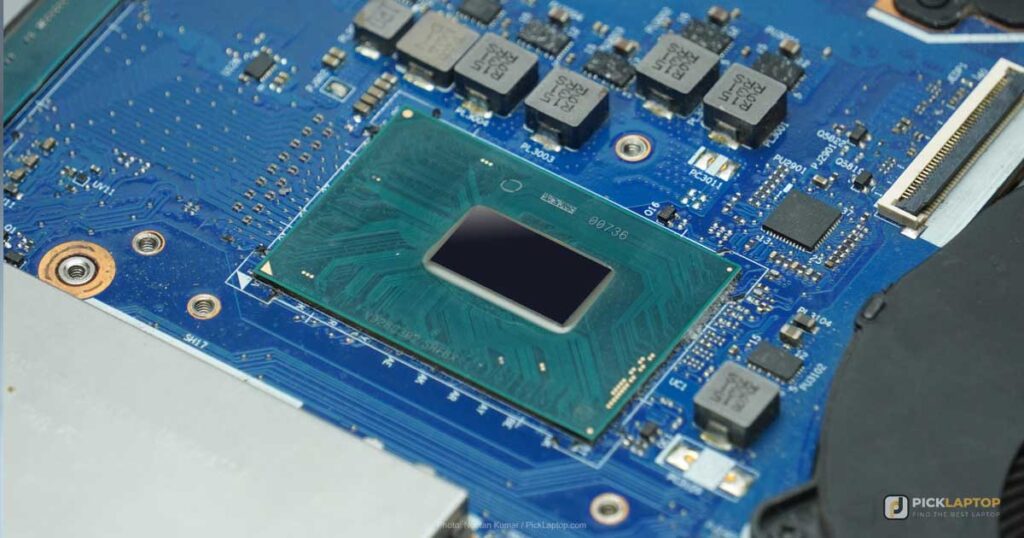
Reading, writing and spreadsheet work sit well inside what a Core 5, Core Ultra 5 or Ryzen 5 will do. The processor question only becomes interesting once you’re waiting on something, and in econometrics coursework that’s usually a bootstrap, a simulation or a large panel regression rather than a single model fit.
One thing to know about the wait: much of it is single-threaded. Base R runs one core unless you deliberately parallelize, and so does Stata/BE and Stata/SE — multiple cores are what the separately licensed Stata/MP edition adds. So a Ryzen 7 or Core Ultra 7 shortens the work you have explicitly farmed across cores, and does less for a plain reg or lm() call than the core count suggests. If your department licenses Stata/MP or your coursework runs simulations, the extra cores are worth paying for. Otherwise the money moves to memory.
Memory
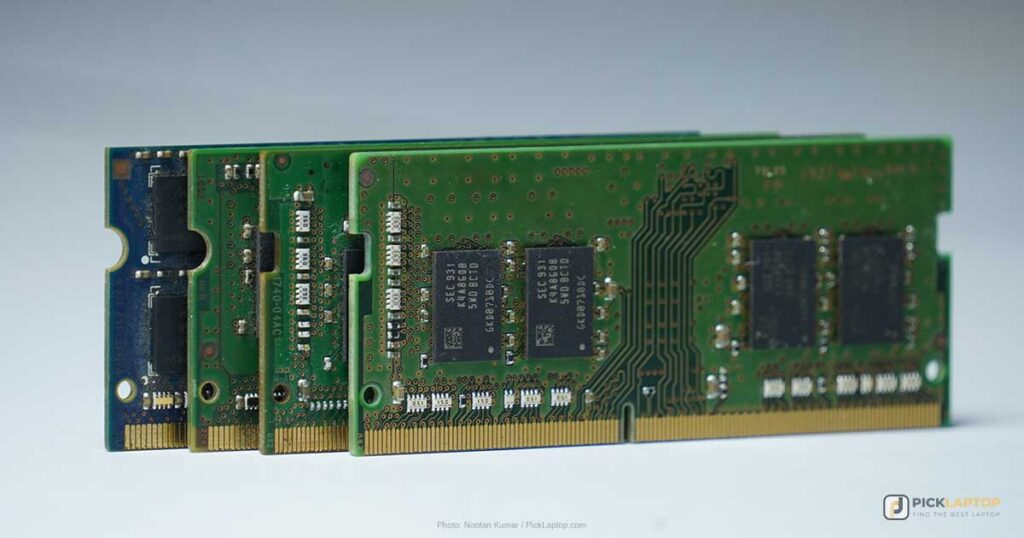
R keeps everything in memory, and it’s the number of resident copies rather than the row count that exhausts it. R’s own Memory-limits documentation states that “R holds all objects in virtual memory”, and that the failure surfaces as cannot allocate vector of size. A 50,000-row dataset is small on its own. What isn’t small is the session around it: R’s copy-on-modify behavior means a transformation can leave an old version and a new one both alive, a fitted model object keeps its own copy of the data it was fitted on by default, and students rarely clear any of it between steps. Add a browser with twenty tabs and Excel, and 8GB runs out during the session rather than during the import. 16GB is the working floor; 32GB is what large panel datasets and repeated model fits want.
Stata is stricter about it than R is — it allocates a single contiguous block for the dataset, so free memory that’s fragmented isn’t necessarily usable memory. That’s another argument for buying more than you think you need on a machine whose memory is soldered.
Display
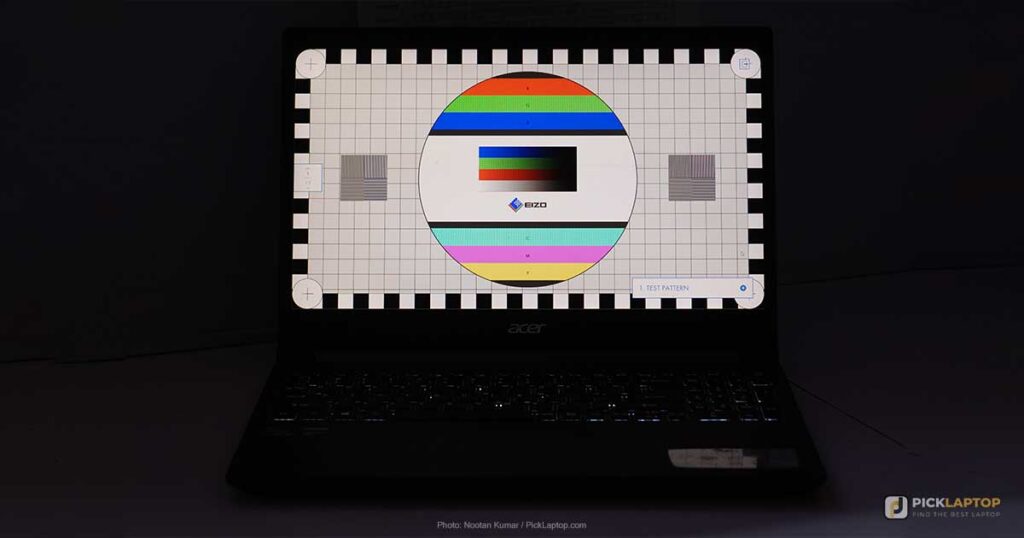
Most of the day is dense text — regression output, spreadsheet columns, PDFs of papers. That makes resolution after UI scaling and the finish of the panel the two things to check, in that order. Full HD at 14 inches is legible; the same resolution stretched to 17 inches is not the same reading experience.
Panel type tells you less than the marketing implies. IPS describes viewing-angle behavior; it says nothing about how bright a given screen is. If you study near windows or in bright lecture halls, look for a measured brightness figure and a matte finish rather than a panel acronym.
Storage
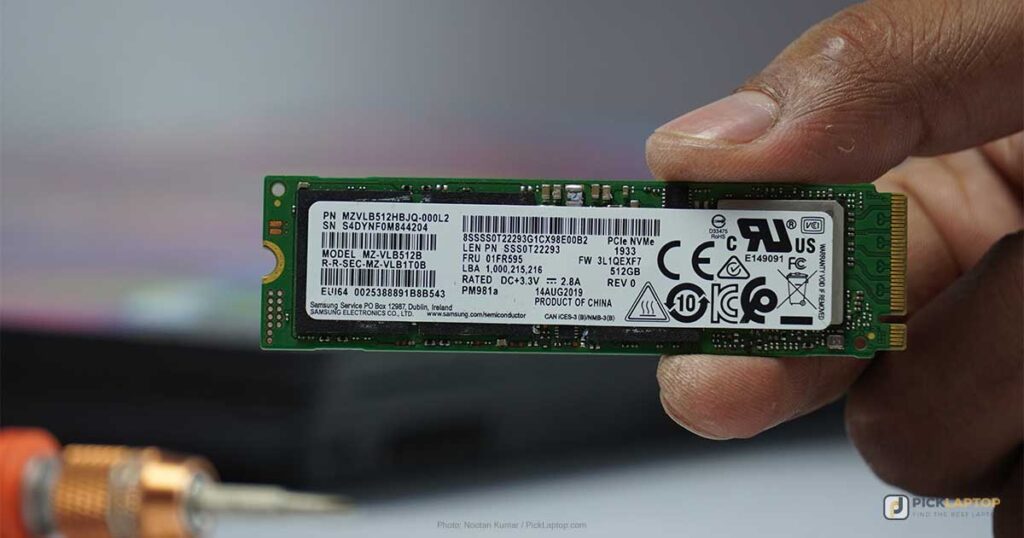
512GB on an NVMe drive is the sensible starting point. 256GB fills faster than students expect once a Stata or MATLAB installation, a few years of course material and several versions of the same dataset are all sitting there. Disk speed matters less than it sounds like it should here — once a dataset is loaded, the work happens in memory, and the SSD is only involved at import and export.
Dedicated GPU
Skip it. Excel, Stata, EViews, SAS and base R don’t dispatch work to a discrete GPU, so buying one for econometrics coursework spends money that RAM or storage would put to better use — and costs you battery life and weight every day you carry it. The exception is narrow and you’ll know if you’re in it: training neural networks in PyTorch or TensorFlow as part of a machine-learning-for-economics elective. That is a different purchase from this list.
Battery Life
Aim for a machine that covers a full teaching day without an outlet. Be careful with the headline numbers, though: figures like 26.5 or 28 hours are manufacturer ratings from a controlled video-playback loop, not measurements of mixed use. Independent tests of the same machines usually land well below them. Treat a high rating as evidence the laptop is in the long-battery class, and expect a fraction of it with a browser, a PDF reader and a stats package all open.
Economics Laptop Comparison Table





Last update on 2026-09-28 / Affiliate links / Images from Amazon Product Advertising API
Best Laptops for Economics Students in 2026: In-Depth Reviews
1. Lenovo ThinkPad E16 Gen 2 (Best Overall)
Best Overall
Last update on 2026-09-28 / Affiliate links / Images from Amazon Product Advertising API
- ProcessorAMD Ryzen 7 7735HS
- GPUAMD Radeon 680M (integrated)
- RAM16GB DDR5 (two slots, up to 64GB)
- Storage512GB PCIe SSD
- Display16-inch WUXGA IPS
- OSWindows 11 Pro
Windows is the one operating system on which every package in the section above installs, and the E16 is the version of that answer built to survive four years of being carried around. Lenovo’s spec sheet for the AMD Gen 2 lists two DDR5 SODIMM slots supporting up to 64GB, two PCIe Gen 4 M.2 slots, MIL-STD-810H testing and a spill-resistant keyboard with 1.5mm of key travel.
Those two slots matter more in this subject than in most. If your first two years turn out to be Excel and small cross-sections, 16GB was the right buy. If year three brings panel data and the cannot allocate vector errors start, you add memory for the price of memory. Every other Windows pick here and both MacBooks ship theirs soldered.
Independent coverage of this exact configuration is thin. The closest is GSMGoTech’s review of the Intel Core Ultra 7 155U version of the same Gen 2 chassis, which found the hinge opens one-handed without wobble and the speakers lack bass, though they’re fine for calls. Chassis findings carry across the two processor options; its battery result — 9 to 10 hours from a 57Wh pack — does not, since the Ryzen 7 7735HS is a 35W-class part rather than a 15W one. No lab figure for battery on the AMD model turned up.
It’s 3.59 lbs, which is heavy next to a gram or an Air, and that’s the honest trade for the slots and the durability testing.
Pros
- Two SODIMM slots to 64GB — add RAM yourself when datasets grow
- Runs every package in this guide, EViews and SAS included
- MIL-STD-810H tested, spill-resistant keyboard
Cons
- 3.59 lbs, the heaviest machine here
- Speakers lack bass, fine for calls only
- No published battery measurement for the Ryzen configuration
2. Dell 14 Laptop (Best Budget)
Best Budget
Last update on 2026-09-12 / Affiliate links / Images from Amazon Product Advertising API
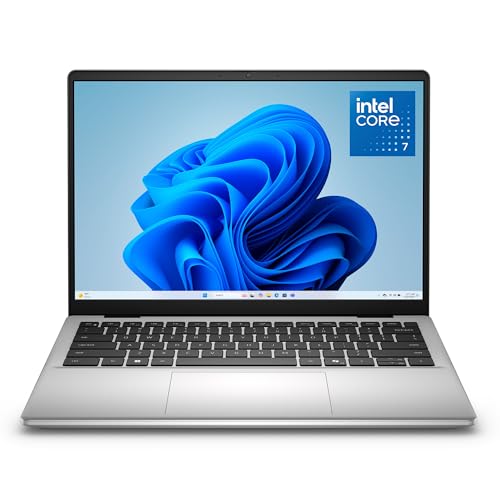
- ProcessorIntel Core 7 150U
- GPUIntel integrated
- RAM16GB DDR5
- Storage1TB SSD
- Display14-inch WUXGA IPS, anti-glare
- OSWindows 11 Home
16GB and 1TB at the entry tier is the specific combination that makes this one work for a first-year budget: it clears the memory floor without an upsell, and it doesn’t force dataset housekeeping in week three.
The anti-glare finish matters more here than the panel type does, given how much of the degree is reading text under lecture-hall lighting. ZippyLaptop’s hands-on review of this model — the DC14250 with the Core 7 150U rates the 54Wh battery 2.5 out of 5 and calls it “not your all-day-away-from-an-outlet machine,” so plan on charging between blocks of lectures.
The chassis is consumer-grade with no durability testing behind it, and there’s no second memory slot, so 16GB is what you keep. If you already know panel econometrics is where your degree is heading, start further up this list instead.
Pros
- 1TB of storage, unusual at this tier
- Anti-glare display for bright lecture halls
- Windows, so no software eligibility problem
Cons
- Battery is the weak point — ZippyLaptop scored it 2.5 of 5
- Consumer-grade build, not durability tested
- Memory is what you order and nothing more
3. LG gram Pro 17 (Best for Large Datasets)
Best for Large Datasets
Last update on 2026-09-28 / Affiliate links / Images from Amazon Product Advertising API
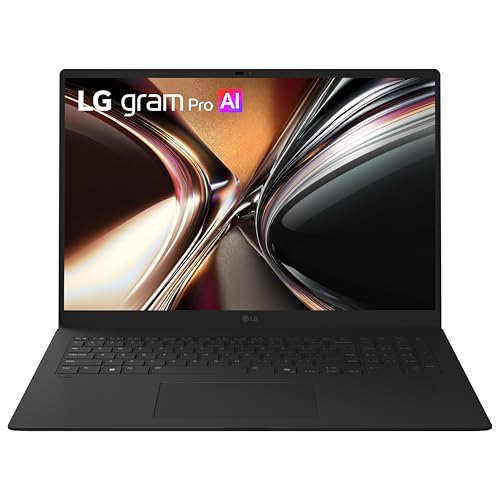
- ProcessorIntel Core Ultra 7 355
- GPUIntel integrated
- RAM32GB LPDDR5X
- Storage1TB NVMe SSD
- Display17-inch WQXGA touch
- Battery26.5 hours (LG rating)
32GB is the specification doing the work, and it addresses the memory problem from the other end than the ThinkPad does: instead of adding RAM when you hit the wall, you start past it. For a dissertation on a large panel — where the data, two transformed copies and a fitted model object are all resident together — that’s the difference between working and restarting the session.
The 17-inch WQXGA panel is the second half of the argument, and it’s a real one for this subject: a wide panel dataset shows more columns before you scroll, and regression output stops wrapping. At 3.02 lbs it’s lighter than the 14-inch ThinkPad above, which is not a sentence you get to write about many 17-inch laptops.
Note what isn’t established. No independent lab test of this exact configuration — 17-inch, Core Ultra 7 355 — turned up. The closest published hands-on is Techgoondu’s review of the 16-inch 2026 gram Pro with the Core Ultra X7 358H, a different screen size and a different chip, which found the down-firing speakers put out decent sound with clarity and expected eight to ten hours from its 77Wh battery. Read that as a family resemblance rather than a measurement of this machine, and read the 26.5-hour figure as LG’s rating.
Pros
- 32GB — the most memory of any pick here, no upgrade needed
- 17-inch WQXGA shows a wide panel dataset without scrolling
- 3.02 lbs despite the 17-inch panel
Cons
- No published lab measurement of this configuration turned up
- Soldered memory — 32GB is permanent in both directions
- A 17-inch footprint is still a 17-inch footprint in a bag
4. LG gram 15 (Best Ultraportable)
Best Ultraportable
Last update on 2026-09-28 / Affiliate links / Images from Amazon Product Advertising API
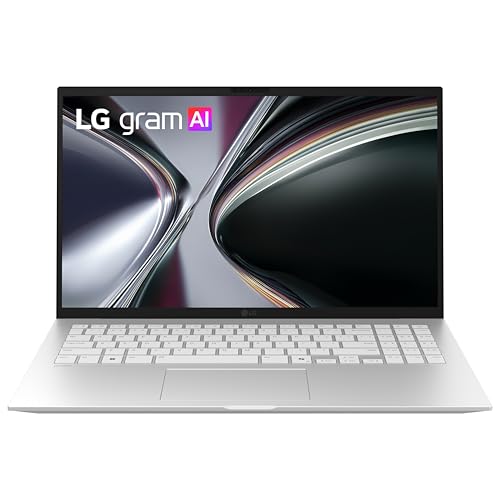
- ProcessorAMD Ryzen AI 7 450
- GPUAMD Radeon (integrated)
- RAM16GB (32GB configurations available)
- Storage512GB SSD
- Display15.6-inch FHD IPS touch
- Battery28 hours (LG rating)
2.8 lbs for a 15.6-inch screen is the whole pitch. If your day is four buildings and a library and the laptop is in the bag for all of it, weight is the specification you’ll notice every single day, and none of the other picks match this one on it at this screen size.
16GB is the base, and a 32GB configuration exists — worth taking at purchase, because nothing here is socketed. Order the memory you’ll want in year three.
On the 28-hour rating, the useful caution comes from NotesForSHS, a research roundup of the gram line that aggregates published tests rather than running its own: it reports RTINGS measuring over 15 hours of light productivity on the 2024 gram 16 and Trusted Reviews recording 21 hours 10 minutes in PCMark on the 2025 gram Pro 16, and says LG’s advertised figures should be treated as “a controlled manufacturer claim, not a promise of 27 hours of mixed lectures.” Those are neighboring models, not this one; no independent test of the Ryzen AI 7 450 gram 15 was found. The same roundup describes gram speakers generally as thin on bass and adequate for lectures.
This is a portability-first pick and it should lose to the gram Pro 17 above if your coursework is memory-bound rather than bag-bound.
Pros
- 2.8 lbs with a 15.6-inch screen
- 32GB configuration available at purchase
- Still a long-runtime machine after discounting LG’s figure
Cons
- No independent test of this configuration was found
- Thin-sounding speakers are a recurring gram trait
- Base 16GB is fixed at purchase
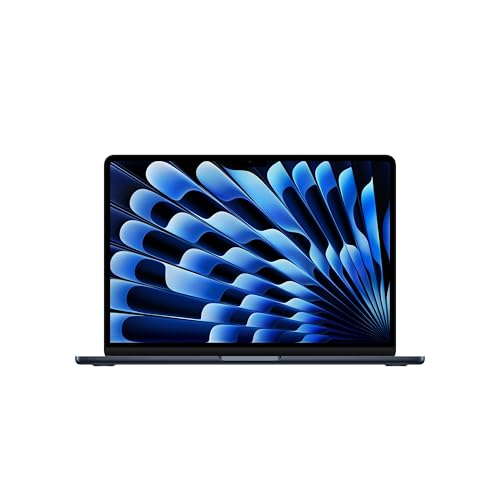
5. Apple MacBook Air 13-inch (Best for macOS)
Best macOS Pick
Last update on 2026-09-28 / Affiliate links / Images from Amazon Product Advertising API
- ProcessorApple M5
- GPUIntegrated
- RAM16GB unified
- Storage512GB SSD
- Display13.6-inch Liquid Retina
- BatteryUp to 18 hours (Apple rating)
Check the software section first, because this pick has a hard eligibility test attached: R, Stata 19 and MATLAB R2023b onward all have Apple silicon builds, and EViews and SAS 9.4 do not run on this machine at all. If your econometrics module is taught in EViews, stop here and buy Windows.
Past that gate, the fanless design suits the rhythm of econometrics coursework — long stretches of reading and writing, punctuated by short model fits. There’s no fan noise in a silent library because there’s no fan.
The limit shows up under sustained load. Tom’s Hardware watched the Air’s chip open a Cinebench 2026 stress loop at 3,415 and settle in the low 2,300s. A regression finishes long before that point; a bootstrap with 10,000 replications or a Monte Carlo simulation runs straight into it.
The other constraint is permanent: 16GB of unified memory can’t be added to later, on a machine where memory is the specification most likely to run short.
Pros
- R, Stata 19 and current MATLAB all run natively on Apple silicon
- Fanless and silent, which suits library work
- Up to 18 hours rated battery life
Cons
- EViews and SAS 9.4 don’t run on it
- Chip steps down measurably over a sustained load, per Tom’s Hardware
- 16GB unified memory, not upgradeable
6. Lenovo Yoga 9i 2-in-1 (Best Convertible)
Best Convertible
Last update on 2026-09-28 / Affiliate links / Images from Amazon Product Advertising API
- ProcessorIntel Core Ultra 7 355
- GPUIntel integrated
- RAM32GB LPDDR5X
- Storage1TB NVMe SSD
- Display14-inch 2.8K OLED touch
- OSWindows 11 Pro
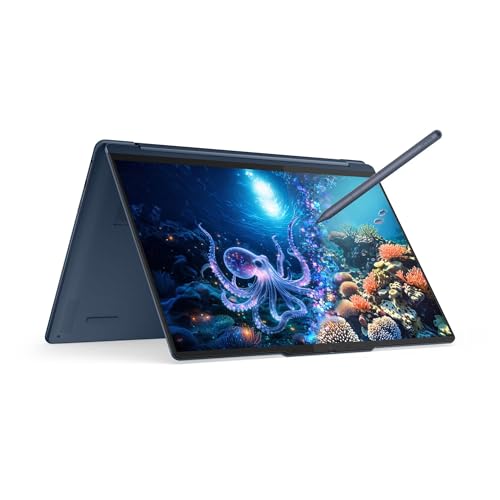
Economics is a subject you draw. Supply and demand, indifference curves, IS-LM, game trees — all of it is faster by hand than in any diagramming tool, and a convertible with pen support is the one form factor that lets you do it in the same file as your notes. That’s the case for this machine, and it’s narrow: if you don’t annotate by hand, the hinge and touchscreen are weight you’re carrying for nothing.
It also happens to pair that with 32GB, which no other convertible in this price class does, so the drawing workflow doesn’t cost you the memory the guide above argues for.
On the audio, PCWorld’s review of the Core Ultra 7 258V configuration of this Aura Edition confirms the rotating soundbar hinge is real on this generation — two tweeters that turn with the screen, two woofers underneath — and describes the result as clear, detailed and punchy, while noting the absence of the bass you’d get from headphones. PCWorld tested a different processor variant of the same design and did not rank the speakers against other laptops, so treat the hinge as a verified design feature rather than a class-leading audio claim.
Pros
- Pen and tablet mode for drawing curves and annotating slides
- 32GB in a 14-inch convertible
- Rotating soundbar hinge, confirmed on this generation by PCWorld
Cons
- The hinge and touch layer add weight you only recoup if you draw
- Soldered memory
- PCWorld’s testing covers a different processor variant
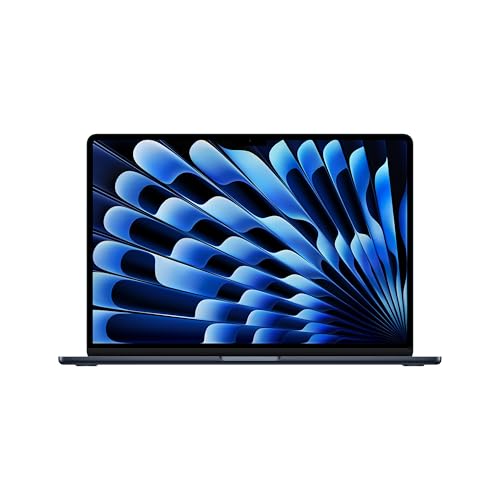
7. Apple MacBook Air 15-inch (Best Large-Screen macOS)
Best Large-Screen macOS
Last update on 2026-09-28 / Affiliate links / Images from Amazon Product Advertising API
- ProcessorApple M5
- GPUIntegrated
- RAM16GB unified
- Storage512GB SSD
- Display15.3-inch Liquid Retina
- BatteryUp to 18 hours (Apple rating)
What the extra size buys is screen area: 15.3 inches holds a spreadsheet, a console and a PDF of the paper you’re replicating in a readable arrangement, where 13.6 inches means alt-tabbing between two of them.
Gizmodo reviewed this 15-inch M5 Air with 16GB and found performance held steady across its benchmark set — 4,172 single-core and 17,157 multi-core in Geekbench 6, a Blender render in 2 minutes 37 seconds, 15 seconds behind the fan-cooled M5 MacBook Pro. Gizmodo attributes the steadiness to the Air doing less work than the Pro, not to the chassis size. No published test compares the 13-inch and 15-inch Airs against each other under sustained load, so the larger body shouldn’t be assumed to solve the throttling Tom’s Hardware measured on the 13-inch.
Gizmodo confirms the 15-inch carries a six-speaker system where the 13-inch has four, which is worth something for lecture recordings and calls.
The software eligibility test and the soldered 16GB from the 13-inch model both apply here unchanged.
Pros
- Three windows side by side instead of two
- Gizmodo measured steady performance across its benchmark set
- Six speakers against the 13-inch model’s four
Cons
- Same macOS software exclusions as the 13-inch model
- 16GB unified memory, not upgradeable
- Nothing published compares it to the 13-inch Air under sustained load
Recommended Accessories


Last update on 2026-09-05 / Affiliate links / Images from Amazon Product Advertising API
Which Economics Laptop Should You Buy?
| Best For | Pick |
|---|---|
| Overall | Lenovo ThinkPad E16 Gen 2 |
| Budget | Dell 14 Laptop |
| Large Datasets | LG gram Pro 17 |
| Ultraportable | LG gram 15 |
| macOS | Apple MacBook Air 13-inch |
| Convertible | Lenovo Yoga 9i 2-in-1 |
| Large-Screen macOS | Apple MacBook Air 15-inch |
Economics Laptop FAQ
What are the minimum requirements for a laptop for economics students?
A Core 5 / Ultra 5 or Ryzen 5 chip, 16GB of RAM, 512GB of NVMe storage, and a full HD or sharper 13-inch-plus screen. The order matters more than the list: memory is the specification that stops work, so if the budget has to give somewhere, give on the processor rather than the RAM. And settle the operating system question against your department’s software before any of this.
Is a dedicated graphics card necessary for economics students?
No. And if a machine-learning elective is the thing making you hesitate, note that most departments run that work on a shared compute cluster you log into, and cloud GPU time is rentable by the hour for the rest. Both are cheaper than carrying a discrete card through a degree it sits out.
Should I get a Windows or macOS laptop for economics coursework?
Ask which package your econometrics sequence uses, then decide. R and Stata 19 run natively on both, and MATLAB does from R2023b onward. EViews publishes Windows-only system requirements, and SAS says 9.4 isn’t supported on Apple silicon Macs — either of those makes it a Windows purchase. Some departments provide browser-based or remote-desktop access to their licensed software, which changes the answer entirely, so it’s worth one email to the module convenor.
How much should I spend on a laptop for economics coursework?
Spend at the point where the money removes a future constraint. Extra memory on a soldered machine and a Windows license where your software demands one are both irreversible after purchase. A faster processor is not a constraint of the same kind — you wait longer, but the work completes. Buy the constraints out first and the speed last.
Are there any specific software requirements for economics coursework?
Beyond the statistical package, two things catch students out. LaTeX is standard for thesis writing in the field and is architecture-agnostic, so it doesn’t affect the decision. Departmental licenses often are the deciding factor instead — many are tied to a campus network or a specific OS build, and a license you can’t run is worse than software you’d have to buy. A thesis or dissertation track raises the licensing and long-run-job side of research computing — our Ph.D. student laptop guide goes into that in more depth.
Is a touchscreen display necessary for economics students?
Not necessary, but it’s the one feature in this guide with a subject-specific case behind it. Drawing supply-and-demand curves, indifference maps and game trees by hand into your notes is faster than any software equivalent. Whether that’s worth the weight depends entirely on whether you already annotate by hand — if you type everything, skip it.
How important is battery life for economics students?
Important enough to change which laptop you buy, but not important enough to chase the biggest number. Once a machine covers your longest teaching day with margin, further capacity is weight in the bag you never draw on. Work out your actual longest day first — for most students that’s six to eight hours between charges, not eighteen — and buy to that with a margin for a cold battery in year three.
Should I prioritize portability or performance when choosing a laptop for economics coursework?
For most economics students the trade-off is smaller than it looks, because the performance that matters is memory rather than processor speed, and 32GB is available in 3-pound machines. The real fork is screen size: a 17-inch panel shows a wide dataset without scrolling and is unpleasant to carry daily, and no laptop resolves that for you. Decide where you’ll do most of your work, and buy for that place.
Final Thoughts on Economics Laptops
Two questions settle this purchase, and neither is about processors. Which package does your department teach in — because EViews and SAS 9.4 rule out an Apple silicon Mac before you’ve compared a single benchmark. And can you add memory later — because that’s what decides whether 16GB now is a starting point or a ceiling. Everything else on the spec sheet is negotiable after those. Coursework that later shifts from theory to case studies — graduate business school — is covered separately in our MBA student laptop guide.


Which laptop should I buy for my economics study? Sometimes, I play games as well, such as Angry Birds and Asphalt.
Hi Kelly — for economics coursework plus light gaming like Angry Birds and Asphalt, you don’t need a discrete GPU at all; any modern laptop with integrated graphics handles both comfortably. Our updated Economics Students guide has current picks if you want to take a look.