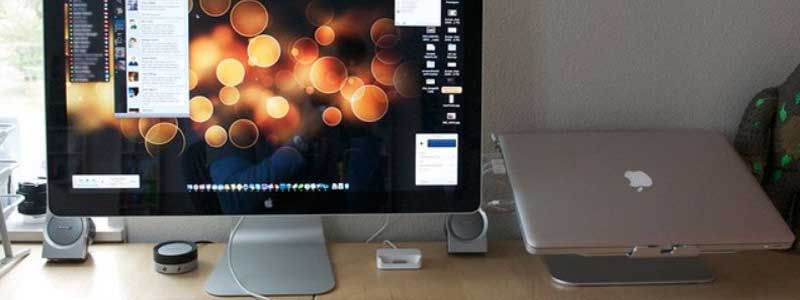
The setup is familiar: laptop connected to a monitor, external keyboard and mouse on the desk, and the moment you close the lid to reclaim the space, everything goes dark. Windows and macOS both default to sleeping when the lid shuts, and both let you change it.
On Windows 11 the setting sits in two places now, which is why half the guides online send you somewhere that does not match your screen. On a Mac it is not a setting at all — closed-display mode turns on by itself once specific conditions are met. Here is the current route for each.
What’s Inside
- 1 – Changing Lid-Close Behavior in Windows 11
- 2 – If the External Monitor Still Goes Black
- 3 – Using a MacBook in Closed-Display (Clamshell) Mode
- 4 – The Heat and Battery Trade-Off of Running Lid-Closed
- 5 – When You Actually Want This Setup
- 6 – Questions About Running a Laptop With the Lid Closed
- 7 – Final Thoughts on Keeping Your Monitor On With the Lid Shut
Changing Lid-Close Behavior in Windows 11
The Control Panel route works on every Windows 11 build, and it is the one to use if you want a single set of instructions that will not depend on which update you are on.
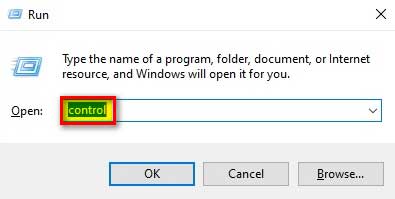
- Press Windows + R, type control and press Enter to open Control Panel.
- Go to Hardware and Sound > Power Options. If Control Panel is set to icon view, select Power Options directly.
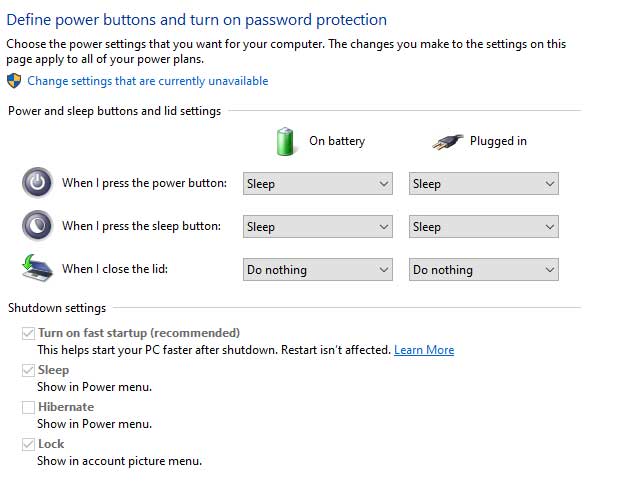
- In the left pane, select Choose what closing the lid does.
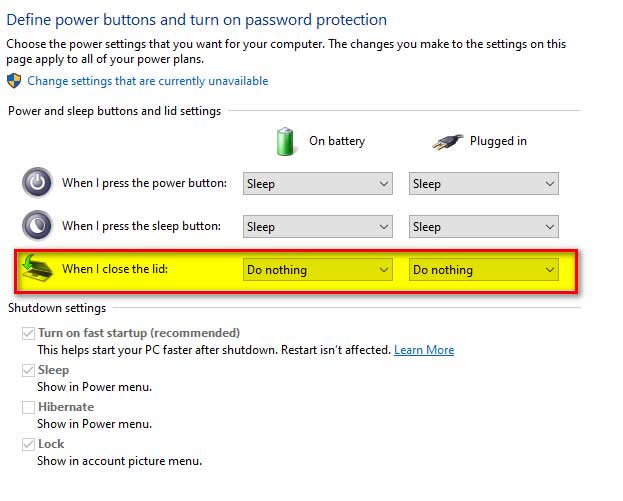
- Find the row When I close the lid. It has two columns: On battery and Plugged in.
- Set the Plugged in column to Do nothing.
- Select Save changes. Nothing takes effect until you do.
The four available actions are Do nothing, Sleep, Hibernate and Shut down. Only Do nothing keeps the machine running with the lid shut.

The Newer Settings App Route
Microsoft has been moving power controls out of Control Panel and into Settings. On Windows 11 24H2 and later, lid and power button behavior appears under Settings > System > Power & battery, in a “Lid and power button controls” section, with the same four actions split across plugged-in and on-battery.
If that section is not there, your build predates the change and the Control Panel route above is the one that applies. Both write the same underlying power setting, so it makes no difference which you use.
Change the plugged-in column only. Leaving On battery set to Sleep means a laptop closed and dropped into a bag on the way out still shuts down properly. Set both columns to Do nothing and it is the unplugged case that bites you — a machine running at full tilt inside a closed bag.
Older Routes to Power Options on Windows 10
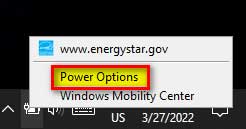
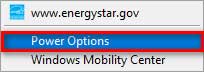
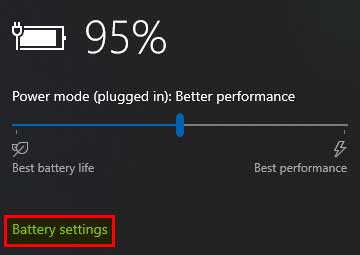
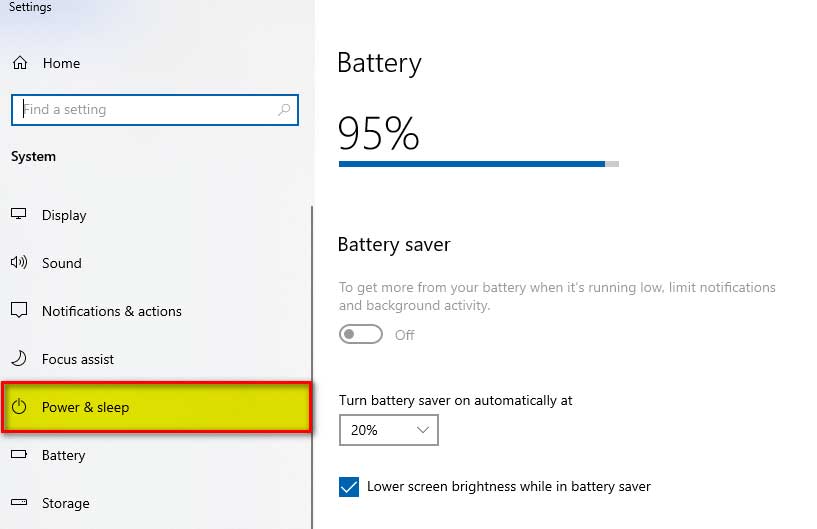
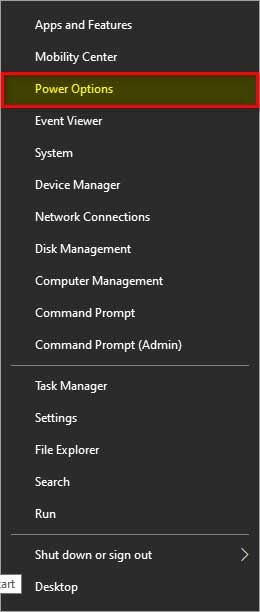
The screenshots below come from Windows 10 and are kept for readers still on it. The destination is the same Power Options page described above; only the panels you pass through on the way differ. On Windows 11 the taskbar battery icon opens Quick Settings instead, so the first two routes no longer apply.
Right-clicking the battery icon in the notification area and choosing Power Options:
Left-clicking the battery icon and opening Battery settings, then Power & sleep and Additional power settings:


Right-clicking the Start button and selecting Power Options:
Or the route that still works unchanged on Windows 11 — Windows + R, control, then Power Options:

If the External Monitor Still Goes Black
The lid setting only stops the sleep. A few other things can still blank the screen:
- The screen timeout. Settings > System > Power & battery > Screen and sleep controls how long before the display switches off, and it is independent of the lid action.
- Projection mode. Press Windows + P and choose Second screen only, so Windows is not still treating the closed laptop panel as the primary display.
- A dock or hub losing the link. If it works on a direct cable but not through a dock, the dock is the variable. Test the monitor plugged straight into the laptop.
- Graphics drivers. An out-of-date GPU driver is a common cause of a display that drops out when the lid closes.
- Nothing to wake it with. With the lid shut you cannot use the built-in keyboard, so an external keyboard or mouse is not optional.
If you are running the closed laptop alongside a second screen rather than instead of it, the arrangement and scaling side of that is covered in our walkthrough on running two monitors from one laptop.
Using a MacBook in Closed-Display (Clamshell) Mode
macOS has no equivalent of the “when I close the lid” dropdown. Closed-display mode is automatic: meet the conditions and closing the lid moves everything to the external display, rather than sleeping.
Apple’s requirements, set out in its guidance on running dual displays from a MacBook Air or MacBook Pro with the lid closed, are an external keyboard and mouse or trackpad, and the Mac connected to power — though Apple notes a separate power adapter is not needed if the external display supplies power to the Mac over the same cable.
- Connect the Mac to power, or to a display that supplies power over USB-C or Thunderbolt.
- Connect the external display and confirm the desktop appears on it.
- Connect and pair an external keyboard and mouse or trackpad.
- Close the lid. The display briefly goes dark and comes back with the external screen as the only display.
- If it stays dark, press a key or click the external mouse to wake it.
How many external displays a given Mac can drive varies by chip, and the lid state is part of that calculation — on the M3 MacBook Air and MacBook Pro, Apple specifies that two external displays can be connected simultaneously when the lid is closed. Check the specification for your own model before buying a second monitor.
Some Bluetooth keyboards will not wake a Mac from a fully closed, sleeping state. If waking is unreliable, a wired keyboard or a USB receiver on the dock solves it.
The Heat and Battery Trade-Off of Running Lid-Closed
Running a laptop with the lid shut is not free. Most laptops draw cooling air from beneath the chassis and exhaust it through the hinge area, and a closed lid puts a panel directly across part of that path while the keyboard deck loses its ability to shed heat upward.
Sustained heat is what pushes a machine into thermal throttling, and driving an external monitor is exactly the kind of load that generates it. If the fans run constantly in clamshell mode, our guide to dealing with an overheating laptop covers airflow and cleaning; a stand that lifts the closed laptop off the desk on its edge helps considerably.
Never put a running laptop in a closed bag. This is the real hazard of setting the lid action to Do nothing on battery. A machine that keeps working inside an insulated bag has no route for its exhaust heat at all, and neither Windows nor macOS will warn you. Change the plugged-in setting and leave the battery setting on Sleep.
The battery side is simpler: with the lid closed and the machine plugged in, it is running on mains power, so battery drain is not the concern. It only becomes one if you also changed the on-battery setting.
When You Actually Want This Setup
- A permanent desk setup where the laptop is the tower and the monitor, keyboard and mouse are the workstation.
- A long job — a backup, an export, a render — that has to finish while you are away from the desk.
- Playing audio or a call through connected speakers without the screen on.
- Reclaiming desk depth, where the closed laptop sits on a vertical stand beside the monitor.
What it is not good for is transporting the machine while it works. Set it up on the desk, and put it to sleep before it moves.
Questions About Running a Laptop With the Lid Closed
Where is the lid-close setting in Windows 11?
Control Panel > Hardware and Sound > Power Options > Choose what closing the lid does, on every build. On Windows 11 24H2 and later it also appears under Settings > System > Power & battery in the lid and power button controls section. Both change the same setting.
Why does my external monitor still turn off when I close the lid?
Most often the lid action was changed in the On battery column but the laptop is plugged in, or Save changes was never clicked. After that, check the separate screen timeout under Power & battery, press Windows + P and select Second screen only, and test the monitor on a direct cable rather than through a dock.
Is it bad for the laptop to run with the lid closed?
It runs hotter, because a closed lid restricts airflow across the keyboard deck and hinge vents. On a desk with clear space around it and the fans able to breathe, it is a normal way to work. Inside a bag it is not.
Does a MacBook have a lid-close setting like Windows?
No. Closed-display mode activates automatically when an external display, an external keyboard and pointing device, and power are all connected. There is no dropdown to change.
Can I use a MacBook in clamshell mode on battery?
Apple’s stated requirement is that the Mac is connected to power, though it notes a separate adapter is unnecessary if the external display powers the Mac over the same cable. Running it on battery alone is outside what Apple documents.
How do I wake the laptop once the lid is closed?
Press a key on the external keyboard or click the external mouse. With the lid shut the built-in keyboard is unavailable, so if no external input device is connected there is no way to wake it without opening the lid.
Will the laptop still charge with the lid closed?
Yes. Charging is unaffected by lid position, and running plugged in is the recommended configuration for this setup on both Windows and macOS.
Final Thoughts on Keeping Your Monitor On With the Lid Shut
On Windows this is one dropdown set to Do nothing in the plugged-in column, and on a Mac it is a set of conditions rather than a setting at all. Change the plugged-in behavior only, give the closed machine room to breathe, and the rest of the setup takes care of itself.