
Most people searching this have a meeting starting in ten minutes and a link that wants to install something. The short answer is that you do not have to let it — Webex runs in a browser, and joining that way takes about twenty seconds.
This guide covers the routes that work on a Windows or Mac laptop now: the link in the invitation, the Webex App, the browser web app, and joining by meeting number when you have no link at all. Cisco has reorganized both the software and the sign-in pages since 2022, so several older sets of instructions send you to the wrong place.
You do not need a Webex account to join a meeting. An account is for hosting and scheduling. As an attendee you need the link or the meeting number, and a name to display. Cisco’s own guidance names the browser web app as the easiest way to join if you are using a Chromebook, a Linux computer, or you simply don’t want to download anything.
What’s Inside
- 1 – Join From the Meeting Link in Your Invitation
- 2 – Join in a Browser With the Webex Web App
- 3 – Join From the Webex Desktop App
- 4 – Join by Meeting Number When You Have No Link
- 5 – Audio and Video Settings Before You Join
- 6 – Common Problems Joining a Webex Meeting
- 7 – Final Thoughts on Joining Webex Meetings From a Laptop
Join From the Meeting Link in Your Invitation
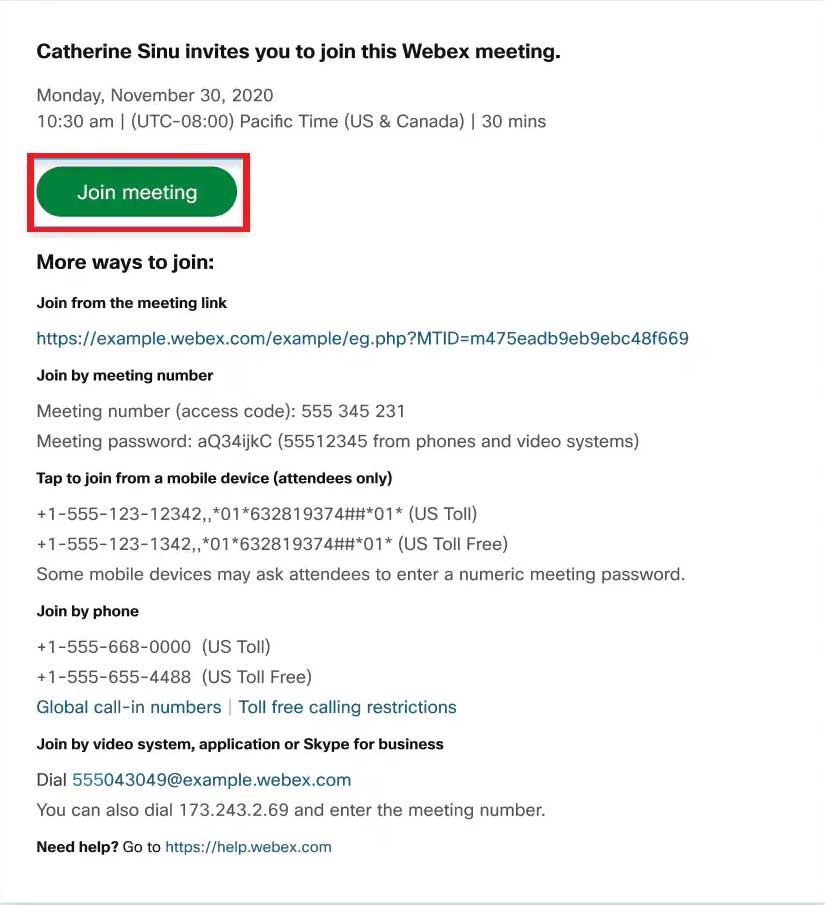
This is the path almost everyone takes, and it works from Outlook, Gmail, a calendar entry or a chat message. The link carries the meeting number and password, so there is nothing to type.
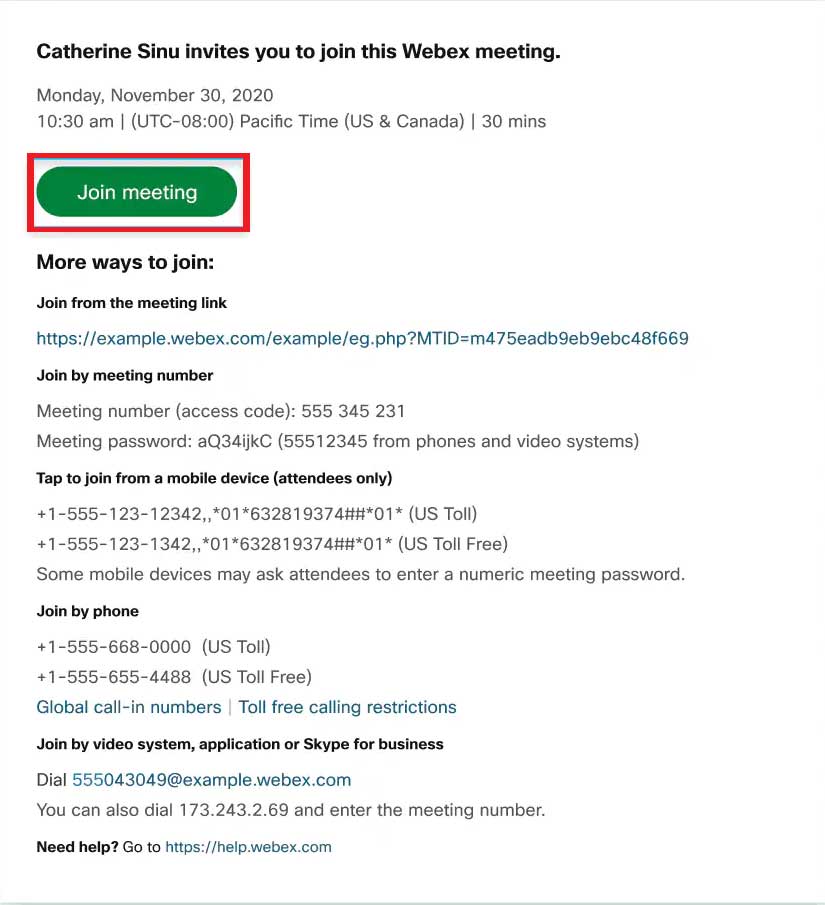
- Open the invitation and click Join meeting.
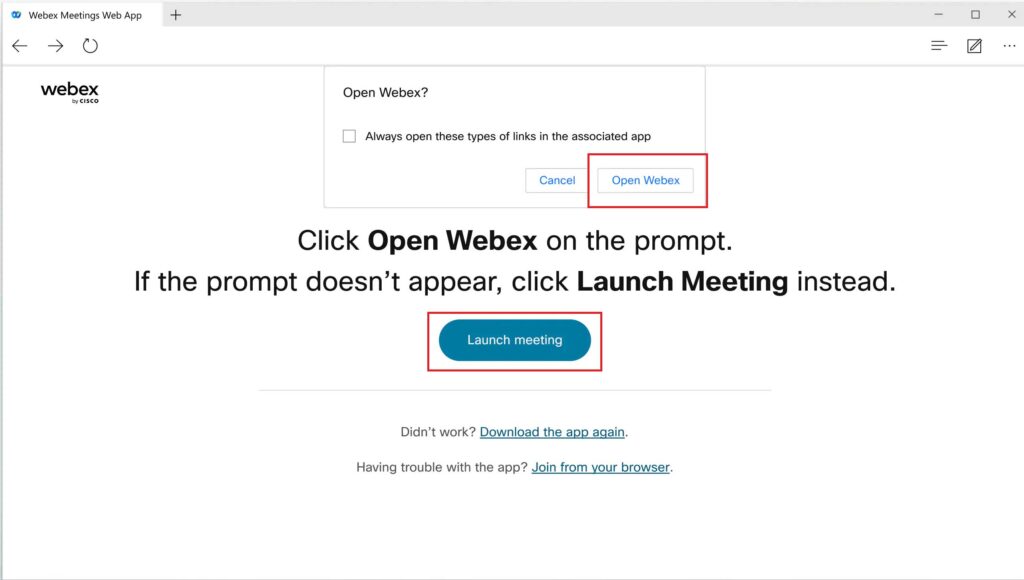
- A browser tab opens on the Webex join page. If the Webex App is installed, a prompt asks to open it — accept, and the meeting launches there.
- If it is not installed, the page offers the installer and a Join from your browser link. Take the browser link if you are short of time or lack administrator rights.
- Type the name you want other attendees to see, plus an email address, then continue.
- On the preview screen, set your camera and microphone, then click Join meeting.
The preview screen before you join is the part worth not skipping. It lets you check the camera, pick the right microphone, and decide whether you enter muted. Two seconds there saves the meeting’s first minute.
Join in a Browser With the Webex Web App
Nothing to install, no administrator rights needed, works on a locked-down work laptop or a Chromebook. Cisco supports the web app in Chrome, Chromium, Edge, Firefox and Safari.
- Click the invitation link, or go to signin.webex.com/join and enter the meeting number.
- On the join page, choose Join from your browser instead of downloading the app. On some sites the link sits below the download button, or behind a “having trouble?” prompt.
- Allow the browser access to your camera and microphone when it asks. Denying this is the most common reason people join and cannot be heard.
- Enter your name and email, set audio and video, and join.
Cisco is explicit that the web app provides basic functionality and that some capabilities are only in the desktop app. In practice you get video, audio, chat, screen sharing and reactions — enough for attending. If you are presenting with breakout rooms or advanced controls, the desktop app is the safer choice.
Mid-meeting you are not stuck: for meetings not on the Webex Suite platform, Cisco documents a Switch to desktop app option under More options on Windows and Mac.
Join From the Webex Desktop App
If Webex is a regular part of your week, install the app. It handles audio devices better, keeps your meeting list on the home screen, and adds features the browser cannot reach.
Naming is where old guides get confusing. Cisco consolidated the separate Webex Meetings desktop client and Webex Teams into a single client called the Webex App, which is what webex.com downloads today. Instructions telling you to find “Cisco Webex Meetings” in your Start menu are describing the older client.
- Download the Webex App from Cisco’s downloads page and install it.
- Open it. Sign in if you have an account; if not, you can still join by number from the join field.
- Meetings you are invited to appear in the list — click Join next to the one starting.
- Or paste the meeting link or number into the search or join field at the top.
- Check audio and video on the preview screen, then join.
What Your Laptop Needs to Run It
The requirements are undemanding. Cisco’s support policy lists Windows 10 and Windows 11 for Windows, and gives a minimum of an Intel dual-core 2.xx GHz or AMD processor with 2 GB of RAM recommended; Mac requirements start at Intel CPU-based hardware with 2 GB of RAM minimum.
Any laptop bought in the last decade clears that. What actually degrades a Webex call is a weak connection or a machine already loaded with other work, not the CPU specification. If calls stutter, start with the network — our notes on tracking down a flaky laptop connection cover the usual causes.
Windows 10 is still on Cisco’s supported list, but Microsoft stopped issuing security updates for it in October 2025, which is a separate reason not to stay there — see our piece on what end of support actually means day to day.
Join by Meeting Number When You Have No Link
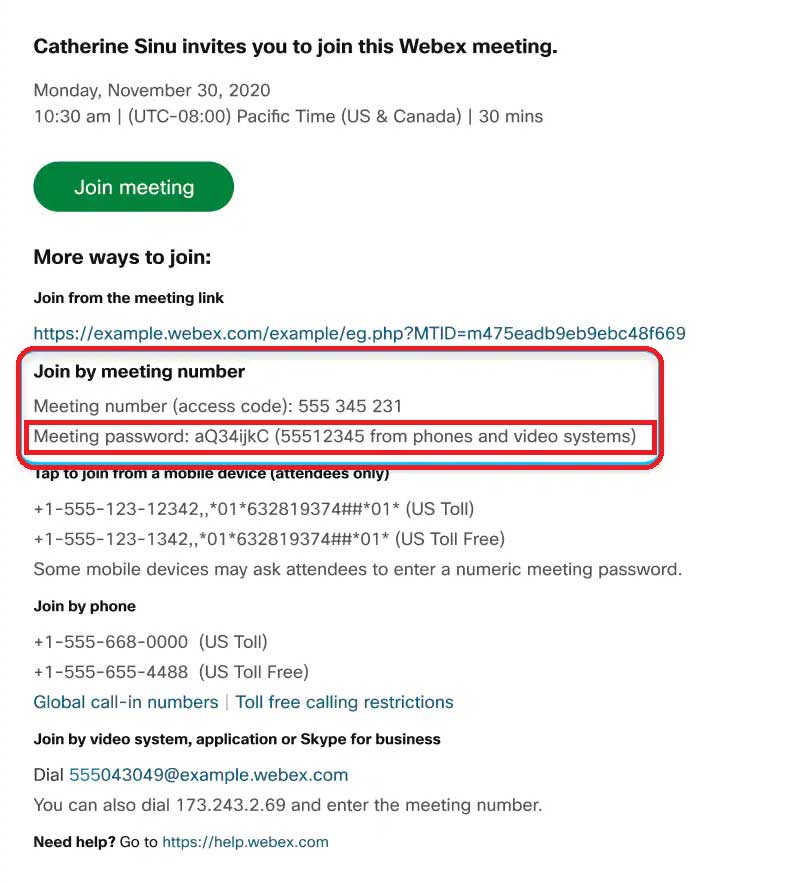
The invitation deleted, the link expired in a chat, the number read out over the phone — this is the fallback. Every Webex meeting has a numeric ID, usually nine to eleven digits.
- Go to signin.webex.com/join.
- Enter the meeting number and select Continue.
- Enter the meeting password if one is set. Ask the host if you do not have it — this cannot be worked around.
- Choose the app or the browser, set audio and video, and join.
Cisco documents the same thing from inside an account: sign in to your Webex site and enter the meeting number in the search box. Both routes land in the same place.
Audio-only is also available. Every invitation carries dial-in numbers under Join by phone; call one, enter the meeting code and your attendee PIN when prompted. On a bad connection this is often better than a video call that keeps dropping.
Audio and Video Settings Before You Join
The preview screen is where the original guide was strongest, and its list of audio options is still accurate. What each one does:
- Use computer audio: the default. Microphone and speakers on the laptop, or a headset. Right for almost everyone.
- Call me: Webex phones you and you take the audio on that call. Availability depends on the host’s plan.
- Call in: you dial the number Webex gives you. Useful when your internet is too poor for voice.
- Don’t connect audio: for when someone else in the same room is already carrying the audio. Prevents the feedback howl.
Use Test speaker and microphone on that screen before your first call on a new laptop. Windows frequently selects a monitor’s HDMI audio or a previously paired Bluetooth device rather than the one you are wearing.
Joining muted with video off, then turning them on once you can see the room, is the safer default in any meeting with more than a handful of people.
Common Problems Joining a Webex Meeting
Nearly every failure to join comes down to one of these.
- Stuck in the lobby. The host has not admitted you or has not started the meeting yet. Guests wait for approval; there is nothing to fix at your end.
- No microphone or camera in the browser. Permission was denied. Click the padlock or camera icon in the address bar and allow access, then rejoin.
- The installer will not run. A managed work laptop is blocking it. Use the browser web app, which needs no installation rights.
- The link opens the wrong app. An old Webex Meetings client is still installed alongside the Webex App. Uninstall the old one.
- Password rejected. Meeting numbers and passwords are per-meeting. A recurring series can reissue both — check the most recent invitation.
Joining a few minutes early is the underrated fix. The preview screen sits there quite happily until the host opens the meeting, and it is where you find out the microphone is set to the wrong device.
Do I need to install anything to join a Webex meeting?
No. Choose “Join from your browser” on the join page and the meeting runs in Chrome, Chromium, Edge, Firefox or Safari. Cisco recommends this route for Chromebooks, Linux and anyone who does not want to install software.
Do I need a Webex account?
Not to attend. You need the meeting link or number, and a name to display. An account is required for hosting and scheduling.
What can the browser version not do?
Cisco describes the web app as offering basic functionality, with expanded capabilities in the desktop app. Video, audio, chat and screen sharing all work in the browser; advanced host controls are where you may need the desktop client.
What is the difference between Webex App and Webex Meetings?
Cisco consolidated the older separate Webex Meetings desktop client and Webex Teams into a single client, the Webex App, which is what webex.com downloads today. Guides referring to a standalone “Cisco Webex Meetings” application are describing the earlier software.
How do I join with only a meeting number?
Go to signin.webex.com/join, enter the number, then the password if one is set. If you have an account, signing in to your Webex site and entering the number in the search box does the same thing.
Can I join by phone instead?
Yes. Every invitation lists dial-in numbers under “Join by phone”. Call one and enter the meeting code and attendee PIN when prompted. On a poor connection this is more reliable than video.
Will Webex run on an old laptop?
Almost certainly. Cisco’s stated minimum is an Intel dual-core 2.xx GHz or AMD processor with 2 GB of RAM recommended on Windows, and Windows 10 and 11 are both supported. Connection quality limits calls far more often than the processor does.
Why can nobody hear me?
Either the browser was denied microphone access — check the padlock icon in the address bar — or Windows has selected the wrong input device. Use “Test speaker and microphone” on the preview screen before joining.
Final Thoughts on Joining Webex Meetings From a Laptop
For a one-off meeting, click the link and take the browser option — it sidesteps installers, admin rights and the app-naming confusion entirely. Install the Webex App only if you are in these calls regularly enough to want the extra controls.
Whichever route you take, join two minutes early and use the device test on the preview screen. That habit prevents most of the problems in this guide.