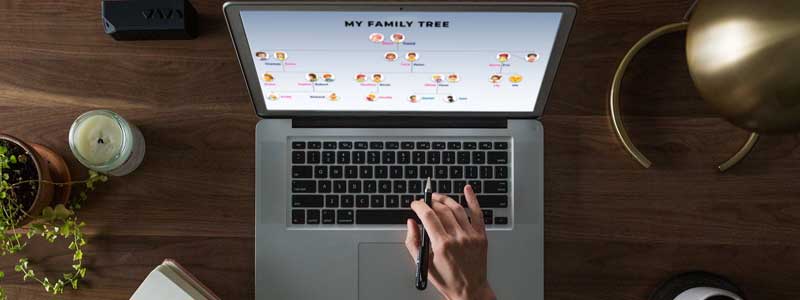
Most “best laptop for genealogy” guides, including PickLaptop’s earlier one, told readers to buy something small and light. Then the reader sits down to check a census entry against a family Bible page and a birth certificate — three documents, one 13-inch screen — and spends the session resizing windows instead of reading them.
A genealogist named Kristina made that argument first, in a comment left on the earlier version of this page: screen size matters more than an expensive machine, because the work means several records open side by side, and a split-screen setup needs somewhere to split. Genealogy communities describe the same workaround — researchers pair a laptop with an external monitor specifically to keep more documents visible at once. So the picks below are organized around display area first, with one deliberately small machine for archive trips.
Editor’s Pick

Last update on 2026-10-19 / Affiliate links / Images from Amazon Product Advertising API
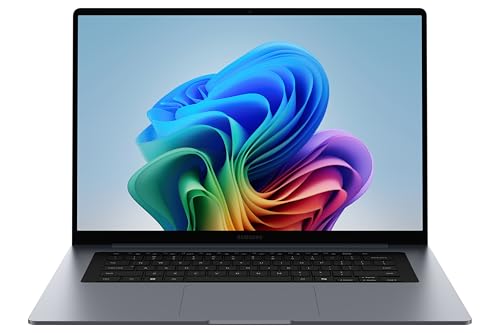
A 16-inch panel and 1TB of storage, without paying for a discrete GPU that genealogy software has never used.
- Intel Core Ultra 7 (Series 3)
- 16GB RAM, 1TB storage
- 16-inch FHD+ display
- Up to 24 hours (Samsung rating)
What’s Inside
- 1 – Genealogy Laptop Buyer's Guide
- 2 – Genealogy Laptop Comparison Table
- 3 – Best Laptops for Genealogy Research in 2026 — Reviews
- 3.1 – 1. Samsung Galaxy Book6 16-inch (Best Overall)
- 3.2 – 2. LG gram Pro 17 (Most Portable Large Screen)
- 3.3 – 3. Samsung Galaxy Book6 Pro (Best Display)
- 3.4 – 4. Apple MacBook Pro 16-inch M5 Pro (Best Mac)
- 3.5 – 5. Acer Nitro V 16 (Budget Large Screen)
- 3.6 – 6. Apple MacBook Air 13-inch M5 (Best Portable Companion)
- 4 – Recommended Accessories
- 5 – Which Genealogy Laptop Should You Buy?
- 6 – Genealogy Laptop FAQ
- 7 – Final Thoughts on Genealogy Laptops
Genealogy Laptop Buyer’s Guide
Screen Size and Multi-Window Comparison
Genealogy is comparison work: a census entry beside a birth record beside a family tree, often three or four windows at once. Two documents at readable text size need roughly two usable columns, and a 13-inch 16:10 panel gives you about one and a half. That is the arithmetic behind the whole category — a 16-inch or larger display, or a smaller laptop docked to an external monitor, is what removes the resizing step from every comparison.
If archive and library trips are part of the routine, split the difference across two devices: something compact for the road, a larger panel or an external monitor for desk sessions. Two of the picks below are chosen for each half of that arrangement.
Processor and Memory
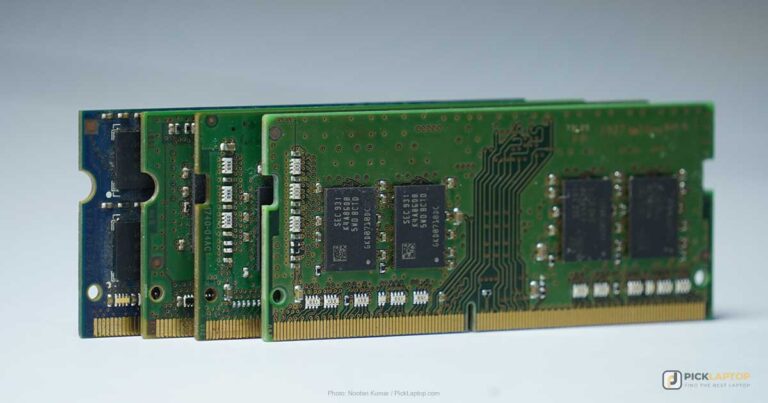
A Core 5, Core Ultra 5 or Ryzen 5-class chip runs desktop genealogy software, web-based archives and a document viewer at the same time without straining. Memory is the specification that runs out first, and browser tabs are why: a dozen record pages, a spreadsheet and a family tree program are all resident at once, which is a different demand from the modest system requirements printed on the software’s own page. 16GB is the floor worth starting at.
Storage
256GB works if scanned documents and photos live in cloud storage. 512GB is the safer starting point for digitizing a family photo collection or keeping a local archive of record images — scans at archival resolution accumulate faster than the page count suggests, and shuffling files off a full drive mid-project is time taken from research.
Do You Need a Dedicated GPU?
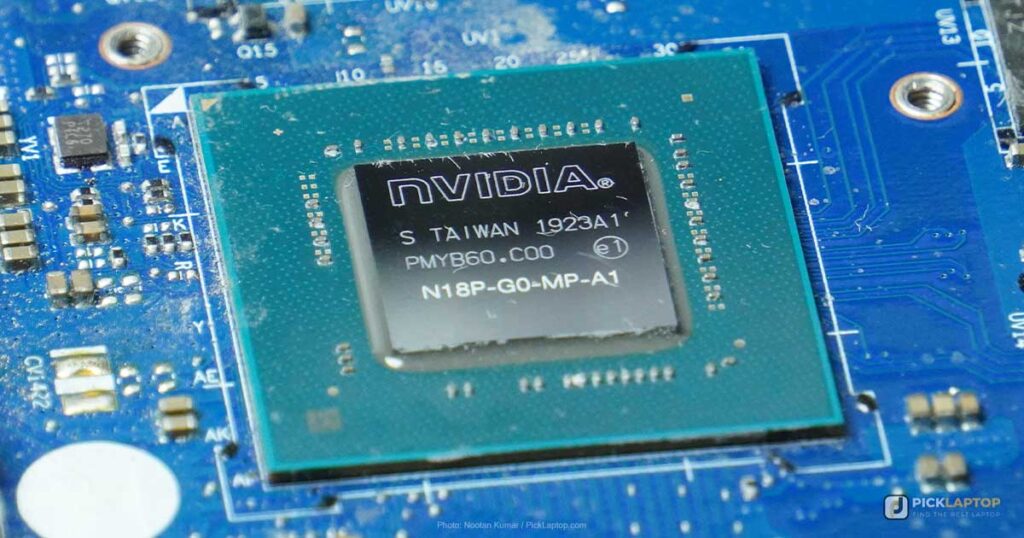
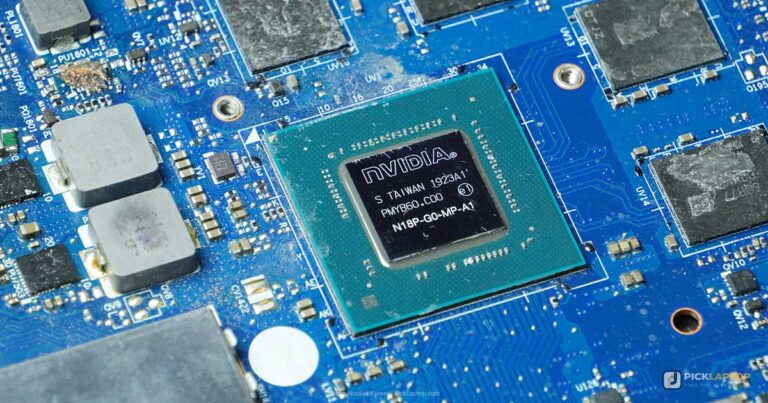
No. Genealogy software, web archives and document viewers draw on integrated graphics and stop there. A discrete GPU on a research machine mostly costs weight, heat and battery. Where it is unavoidable — the budget pick below comes from a gaming chassis — it should be treated as a side effect of buying screen area cheaply, not as a feature of the purchase.
Battery Life and Portability
Desk-based research makes battery life close to irrelevant. Archive and library visits make it the deciding specification, and the number to judge is a measured one: manufacturer figures are video-playback ratings, and browsing a records site with a dozen tabs open is a heavier load than looping a video file. Where a lab figure exists for a pick below, it is the figure quoted.
Genealogy Laptop Comparison Table



Last update on 2026-10-19 / Affiliate links / Images from Amazon Product Advertising API
Best Laptops for Genealogy Research in 2026 — Reviews
Six machines: four chosen for display area, one for carrying a 17-inch panel that normally doesn’t travel, and one small enough to take into an archive.
1. Samsung Galaxy Book6 16-inch (Best Overall)
Best Overall
Last update on 2026-10-19 / Affiliate links / Images from Amazon Product Advertising API
- ProcessorIntel Core Ultra 7 (Series 3)
- GPUIntel Graphics (integrated)
- RAM16GB (32GB configurations available)
- Storage1TB
- Display16-inch FHD+, non-touch
- BatteryUp to 24 hours (Samsung rating, video playback)
A 16-inch panel at FHD+ leaves a census image and a certificate scan open beside each other at readable size with a family tree window still reachable underneath, which is the arrangement Kristina’s comment described and the reason this configuration heads the list rather than a lighter, faster one. The Core Ultra 7 and its integrated graphics sit well above what the workload asks for; nothing about record research has ever needed a discrete GPU.
The 1TB drive is the specification doing quiet work here. A long-running family history project ends up holding thousands of scanned pages, downloaded record images and digitized photographs, and 1TB postpones the point where that becomes a filing problem rather than a research one. 16GB keeps a wide tab set and a spreadsheet resident alongside it.
One limitation to state outright: no independent lab has published a test of this exact 16-inch, Core Ultra 7 configuration. Reviews of the Galaxy Book6 Pro exist, but that is a different chassis with a different panel and a different chip, so nothing in them can be transferred here. Everything above rests on Samsung’s published specification.
Pros
- 16-inch panel wide enough for two records side by side without shrinking the text
- 1TB storage for a growing scan and photo archive
- No discrete GPU to pay for, carry or cool
Cons
- Non-touch display — no direct annotation on a scan
- Specification-only evidence — no third-party measurements exist
- A desk machine; the weight and footprint work against archive trips
2. LG gram Pro 17 (Most Portable Large Screen)
Most Portable Large Screen
Last update on 2026-10-19 / Affiliate links / Images from Amazon Product Advertising API
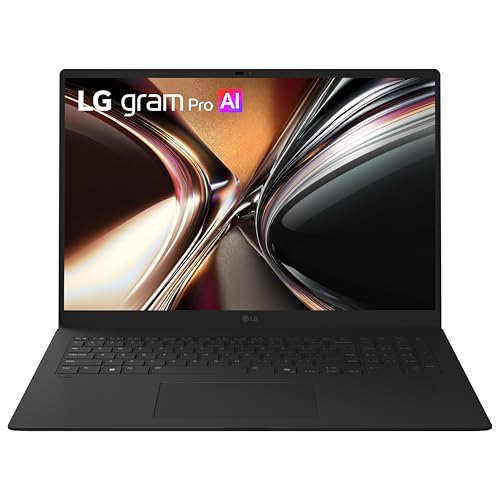
- ProcessorIntel Core Ultra 7 355
- GPUIntel Graphics (integrated)
- RAM32GB LPDDR5X
- Storage1TB NVMe SSD (2TB configurations exist)
- Display17-inch WQXGA (2560×1600) IPS touchscreen
- Weight3.3 lb
Screen area and portability normally trade against each other, and the gram line exists to refuse that trade. LG puts the 17-inch model at 3.3 lb and 0.6 inches thick, and lists seven MIL-STD-810H test methods it has passed, including low and high temperature, altitude and vibration. Three record images fit across 2560×1600 at once, and the machine still goes into a bag for a day at a repository — which is the combination nothing else on this list offers.
The touchscreen changes how the comparison work feels more than the resolution does: scrolling a long census sheet by dragging it is faster than reaching for a trackpad, and a pen or finger annotation lands where you are already looking. 32GB is past anything genealogy software will request, which mostly buys years before the tab habit outgrows the machine.
No independent lab test of this 17-inch, Core Ultra 7 355 configuration was found — published gram Pro reviews from 2026 cover the 16-inch model with a different chip, and older 17-inch reviews cover earlier Intel generations. The durability and weight figures above are LG’s own; the panel measurements a display review would give you do not exist yet for this model.
Pros
- 17-inch 2560×1600 panel at 3.3 lb, per LG’s specification
- Touchscreen suits scrolling and annotating scanned records
- Seven military-standard durability methods passed, per LG — relevant for a machine that travels
Cons
- The most expensive machine here
- No published lab test of this configuration; brightness and gamut figures do not exist yet
- Thin chassis, so key travel is short by class standards — worth trying in a store if you write long research notes
3. Samsung Galaxy Book6 Pro (Best Display)
Best Display
Last update on 2026-10-19 / Affiliate links / Images from Amazon Product Advertising API
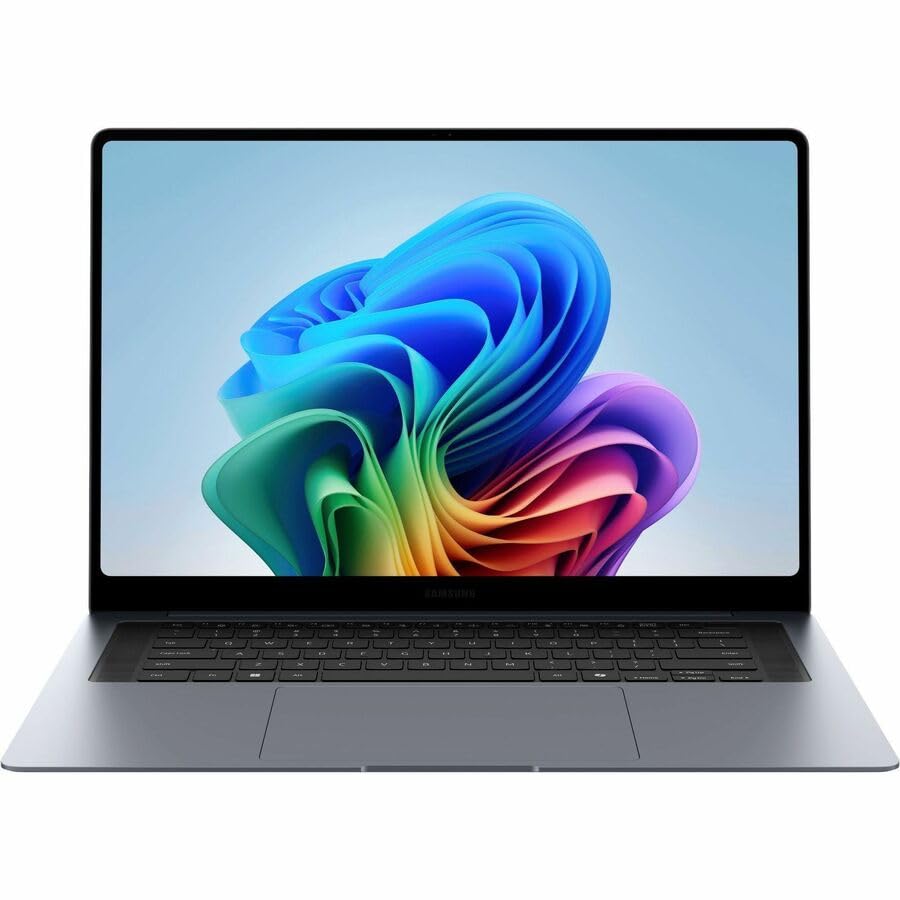
- ProcessorIntel Core Ultra 7 (Series 3)
- GPUIntel Graphics (integrated)
- RAM16GB or 32GB configurations
- StorageUp to 1TB
- Display16-inch AMOLED touchscreen, adaptive 30–120Hz
- BatteryUp to 30 hours (Samsung rating, video playback)
Faded ink on a scanned page is a contrast problem before it is anything else. AMOLED renders near-black at effectively zero luminance, so the gap between a light pencil annotation and the paper behind it survives on screen instead of collapsing into one gray value the way it can on a mid-range IPS panel — the practical difference between reading a marginal note and guessing at it. The touchscreen adds the second half: mark up a scan where you are looking rather than steering a cursor to it.
The keyboard is the known weak point in this line, though the available evidence is one size removed from the machine here. Business Standard’s review of the 14-inch Book6 Pro found the keys shallow and short on tactile feedback for the price, with missed keystrokes becoming noticeable over a long typing session; the same review called the trackpad large, smooth and reliable. That was a 14-inch chassis with a Core Ultra X7, not the 16-inch model here, so treat it as a signal about the line rather than a measurement of this one. If research means clicking through records more than typing notes about them, it is a trade that costs little either way.
Pros
- AMOLED contrast holds detail in faded and handwritten documents
- Touchscreen for direct annotation on a scan
- Adaptive 30–120Hz panel drops to a low refresh rate on static pages
Cons
- Priced above the base Galaxy Book6
- Shallow key travel reported across the Book6 Pro line, though only the 14-inch model has been independently reviewed
- Battery figure is a manufacturer video-playback rating, not a measured browsing result
4. Apple MacBook Pro 16-inch M5 Pro (Best Mac)
Best Mac
Last update on 2026-10-19 / Affiliate links / Images from Amazon Product Advertising API
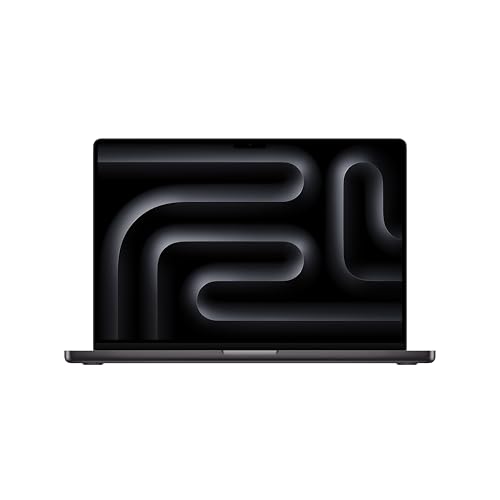
- ProcessorApple M5 Pro (18-core CPU)
- GPU20-core, integrated
- RAM24GB unified
- Storage1TB SSD
- Display16.2-inch Liquid Retina XDR, 3456×2234, 120Hz
- BatteryUp to 24h video streaming / 17h wireless web (Apple ratings); 19h 47m measured
Color fidelity is the argument for this one over the Windows 16-inch picks, and it is measurable rather than asserted. Expert Reviews measured the display’s calibrated sRGB and DCI-P3 D65 modes at an average Delta E of 0.47 and 0.73 — errors below the threshold most people can see. For judging whether a sepia portrait has been color-shifted by a scanner or was that color when it was taken, that matters more than the panel’s brightness figures do.
The same review ran the machine to 19hrs 47mins in a video rundown test at 170cd/m², against Apple’s 24-hour streaming rating — a useful reminder of the gap between the two kinds of number, and still a long way past what a day in a reading room requires. Its reviewer also described Apple’s ForceTouch trackpad as the best built-in pointing device he had used, which stops being a footnote around hour three of dragging and resizing document windows.
Software is the thing to settle before ordering, not after. Some desktop genealogy programs never left Windows — Legacy Family Tree among them — and running one of those on this machine means running Windows on it too. The FAQ below sets out where the major programs stand.
Pros
- Measured Delta E of 0.47 (sRGB) and 0.73 (DCI-P3 D65) for photo and document work
- 19hrs 47mins measured in Expert Reviews’ video rundown test
- 24GB unified memory, enough for a heavy tab set and a tree program together
Cons
- Priced at the top of this list
- Windows-only genealogy programs need a virtual machine — check yours first
- Heaviest machine here; a desk-and-dock laptop rather than a traveling one
5. Acer Nitro V 16 (Budget Large Screen)
Budget Large Screen
Last update on 2026-10-19 / Affiliate links / Images from Amazon Product Advertising API
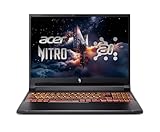
- ProcessorAMD Ryzen AI 5 340
- GPUNVIDIA RTX 5060 8GB, plus integrated Radeon 840M
- RAM16GB DDR5
- Storage512GB Gen4 SSD
- Display16-inch WUXGA, 180Hz
- Battery76Wh
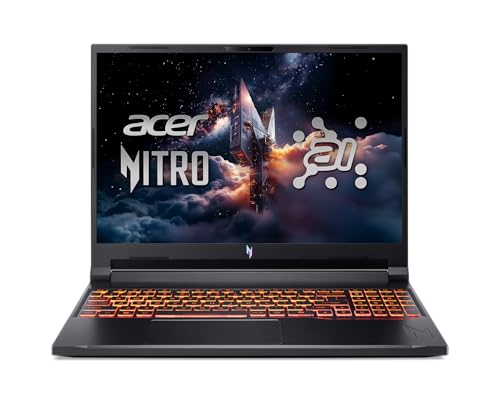
This is the cheapest route to 16 inches on the list, and the route runs through a gaming chassis. Consumer Reports tested this exact ANV16-61-R2QY configuration — Ryzen AI 5 340, RTX 5060, 16GB, 512GB — and reported that email, word processing and web browsing complete quickly and applications start up fast. It also notes that the hybrid graphics arrangement defaults to the more power-efficient integrated chip for exactly that kind of work, switching to the RTX 5060 only when something demands it. So the discrete GPU mostly sits idle during research, which is the correct outcome: you are buying the screen and accepting the graphics card that came attached to it.
Build is where the saving shows. Consumer Reports found more chassis flex on this model than on other laptops it has tested — not a functional problem at a desk, but a fair description of what a lower price buys compared with the ultrabooks above it.
Pros
- Lowest-priced 16-inch panel on this list
- Consumer Reports tested this exact configuration and found everyday tasks quick
- Hybrid graphics stay on the integrated chip for document and browser work
Cons
- More chassis flex than other models Consumer Reports has tested
- Gaming-laptop weight and styling on a machine bought for its screen
- The RTX 5060 adds cost and heat that record research never draws on
6. Apple MacBook Air 13-inch M5 (Best Portable Companion)
Best Portable Companion

Last update on 2026-10-19 / Affiliate links / Images from Amazon Product Advertising API
- ProcessorApple M5 (10-core CPU)
- GPUApple M5 (integrated)
- RAM16GB unified
- Storage512GB SSD
- Display13.6-inch Liquid Retina
- Battery18 hours (Apple rating); 15h 28m measured
Every other pick here is chosen for screen area. This one is chosen against it, on purpose: it is the half of a two-machine setup that goes to the repository, pairs with an external monitor at home, and never has to host a four-window comparison. At 2.7 lb it adds little to a bag, and Tom’s Hardware measured 15 hours 28 minutes in its battery test — mixed browsing, streaming and light graphics at 150 nits, against Apple’s 18-hour rating. Either figure outlasts a reading room’s opening hours.
The fanless design is silent, which is its own argument in a room where silence is house policy. It also has a limit that the same review pins down: on a Cinebench 2026 stress loop the chip opened at 3,415 and settled in the low 2,300s over successive runs, a decline Tom’s Hardware attributes to the thermal ceiling of a chassis with no fan. Reading records and typing notes never approaches that load; batch-processing a few hundred photo scans might.
Do not buy this as the only genealogy machine if side-by-side comparison is routine. 13.6 inches is the screen the rest of this list exists to argue against, and buying it alone reproduces the problem Kristina described.
Pros
- 2.7 lb, and 15h 28m measured by Tom’s Hardware
- Fanless and silent — suited to reading rooms
- Works as the traveling half of a laptop-plus-monitor setup
Cons
- 13.6-inch screen forces the resizing-and-scrolling routine this list exists to avoid
- Sustained multi-core load falls off in Tom’s Hardware’s stress testing — irrelevant to research, relevant to photo batches
- Windows-only genealogy software needs a virtual machine here too
Recommended Accessories


Last update on 2026-09-05 / Affiliate links / Images from Amazon Product Advertising API
Which Genealogy Laptop Should You Buy?
| Best For | Pick |
|---|---|
| Best Overall | Samsung Galaxy Book6 16-inch |
| Most Portable Large Screen | LG gram Pro 17 |
| Best Display | Samsung Galaxy Book6 Pro |
| Best Mac | Apple MacBook Pro 16-inch M5 Pro |
| Budget Large Screen | Acer Nitro V 16 |
| Best Portable Companion | Apple MacBook Air 13-inch M5 |
Genealogy Laptop FAQ
What’s the ideal screen size for genealogy research?
16 inches or larger, or an external monitor doing the work at home. The useful test is your own workflow rather than the number: open the two or three windows you normally compare, set the text to a size you can read for an hour, and see whether they fit without overlapping. If they don’t, that is the specification to fix first — before the processor, before the memory.
Do I need a dedicated graphics card for genealogy research?
No, and the second-order costs are the reason to avoid one. A discrete GPU adds weight, adds heat, and shortens battery life on every day you aren’t using it — which for record research is every day. Where a machine ships with one anyway, as the Acer above does, hybrid graphics leave it dormant for browsing and document work.
How much RAM do I need for genealogy research?
16GB. The published requirements for genealogy programs are far lower — Family Tree Maker 2024 asks for 4GB on Mac and 2GB on Windows — but those figures describe the program alone, not the twenty archive tabs, the PDF viewer and the spreadsheet running beside it. Count what you keep open at once, not what the software asks for.
Should I prioritize portability or a large screen?
Screen size, unless you research away from home more often than at it. The two-device split is the escape from the choice: a compact laptop for repositories and libraries, a large panel or external monitor for the comparison-heavy sessions at a desk. That is cheaper than it sounds, because the traveling machine no longer has to be good at anything except being carried.
Does genealogy software run on a Mac?
It depends on the program, and vendor pages are the place to check rather than forum consensus. Browser-based research — Ancestry, FamilySearch, MyHeritage — is identical on either platform. For desktop software: Software MacKiev publishes full Mac system requirements for Family Tree Maker 2024, macOS Big Sur (11) or later, alongside the Windows build. RootsMagic distributes a Mac installer from its own download pages. Legacy Family Tree has no Mac version at all — its own help center says the program runs on Macs only with Windows installed under Boot Camp, Parallels or Fusion. Confirm your specific program before a Mac purchase; that one check is the difference between a working setup and a virtual machine you didn’t plan for.
Final Thoughts on Genealogy Laptops
The correction came from a reader rather than a spec sheet, and it holds up: genealogy is comparison work, and a small screen fights it on every session. Buy display area first — 16 inches and up, or a laptop and a monitor — skip the discrete graphics card, start at 16GB, and check that your desktop software runs on the platform you’re buying before anything else.
Restoring and editing old family photographs is a common extension of this work; display quality from that side of it is the subject of PickLaptop’s guide to laptops for Adobe Lightroom.
Some points in this article are valid. However, as a genealogist, I disagree that a more expensive laptop is a requirement for a serious genealogist, and think that the best laptop is one with a large screen and one with enough memory to run Excel quickly. You need one with the ability to have several screens open at one time, as many genealogists have several files open to compare. Also the large screen is necessary if you want to do splitscreen comparisons.
Thank you for this, Kristina — you’re right, and it’s a fair pushback. Screen real estate and being able to keep several files open side-by-side for comparison genuinely matters more to serious genealogy work than raw specs, and that’s exactly the kind of hands-on perspective that’s easy to miss writing from the outside. We’ve kept this in mind since revising the guide. Really appreciate you taking the time to write this out.